
Cheap flights to Lisbon
Set your departure airport and maximum budget: SniperAir tracks prices to Lisbon and alerts you as soon as an opportunity matching your criteria appears.
Quick summary
Country
Portugal
Continent
Europe
Airport
LIS
Currency
Euro (€)
Time zone
UTC+0
Opportunities already detected to Lisbon
Real flight examples spotted by SniperAir, with their reference price.
Loading examples…
Things to do in Lisbon
Activities and tickets to book on the spot
A real selection, with up-to-date prices and reviews, from our partners.
Identity
Lisbon, the city of seven hills
Spread across a series of hills overlooking the Tagus estuary, Lisbon is a city that reveals itself through both its streets and its slopes. Cobblestone lanes climb between colourful façades, historic funiculars connect neighbourhoods at different elevations, and yellow trams squeeze through streets that would be difficult for larger vehicles to navigate.
This geography shapes the entire experience of visiting Lisbon. One neighbourhood often looks directly across to another, and an ordinary turn in the street can suddenly open onto a panoramic view of terracotta rooftops, church towers and the Tagus below. Add the distinctive Atlantic light, tiled façades and a pace that can feel more relaxed than in many other European capitals, and it is easy to understand why Lisbon has become such a popular destination for European city breaks.
For travellers searching for things to do in Lisbon, the city combines historic districts, viewpoints, monuments, food experiences, nightlife, river cruises and some of Portugal's best day trips within a relatively compact area.
Discover
Alfama and Tram 28
Alfama is one of Lisbon's oldest neighbourhoods and one of the areas that best preserves the irregular street pattern that predates the devastating earthquake of 1755. Its narrow lanes, staircases, tiny squares and houses decorated with tiles descend towards the Tagus in a maze that is best explored slowly and often without a fixed route. Laundry still hangs from balconies, local cafés occupy street corners and unexpected viewpoints appear between buildings.
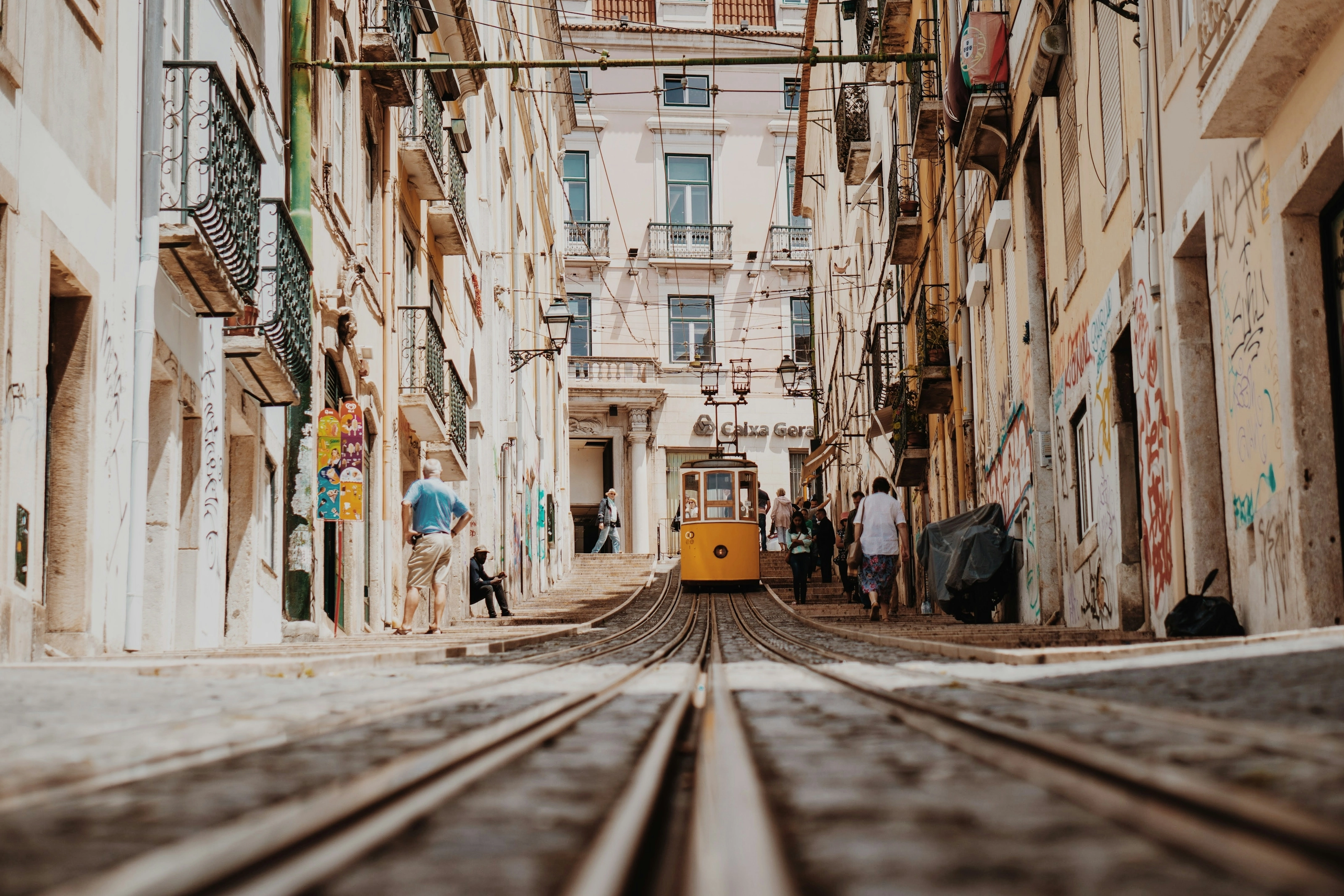
Lisbon's famous yellow trams are an essential part of this landscape. Route 28 crosses several of the city's historic neighbourhoods, passing through areas such as Graça, Alfama, Baixa, Chiado and Estrela. Its small vintage-style carriages are perfectly suited to Lisbon's narrow streets and steep gradients. The tram has also become one of the city's most popular attractions, so travelling outside the busiest hours can make the experience much more enjoyable. A guided walking tour of Alfama or a Lisbon tram and neighbourhood tour can provide useful historical context while helping visitors understand how the city's districts connect.
Don't miss
Belém Tower and Jerónimos Monastery
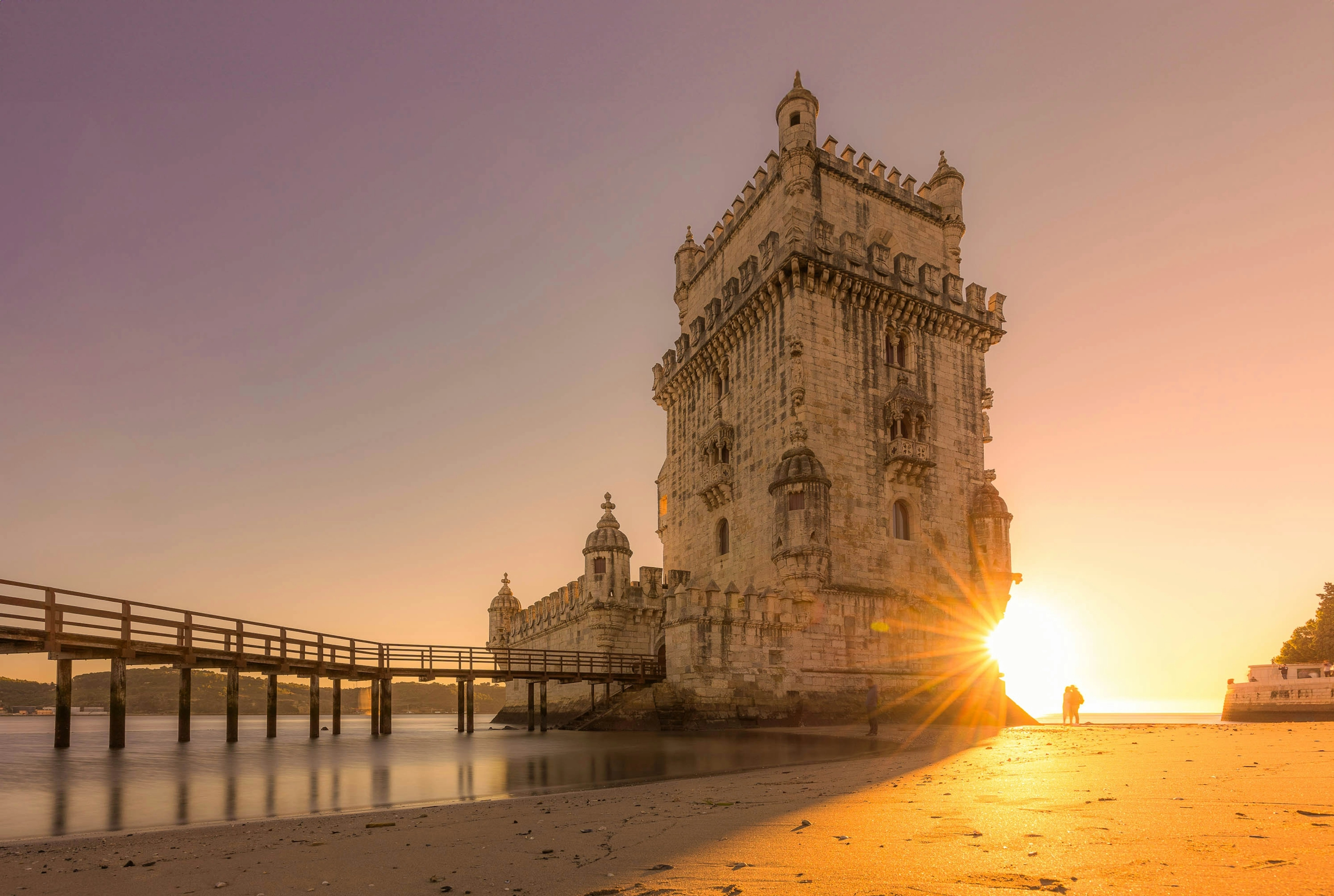
The riverside district of Belém is closely linked to Portugal's maritime history and the Age of Exploration. Belém Tower was built in the early 16th century to help defend the entrance to Lisbon's harbour. Its decorative stonework reflects the Manueline style, a distinctly Portuguese form of late Gothic architecture filled with maritime motifs, carved ropes and symbols connected to navigation and the Order of Christ.
Nearby, the Jerónimos Monastery is one of Portugal's greatest architectural monuments. Construction began at the beginning of the 16th century, during a period when Lisbon was becoming one of Europe's major centres of global trade. The monastery's cloisters are particularly elaborate, and the complex is closely associated with figures such as explorer Vasco da Gama and poet Luís de Camões. Belém Tower and the Jerónimos Monastery form part of a UNESCO World Heritage Site and are among the most important Lisbon attractions for travellers interested in Portuguese history. Guided Belém tours often combine the monuments with the riverfront, the Monument to the Discoveries and a stop for pastéis de nata.
Discover
Lisbon's miradouros: viewpoints above the city
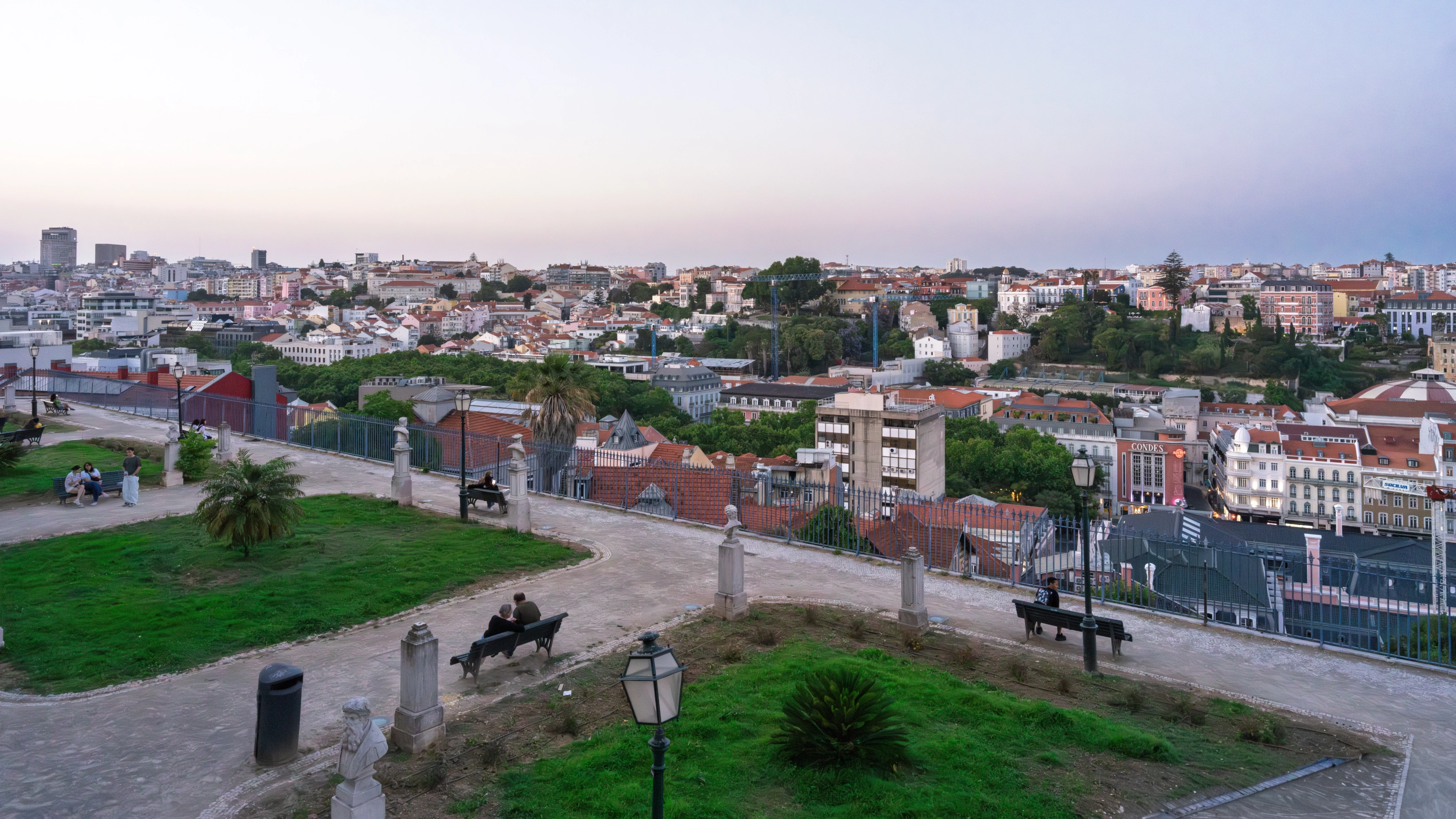
Lisbon's hills have one major advantage: viewpoints are everywhere. Known locally as miradouros, these terraces overlook different parts of the city and often become social spaces in their own right, with benches, kiosks or small cafés. The Miradouro da Graça and Miradouro da Senhora do Monte are particularly popular for views across central Lisbon and towards the castle.
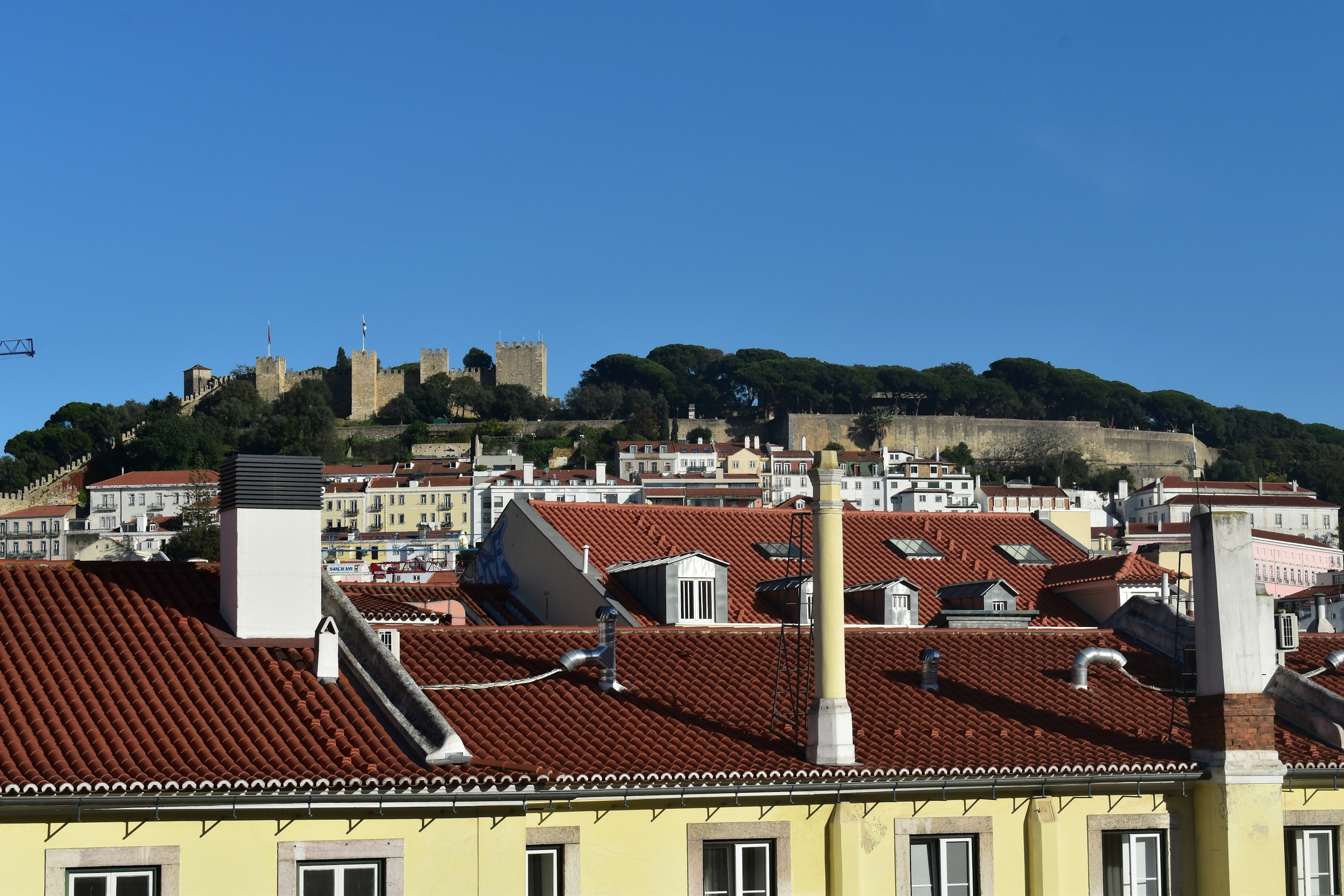
São Jorge Castle occupies one of the most prominent hills in the historic centre. The site has served defensive and royal functions through different periods of Lisbon's history and today provides extensive views over Alfama, Baixa, the Tagus and the city's red rooftops. Rather than visiting only one viewpoint, it is worth allowing Lisbon's hills to guide the walk: some of the best panoramas appear unexpectedly between residential streets. Walking tours focused on Lisbon's hills and viewpoints are a good option for travellers who want to combine photography, history and neighbourhood exploration.
Culture
Fado, Lisbon's musical soul
Fado emerged in Lisbon during the 19th century and became closely associated with working-class districts such as Alfama and Mouraria. Traditionally performed with Portuguese guitar and classical guitar, its songs often revolve around longing, separation, love, fate and saudade — a Portuguese word describing a complex sense of absence and nostalgia.
What began as popular urban music gradually moved into theatres and more formal performance spaces while retaining a strong connection with Lisbon's old neighbourhoods. Fado was added to UNESCO's Representative List of the Intangible Cultural Heritage of Humanity in 2011. Today, visitors can hear it in dedicated casas de fado, particularly around Alfama and Bairro Alto. Some venues combine dinner with a performance, while others offer a more intimate atmosphere centred almost entirely on the music. A Lisbon fado experience can be one of the most distinctive evening activities in the city.
Food
Pastéis de nata, bacalhau and grilled sardines
Lisbon is a city where food is closely tied to neighbourhood life. The pastel de nata is its most famous sweet. These small custard tarts are made with crisp laminated pastry and a creamy filling baked until caramelised on top. The historic Belém version is particularly famous, but excellent pastéis can be found in bakeries throughout the city. Bacalhau, salted cod, is another cornerstone of Portuguese cooking and appears in numerous preparations, from baked dishes to croquettes. During the popular festivities in June, grilled sardines become especially visible on streets and terraces, filling entire neighbourhoods with the smell of charcoal and fish.

Lisbon also offers a strong market and tavern culture, making the city particularly suitable for food tours. Travellers can join market visits, Portuguese cooking classes, pastry tastings and guided food walks through neighbourhoods such as Alfama, Baixa and Mouraria.
Discover
Baixa, Chiado and Bairro Alto
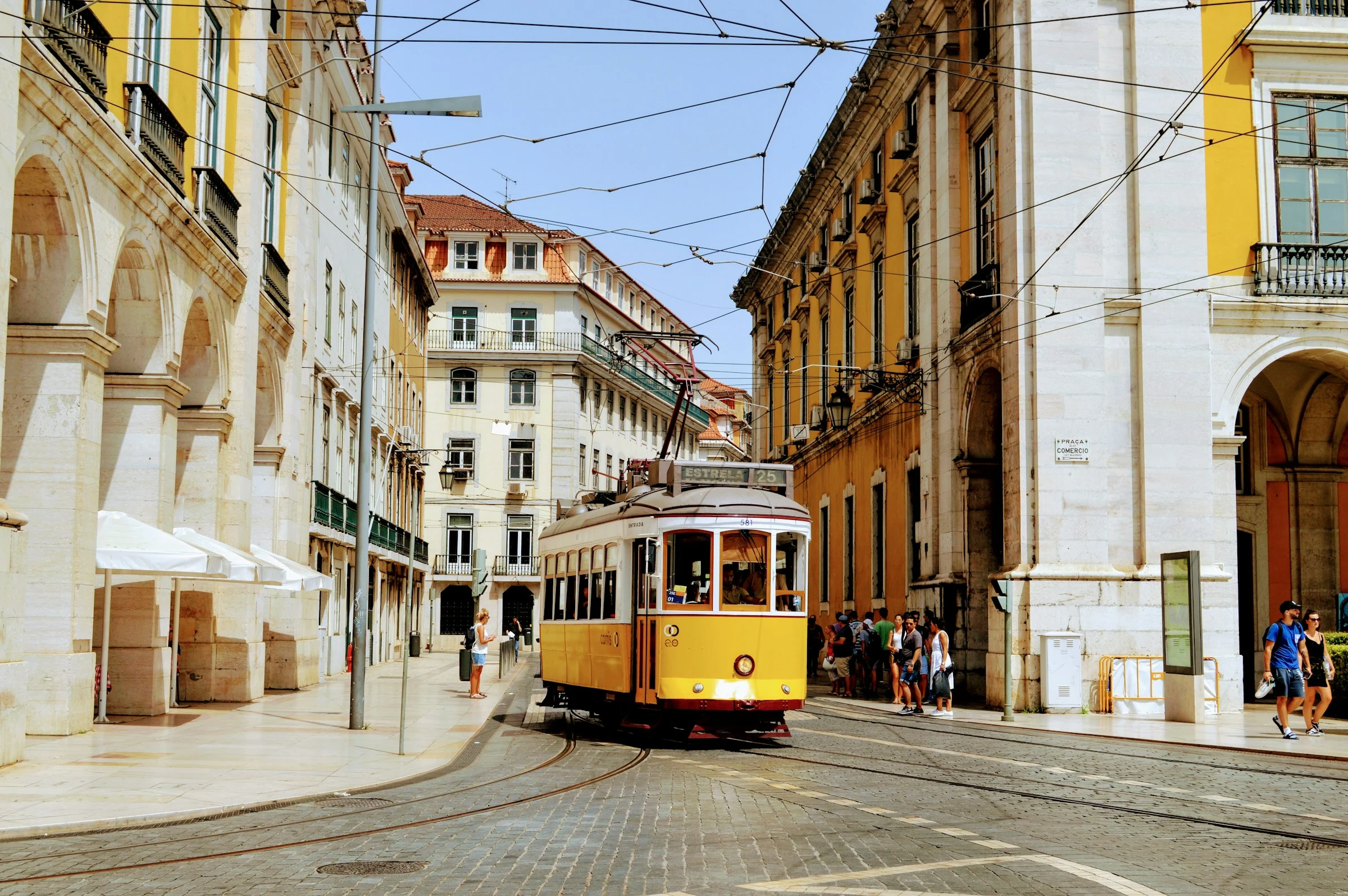
Baixa forms the more ordered, relatively flat section of central Lisbon. Much of the district was rebuilt after the earthquake of 1755 using an organised grid of streets. At its southern edge, Praça do Comércio opens directly onto the Tagus and provides one of the grandest entrances to the historic centre. From there, pedestrian streets lead towards Rossio and the neighbouring districts. Higher up, Chiado has long been associated with cafés, theatres, bookshops and elegant shopping streets.
Bairro Alto changes character throughout the day. Its narrow streets are relatively quiet in the morning and afternoon, then become one of Lisbon's main nightlife areas after sunset as bars and restaurants fill the neighbourhood. The Santa Justa Lift connects different levels of the centre and has become a landmark in its own right thanks to its distinctive iron structure. This part of Lisbon is particularly easy to discover through guided city walks, food tours and nightlife experiences.
Discover
LX Factory and Lisbon's creative side
Beneath the 25 de Abril Bridge, a former industrial complex has been transformed into one of Lisbon's best-known creative spaces. LX Factory combines independent shops, restaurants, design studios, street art, bookshops and event spaces inside former warehouses and industrial buildings. It offers a striking contrast with the medieval streets of Alfama and the monumental architecture of Belém.
For travellers staying more than a couple of days, the area provides a useful glimpse of contemporary Lisbon beyond the classic postcard image. It can also be combined with Belém, Alcântara or a walk along the Tagus riverfront.
Day trip
Sintra, the essential excursion from Lisbon
Sintra is one of the most popular day trips from Lisbon and can be reached relatively easily by train. Set among wooded hills, the town and surrounding cultural landscape contain palaces, gardens, estates and fortifications from several periods of Portuguese history. The most recognisable landmark is the colourful Pena Palace. Built in the 19th century under King Ferdinand II, it combines Romantic architecture with bright façades, towers and decorative elements inspired by several historical styles.
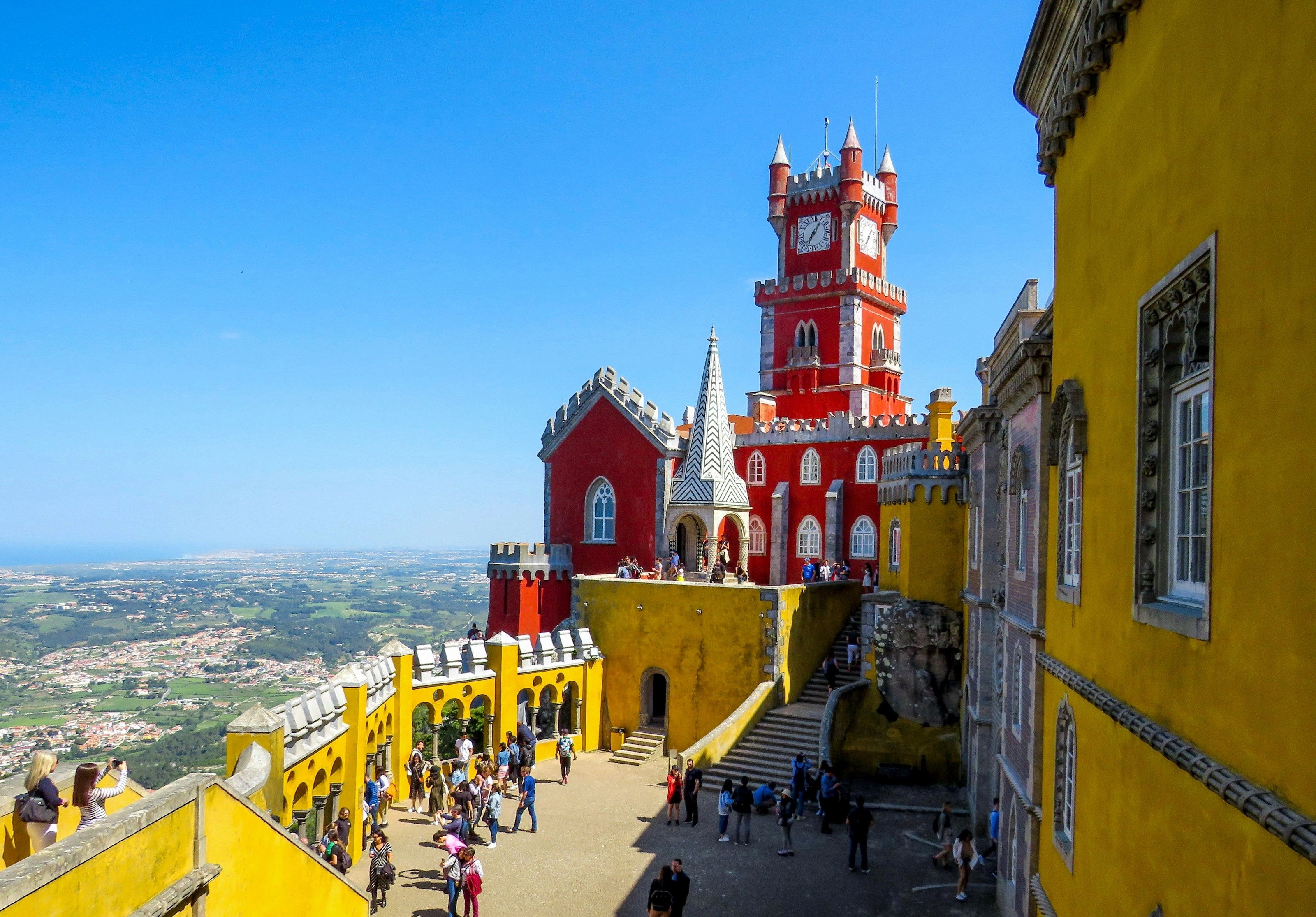
Nearby, the Moorish Castle follows the ridgeline above the town and offers broad views over the surrounding landscape. Quinta da Regaleira provides yet another atmosphere, with gardens, tunnels, symbolic architecture and the famous spiral Initiation Well. Because the major monuments are spread across steep terrain, travellers can either organise the visit independently or book a guided Sintra day trip from Lisbon. Many excursions also continue towards Cabo da Roca or the Atlantic coast.
Lisbon Airport
Portugal's main international gateway
Humberto Delgado Airport
Lisbon Airport is the main international airport serving the Portuguese capital and one of the country's most important aviation hubs. Its relatively close position to central Lisbon makes it convenient for city breaks and short stays.
Travellers searching for cheap flights to Lisbon can monitor routes to LIS from multiple departure airports with SniperAir rather than repeatedly checking fares manually.
When to go
When to visit Lisbon
Spring
Mild temperatures and very good conditions for walking through the city's hills and historic districts.
Summer
Warm, sunny weather and a lively atmosphere, but also one of the busiest periods of the year.
Autumn
Often pleasant for sightseeing, with generally milder conditions than at the height of summer.
Winter
Relatively mild compared with many European capitals, although wetter days are more common.
Book with SniperAir
Flights, tours and experiences in Lisbon
SniperAir can help turn destination research into an actual Lisbon trip. Alongside cheap flights to Lisbon, travellers can discover bookable experiences such as Alfama walking tours, fado shows, Belém guided visits, São Jorge Castle experiences, Tagus river cruises, Lisbon food tours, Portuguese cooking classes, Sintra day trips, Pena Palace excursions, sightseeing tours and other Lisbon attractions.
The idea is simple: monitor the flight, discover Lisbon, compare activities and access the relevant booking offer once you are ready.
You might also like
Similar destinations

FAQ
Frequently asked questions about flights and travel to Lisbon
Which airport serves Lisbon?
Lisbon Airport (LIS), the country's main international airport, located close to the city centre.
How do I get from Lisbon Airport to the city centre?
The metro's red line connects the airport directly to central Lisbon in around 20-25 minutes, with taxis and ride-hailing also widely available.
Is Tram 28 worth taking?
Yes — it crosses several historic neighbourhoods including Graça, Alfama, Baixa and Chiado, but travelling outside peak hours makes the ride much more enjoyable.
Can Sintra be visited easily from Lisbon?
Yes, it makes an excellent day trip: trains run frequently from central Lisbon, and the town's palaces can be combined into a single day, either independently or with a guided tour.
What are the best things to do in Lisbon for a first visit?
Alfama and Tram 28, Belém Tower and Jerónimos Monastery, the city's miradouros, São Jorge Castle and a fado evening cover the essentials of a first visit.
How many days should I spend in Lisbon?
Three to four days let you see the historic centre, Belém and take a day trip to Sintra, while a longer stay allows time for LX Factory and other neighbourhoods.
How much does a flight to Lisbon usually cost?
The price mainly depends on your departure city, the season and how far ahead you book. The "opportunities" section above shows real price examples already detected by SniperAir for this destination.
How long is a flight to Lisbon from other European cities?
Generally between 1 and 3 hours depending on your departure city.
How can I get notified when a flight to Lisbon falls below my budget?
Create an alert profile with your departure airport, Lisbon as the destination and your maximum budget. You'll be notified automatically as soon as a matching price is detected.
Can I find tours, excursions and activities in Lisbon through SniperAir?
Yes. Alongside cheap flights, SniperAir lets you discover bookable experiences in Lisbon: Alfama walking tours, fado shows, Belém guided visits and Sintra day trips.
Ready to head to Lisbon?
Set your budget and let SniperAir watch the fares.
Create my alert