
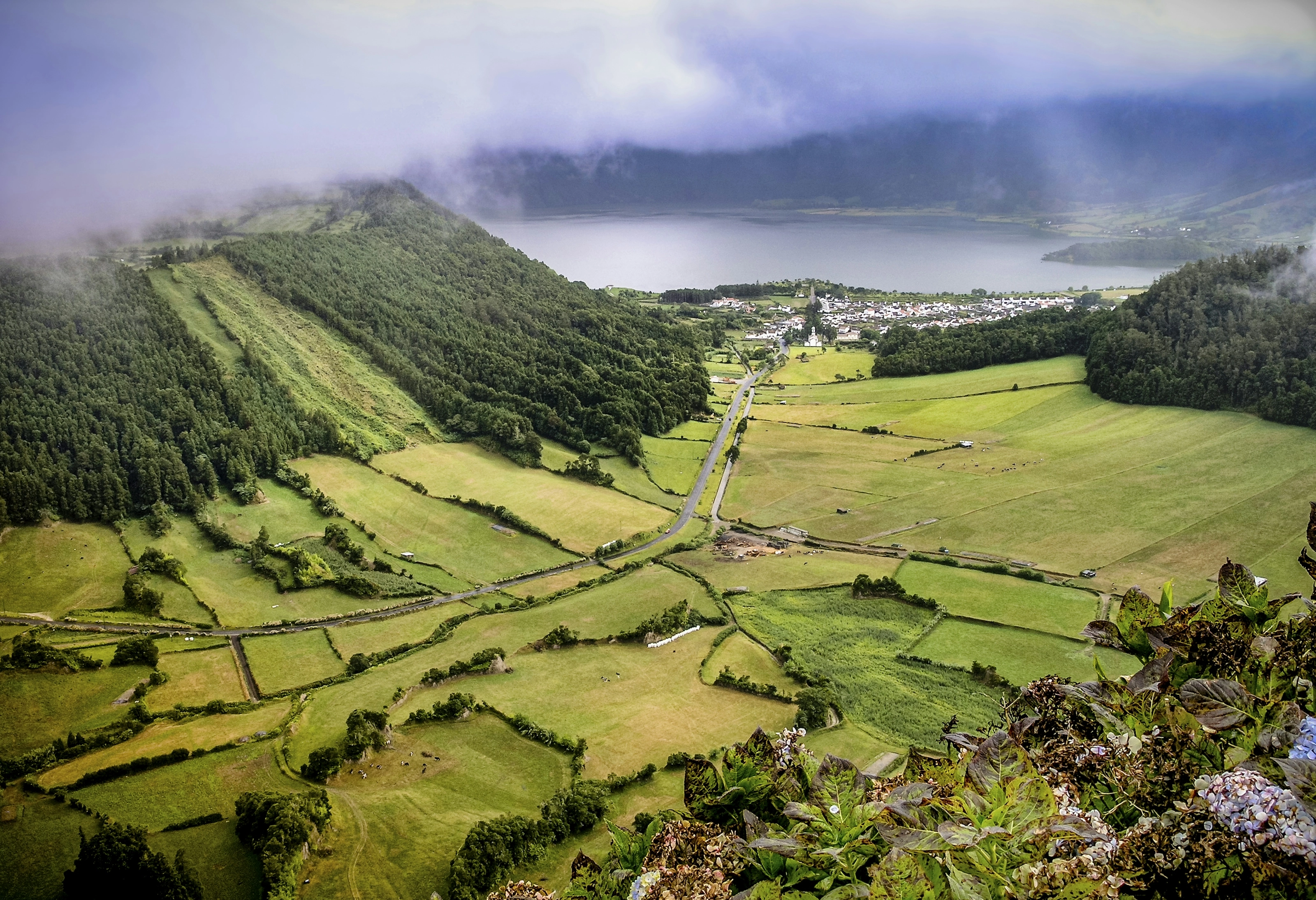
Cheap flights to Ponta Delgada
Set your departure airport and maximum budget: SniperAir tracks prices to Ponta Delgada and alerts you the moment a deal matching your criteria appears.
Quick summary
Country
Portugal
Continent
Europe
Airport
PDL
Currency
Euro (EUR)
Time zone
UTC-1 (UTC+0 during daylight saving time)
Deals already spotted to Ponta Delgada
Real flight examples detected by SniperAir, with their reference price.
Loading examples…
Why track Ponta Delgada with SniperAir
The gateway to the Azores, beneath the crater lakes of São Miguel
Choose your departure
Enter your departure airport and your maximum budget for a flight to Ponta Delgada (PDL).
SniperAir keeps watch
Our systems continuously compare new prices with the real price history of the route. SniperAir monitors prices and alerts you: it does not sell or book tickets.
You receive an alert
As soon as a price matches your criteria, you are notified, without having searched for anything yourself.
Ponta Delgada is the largest municipality in the Azores and the executive capital of Portugal's autonomous region, on the south coast of São Miguel, the biggest and most populous island of the archipelago (Wikipedia EN). English Wikipedia gives it 67,287 inhabitants in 2021, and São Miguel is nicknamed "the Green Island", Ilha Verde. The name means "thin point": the chronicler Gaspar Frutuoso explained that it referred to a slender spit of volcanic land near the Santa Clara chapel (Wikipedia EN). The settlement grew quickly after an earthquake in 1522 destroyed the old island capital, Vila Franca do Campo, and was given city status on 2 April 1546 (Wikipedia FR, DE). English Wikivoyage describes it as the place most visitors pass through before heading to other islands, and a practical base for crater lakes, hot springs, tea and pineapple plantations. It is a town of easy strolls rather than great monuments; the real draw is the volcanic landscape, kept green by the Gulf Stream. This guide reflects open sources only; SniperAir watches flight prices to PDL, compares them with the real history of the route and alerts you when one drops below your budget.
Airport and getting into town
An airport about 2 km from the centre, the archipelago's main gateway
Ponta Delgada - João Paulo II Airport (PDL)
João Paulo II Airport (PDL) lies about 2 km west of the city centre in the parish of Relva (Wikipedia EN; Wikivoyage FR, EN). It is the busiest airport in the Azores and the hub of SATA Air Açores and Azores Airlines (Wikipedia EN; Wikivoyage EN). It connects the other islands of the archipelago, Madeira and the mainland (Lisbon, Porto, Faro), plus several destinations in Europe and North America (Wikipedia EN). German Wikivoyage points out that flights from Europe are partly direct but mostly routed via Lisbon. English Wikivoyage estimates the walk to town at about 4 km and mentions taxis and city buses; we publish no timetable or fare because both change.
Distance to the centre per Wikipedia (EN) and Wikivoyage (FR): about 2 km west; Wikivoyage (EN): 1.9 km as the crow flies and about 4 km on foot. No fares or timetables are published, as they change.
For price alerts, PDL is the code to follow. Connections from mainland Europe and North America, entry rules and travel advice can differ depending on where you start from: check your own government's official guidance and confirm the actual flights before you book. Inter-island flights are run by the regional carrier, so ask it directly if you want to continue to another island.
Landmarks
Crater lakes, island coasts and a baroque town centre
The real landmark of Ponta Delgada is São Miguel itself. The five views below are followed by other places mentioned in the sources.
The Sete Cidades caldera and its village
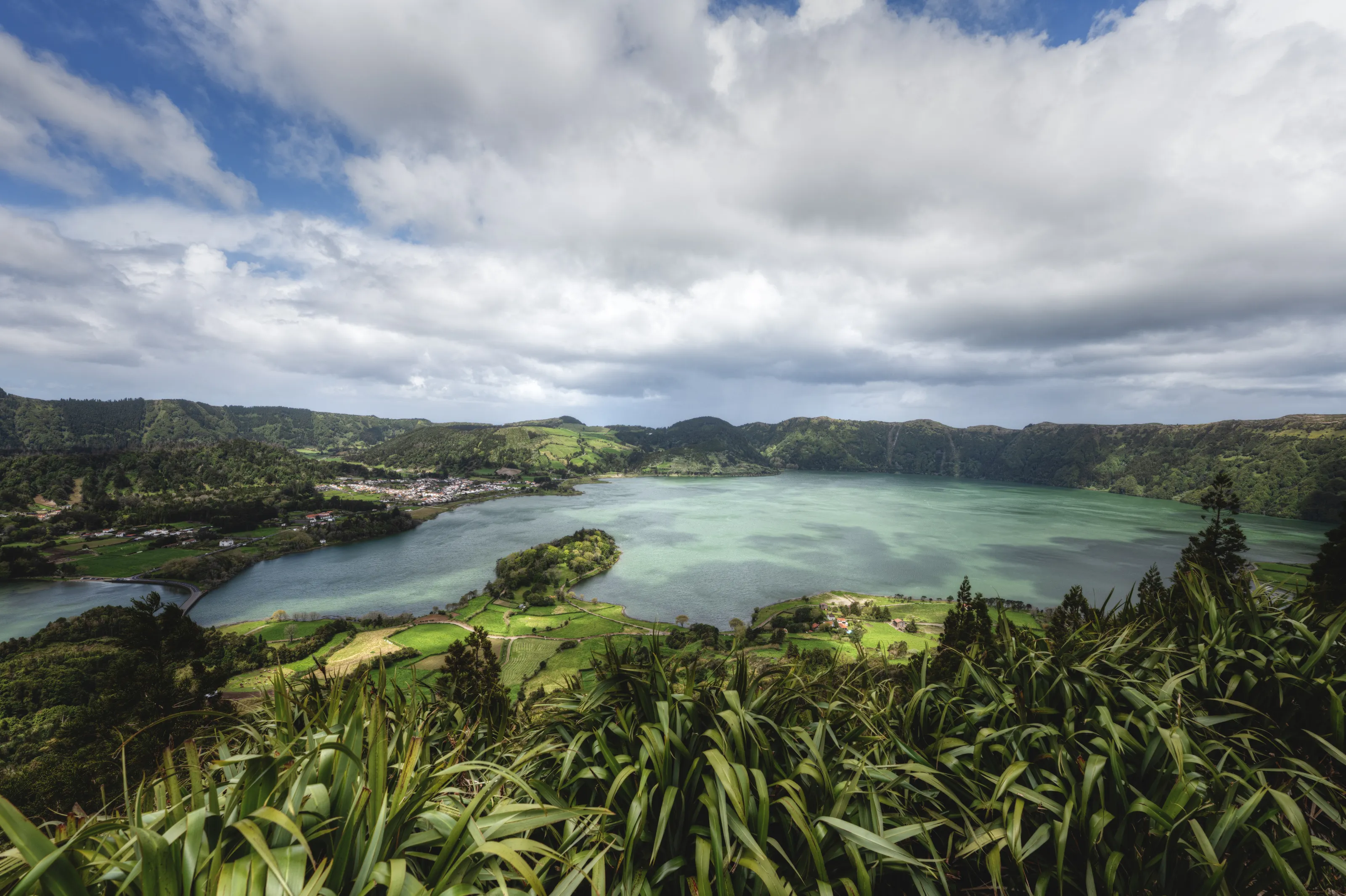
Sete Cidades is a volcano at the western end of São Miguel, crowned by a caldera about 5 km across that holds several freshwater lakes, among them the Green Lake and the Blue Lake (Wikipedia FR, ES). The name means "seven cities", from a legend that seven towns were destroyed by an eruption, which has made the site one of the candidates for Atlantis (Wikipedia FR). A village sits inside the crater among meadows and hydrangeas, and the caldera is best seen from its viewpoints.
The lakes of Sete Cidades
The Green and Blue lakes owe their names to the colours of their waters (Wikipedia FR). English Wikivoyage describes a set of lakes in a caldera north-west of Ponta Delgada, hemmed in by steep mountain walls. The weather is changeable (see the climate section), so pack a waterproof layer and leave slack in your plans.
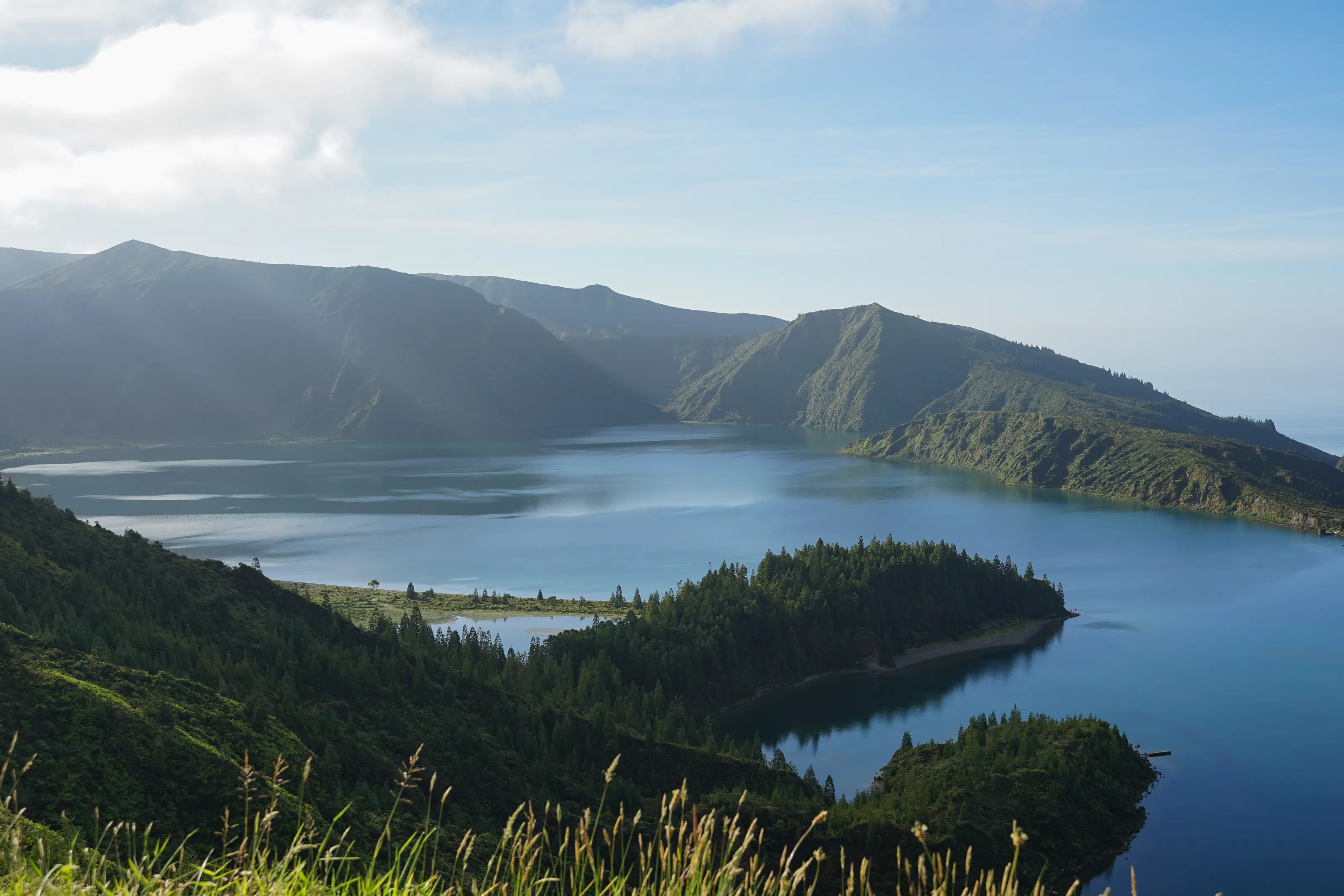
Lagoa do Fogo, a lake in a mountain crater
Lagoa do Fogo is a caldera lake high in the mountains, part of a nature reserve, known for dramatic views and a pale sand beach (Wikivoyage EN; Wikipedia EN). It lies in the crater of the Água de Pau massif.
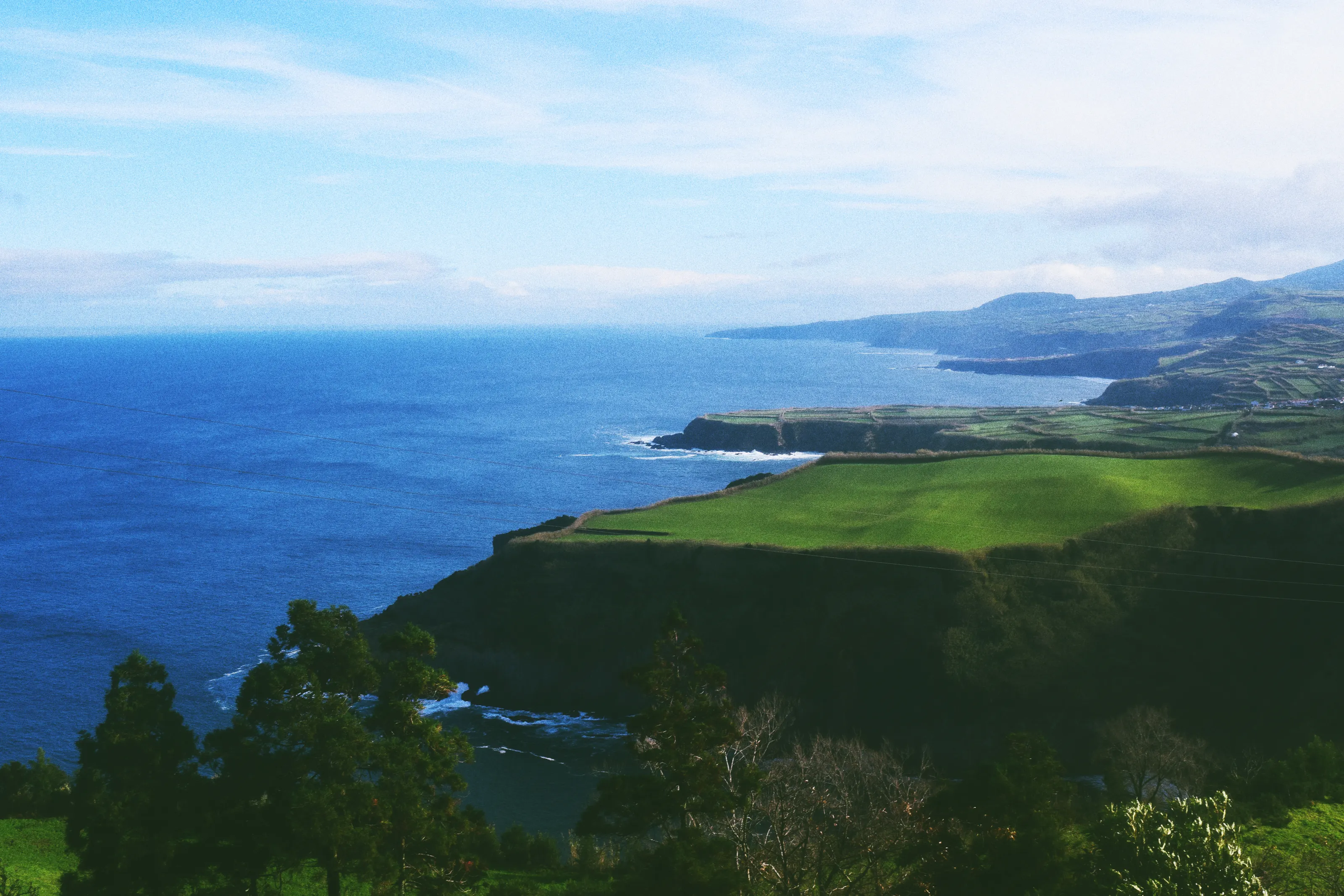
Cliffs and pastures along the coast
São Miguel mixes volcanic coasts, pastures with grazing cows, cryptomeria forests and deep blue Atlantic water (Wikipedia EN). The island's topography varies a lot: the western half is generally drier, with less rain than the centre and east (Wikipedia EN). Wikivoyage (EN) names hiking among the island's most popular activities.
A baroque building in the centre
The historic centre of Ponta Delgada lies behind Avenida Infante D. Henrique, with lanes lined with houses from the 17th to 19th centuries (Wikipedia ES; Wikivoyage DE). Wikipedia (FR, DE, ES) names the Portas da Cidade, the three-arched city gates, the 16th-century mother church of São Sebastião with its baroque facade and interior, and several convents. The photo shows a building of this type in dark stone and white plaster.
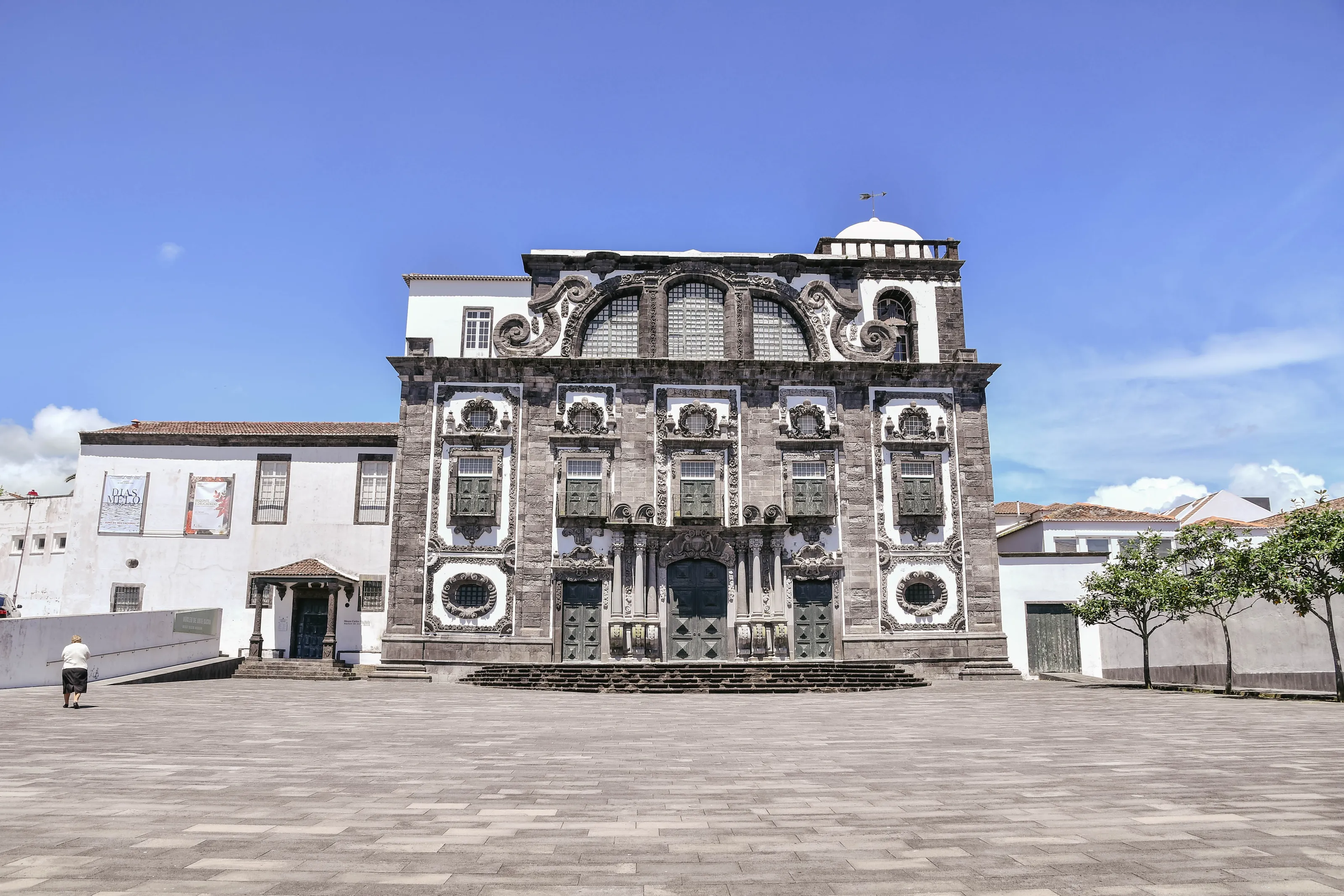
Other places in Ponta Delgada: Fort São Brás, a Renaissance coastal fortress that houses the Azores military museum (Wikipedia FR; Wikivoyage EN); the Carlos Machado Museum, in the Convent of Santo André (Wikivoyage EN; Wikipedia FR); Campo de São Francisco, a large square in the centre (Wikivoyage DE); the Carvão lava cave, a lava tube that runs partly under the city and can be visited with a guide (Wikipedia FR); and the swimming area of Ferraria, with an ocean hot spring at Ponta da Ferraria (Wikipedia FR, EN). Nearby: Furnas Lake, with steam vents and hot springs (Wikivoyage EN) and the Terra Nostra botanical garden at Furnas (Wikivoyage EN; Wikipedia DE).
Museums and culture
Carlos Machado Museum, forts and themed museums
The Carlos Machado Museum
Housed in the Convent of Santo André, the Carlos Machado Museum is the city's main museum. It includes a sacred art centre and collections of regional ethnography, natural history, toys and African art (Wikipedia FR); Wikivoyage (EN) describes it as a window on the scientific mindset of the 19th century. We give no price or schedule.
Fort São Brás and the military museum
Fort São Brás, a Renaissance coastal fortress dating from the 16th century, houses the Azores military museum, and visitors can walk on the ramparts (Wikipedia FR; Wikivoyage EN). English Wikivoyage adds that it was used until the Second World War.
Galleries, religious festivals and flavours
French Wikipedia mentions art galleries, including the Ponta Delgada Cultural Centre. Wikipedia (EN, ES) and Wikivoyage (EN) cite the Festa do Senhor Santo Cristo dos Milagres on the fifth Sunday after Easter, one of the main religious festivals of the archipelago, when the city is decorated with flowers and carpets. Dates and programmes change, so check before booking.
Food and drink
Pineapples, Gorreana tea, cheese, liqueurs and Furnas cozido
São Miguel pineapple
Ponta Delgada is known for its pineapples, grown in greenhouses, notably in the Fajã de Baixo district (Wikipedia DE; Wikivoyage EN, DE). English Wikivoyage says trying a fresh pineapple from a local market is a must and mentions a working plantation open to visitors; the two-storey Mercado da Graça also sells produce, meat and fish (Wikivoyage EN, DE).
Gorreana tea
Gorreana, on the north coast, is described as Europe's oldest surviving tea plantation (Wikipedia EN; Wikivoyage EN). Tea was brought in as a replacement crop after blight devastated the orange groves: farmer José do Canto imported it in 1860, and in 1878 specialists from Macao came to teach local growers (Wikipedia EN). It produces black and green tea, without pesticides according to Wikipedia (EN), and the grounds can be visited at your own pace.
Cheese, liqueurs and cozido
German Wikipedia mentions a fresh cheese made from a mix of goat and cow milk at Fajã de Cima, and English Wikivoyage praises the islands' wines and cheeses and the passion fruit liqueur. At Furnas the speciality is cozido, a stew of vegetables, meat and sausages cooked in a hole in the ground heated by volcanic warmth (Wikipedia DE; Wikivoyage EN), along with bolo lêvedo, a soft milk bread (Wikipedia DE). We name no restaurants or brands.
Getting around
On foot in town, by car on the island
The centre on foot
The centre is easy to cover on foot because distances are short, although German Wikivoyage notes that pavements are often narrow. The cruise terminal is a few minutes' walk from the heart of town (Wikivoyage EN).
Buses and minibuses
City minibuses serve the town (Wikipedia EN; Wikivoyage EN, DE); buses linking other towns on the island often run only a few times a day (Wikipedia EN), and journeys rarely last longer than 90 minutes (Wikipedia EN; Wikivoyage EN). We publish no fares.
Renting a car, boats and inter-island flights
Wikivoyage (EN) calls renting a car one of the best ways to see the island, since some places can only be reached that way, and advises booking ahead; roads can be narrow with blind bends and wandering livestock. Seasonal ferries link São Miguel with Santa Maria and Terceira in summer (Wikivoyage EN, DE); other islands are reached by air.
Budget and precautions
Budget, health and general precautions
Price level
The open sources we read do not allow us to publish reliable, cross-checked price ranges for Ponta Delgada or for excursions on the island, so we give no amounts. The currency is the euro.
Flights, entry rules and insurance
SniperAir monitors prices to PDL and compares them with the route's history, but it does not sell or book tickets. Entry rules, travel advice and health cover depend on where you travel from and may change, so check your government's official guidance before booking. French Wikivoyage notes that European Union residents can rely on the European Health Insurance Card.
Safety and roads
English Wikivoyage describes little crime on the island but advises locking vehicles and leaving nothing in sight, especially at trailheads. Drive carefully on the narrow roads and avoid unfamiliar unpaved tracks. At sea and in the mountains, follow local instructions.
When to go
A mild, damp and changeable oceanic climate
Winter
Mean temperatures fall to around 14.5 °C and daytime highs to about 17 °C according to Wikipedia (EN) and Wikivoyage (EN). French Wikipedia mentions strong south-westerly winds in winter, linked to passing depressions, and heavier rain.
Spring
English Wikivoyage and Spanish Wikipedia stress that spring weather, like autumn's, is unstable, making daily forecasts hard: bring a waterproof layer.
Summer
Summer means average temperatures near 22 °C and highs around 25 °C (Wikipedia EN; Wikivoyage EN). French Wikipedia notes northerly winds in summer, and English Wikivoyage says summers are more humid than on the Portuguese mainland. This is also the season of the seasonal ferries.
Autumn
The weather varies greatly, as in spring (Wikivoyage EN; Wikipedia ES). The sky is often cloudy, which limits sunshine according to French Wikipedia.
English Wikipedia classes the climate as hot-summer Mediterranean (Csa), French Wikipedia as temperate oceanic: the label varies, but all stress the narrow temperature range created by the Gulf Stream and humidity often above 80 per cent (Wikipedia EN, ES). English Wikipedia adds that the west of the island is drier than the centre and east.
By length of stay
What to do in Ponta Delgada depending on how long you stay
The essentials
The centre of Ponta Delgada (Portas da Cidade, mother church, Fort São Brás) and a day at Sete Cidades.
São Miguel in depth
English Wikivoyage reckons three days by car is enough to see the island well: Sete Cidades, Lagoa do Fogo, Furnas and its hot springs, Gorreana tea.
Beyond the island
A trip to Santa Maria island, half an hour by air or three hours by boat in summer, or to other islands with the regional carrier (Wikivoyage EN).
In pictures
Ponta Delgada and São Miguel in pictures
You might also like
Similar destinations
FAQ
Frequently asked questions about flights to Ponta Delgada
How far is PDL airport from Ponta Delgada?
João Paulo II Airport (PDL) is about 2 km west of the centre (Wikipedia EN; Wikivoyage FR, EN), roughly 4 km on foot according to Wikivoyage (EN).
What should I see first in Ponta Delgada and São Miguel?
The Sete Cidades lakes, Lagoa do Fogo, Furnas and its hot springs, the Gorreana tea plantation and, in town, the Portas da Cidade and Fort São Brás, according to Wikipedia (FR, EN) and Wikivoyage (EN).
What should I taste in Ponta Delgada?
Local pineapple, Gorreana tea, cheeses and passion fruit liqueur, and at Furnas the cozido cooked in volcanically heated ground, according to Wikipedia (DE) and Wikivoyage (EN).
Can I go whale watching from Ponta Delgada?
Wikipedia (EN) and Wikivoyage (EN) say whale- and dolphin-watching trips leave from Ponta Delgada and Vila Franca do Campo, where sea turtles, dolphins and humpback whales can be seen. We name no operator; ask locally.
What entry requirements apply for Portugal?
They depend on where you travel from and may change: check your own government's official guidance before booking.
How many days do I need in Ponta Delgada?
Two days cover the town and Sete Cidades, three to four days let you see São Miguel by car, and five or more allow another island of the archipelago.
How much does a flight to Ponta Delgada usually cost?
The price depends mainly on your departure city, the time of year and how far ahead you book. The "opportunities" section above shows real examples of prices SniperAir has already detected to this destination.
How do I get alerted when a flight to Ponta Delgada drops below my budget?
Create an alert profile with your departure airport, Ponta Delgada (PDL) as the destination and your maximum budget. You are notified automatically as soon as a matching price is detected. SniperAir monitors and alerts, it does not sell or book tickets.
Ready to head to Ponta Delgada?
Set your budget and let SniperAir monitor fares for you.
Create my alert