
Cheap flights to Cluj-Napoca
Set your departure airport and maximum budget: SniperAir tracks prices to Cluj-Napoca and alerts you the moment a deal matching your criteria appears.
Quick summary
Country
Romania
Continent
Europe
Airport
CLJ
Currency
Romanian leu (RON)
Time zone
UTC+2 (UTC+3 during daylight saving time)
Deals already spotted to Cluj-Napoca
Real flight examples detected by SniperAir, with their reference price.
Loading examples…
Why track Cluj-Napoca with SniperAir
Transylvania's big student city
Choose your departure
Enter your departure airport and your maximum budget for a flight to Cluj-Napoca (CLJ).
SniperAir keeps watch
Our systems continuously compare new prices with the real price history of the route. SniperAir monitors prices and alerts you: it does not sell or book tickets.
You receive an alert
As soon as a price matches your criteria, you are notified, without having searched for anything yourself.
Cluj-Napoca is the second-largest city in Romania by population, with 286,598 inhabitants at the 2021 census according to Wikipedia (EN) and (DE). Wikivoyage (EN) presents it as the unofficial capital of Transylvania. Its current name, with Napoca added, dates from 1974 according to Wikipedia (FR); many people still just say Cluj. A university town, a tech hub and a bicultural city, Romanian and Hungarian, it mixes Gothic and Baroque monuments, Austro-Hungarian palaces, parks and nightlife. Wikivoyage (EN) notes that prices are high compared with the rest of Romania, but far below those of Western Europe. Flights to Cluj change price with the season and the departure city, so a SniperAir alert saves you from checking every day. You set your budget, we compare new fares with the real price history of the route, and we let you know.
Airport and getting into town
Avram Iancu Airport, east of the city
Cluj Avram Iancu (CLJ)
Cluj Avram Iancu International Airport (CLJ) is in the Someșeni district, about 9 km east of the centre according to Wikipedia (EN) and (DE). It handled more than 3.5 million passengers in 2025 according to the same sources, making it one of the country's main airports. To reach the centre, bus lines 5 and 8 serve the airport; since May 2023 an express line links the airport with Mihai Viteazul Square according to Wikivoyage (EN). Taxis are plentiful; Wikivoyage (EN) recommends booking apps rather than unmarked drivers who tout for passengers near the airport and the station.
Sources disagree on the distance (8 or 9 km) and on the airport's rank in the country, so we write "about 9 km". No bus, shuttle or taxi fare is published here.
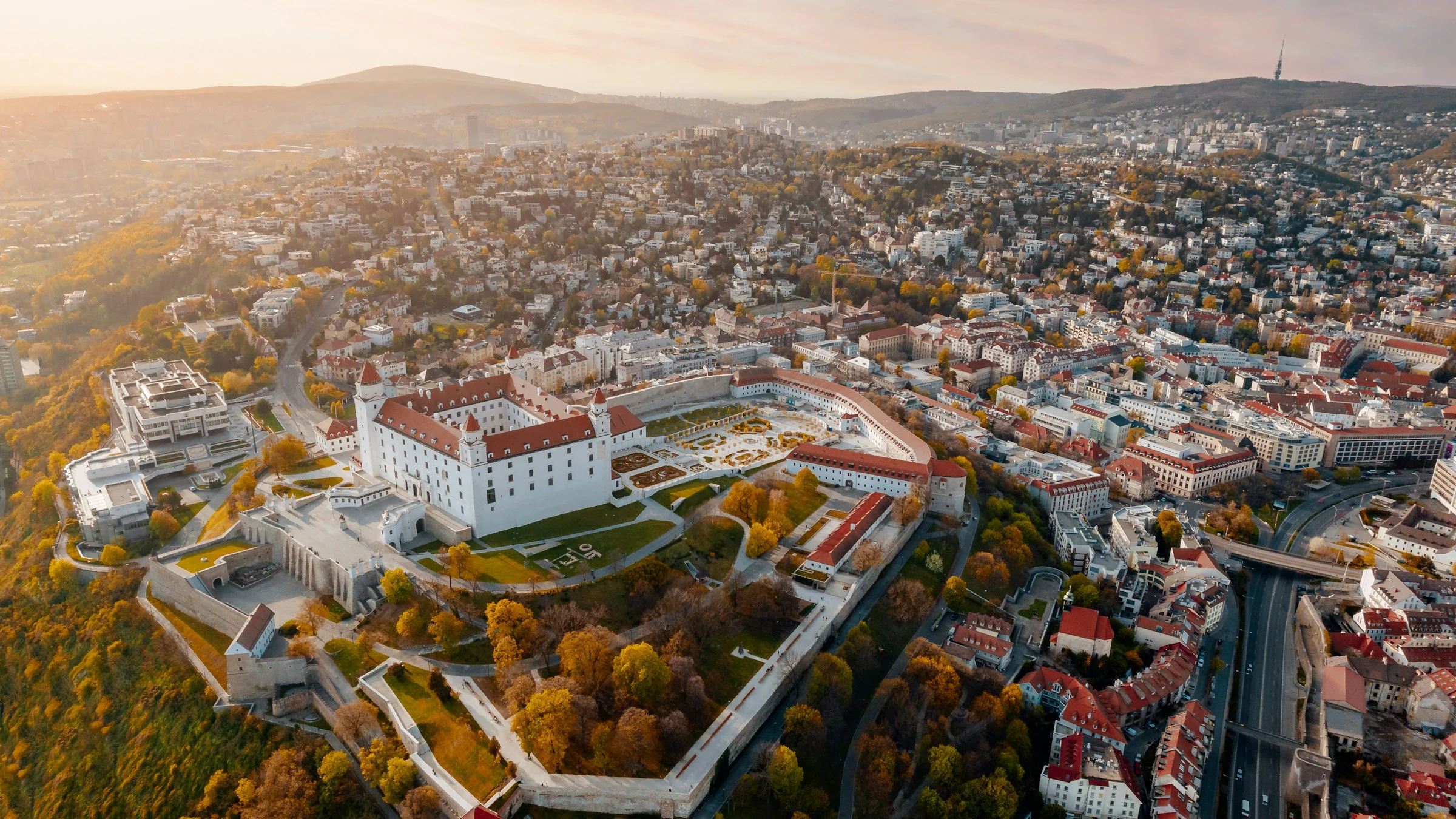
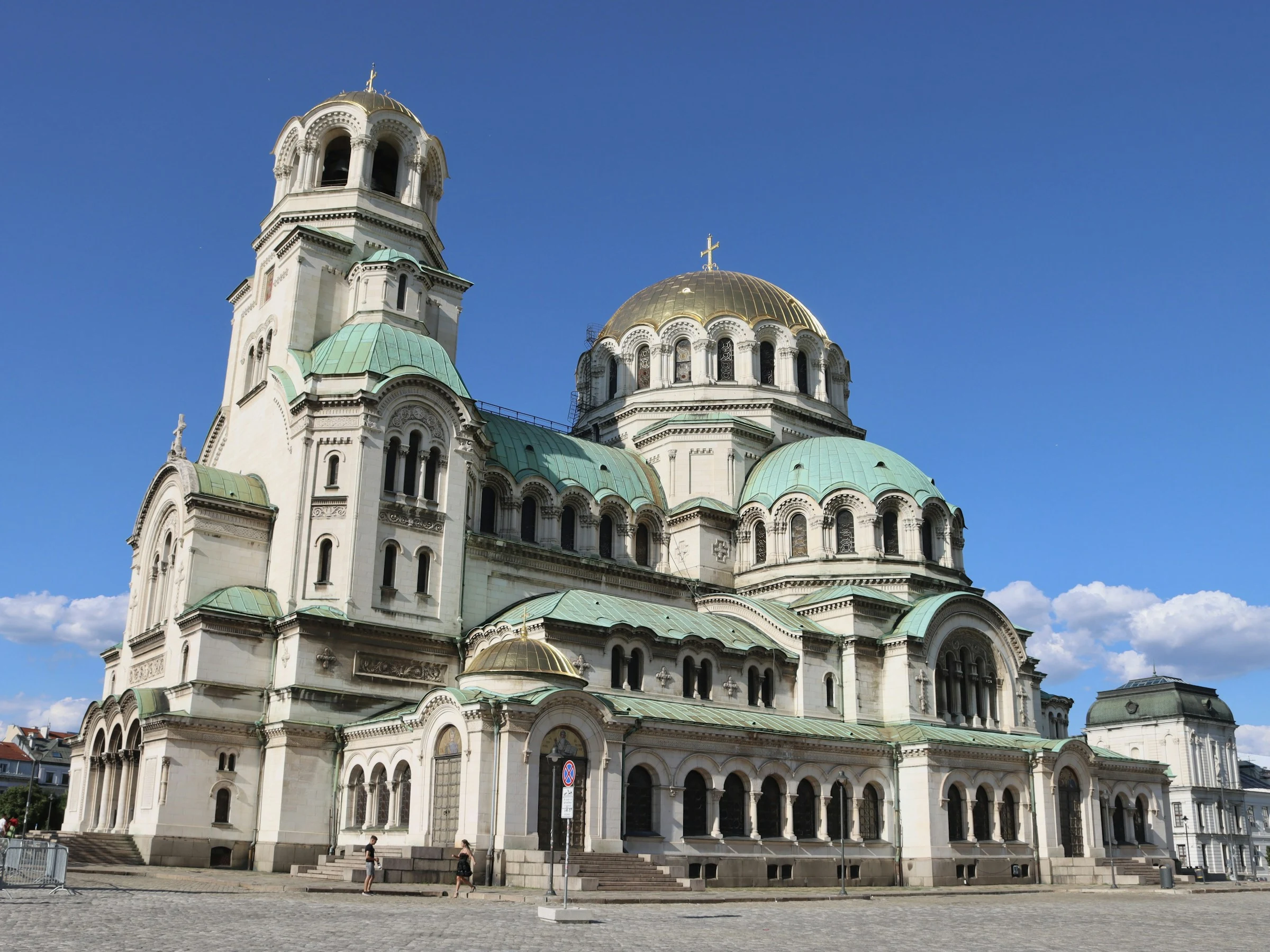
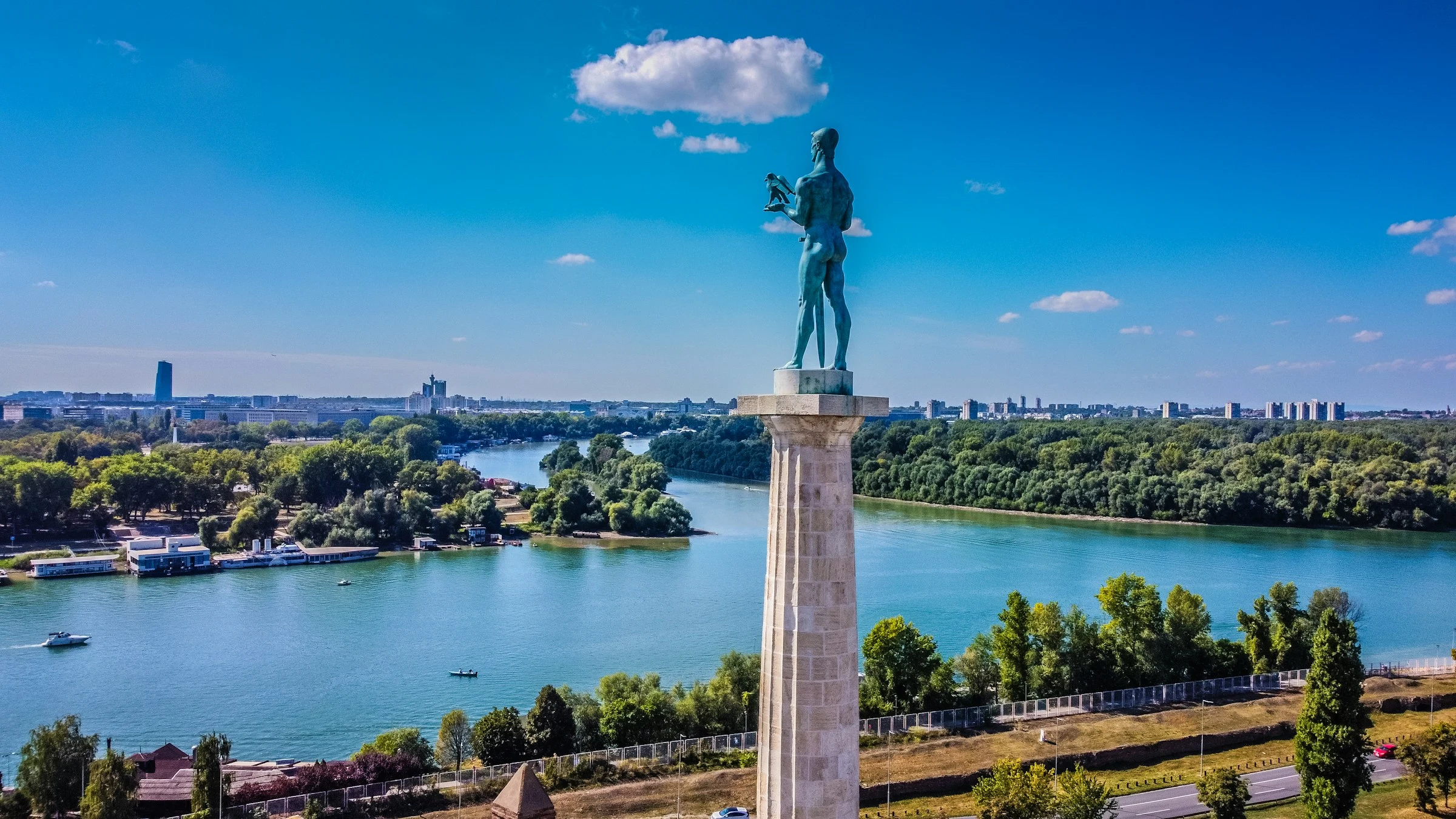
International links connect Cluj with many European cities. To compare with neighbouring cities, you can also track Bratislava (BTS), Sofia (SOF) or Belgrade (BEG): these cities have their own SniperAir page and price alert.
Landmarks
Union Square, St Michael's Church and the parks
Central Cluj is best explored on foot, from Union Square into the surrounding streets. The five pictures below show the places that come up most often in travel accounts.
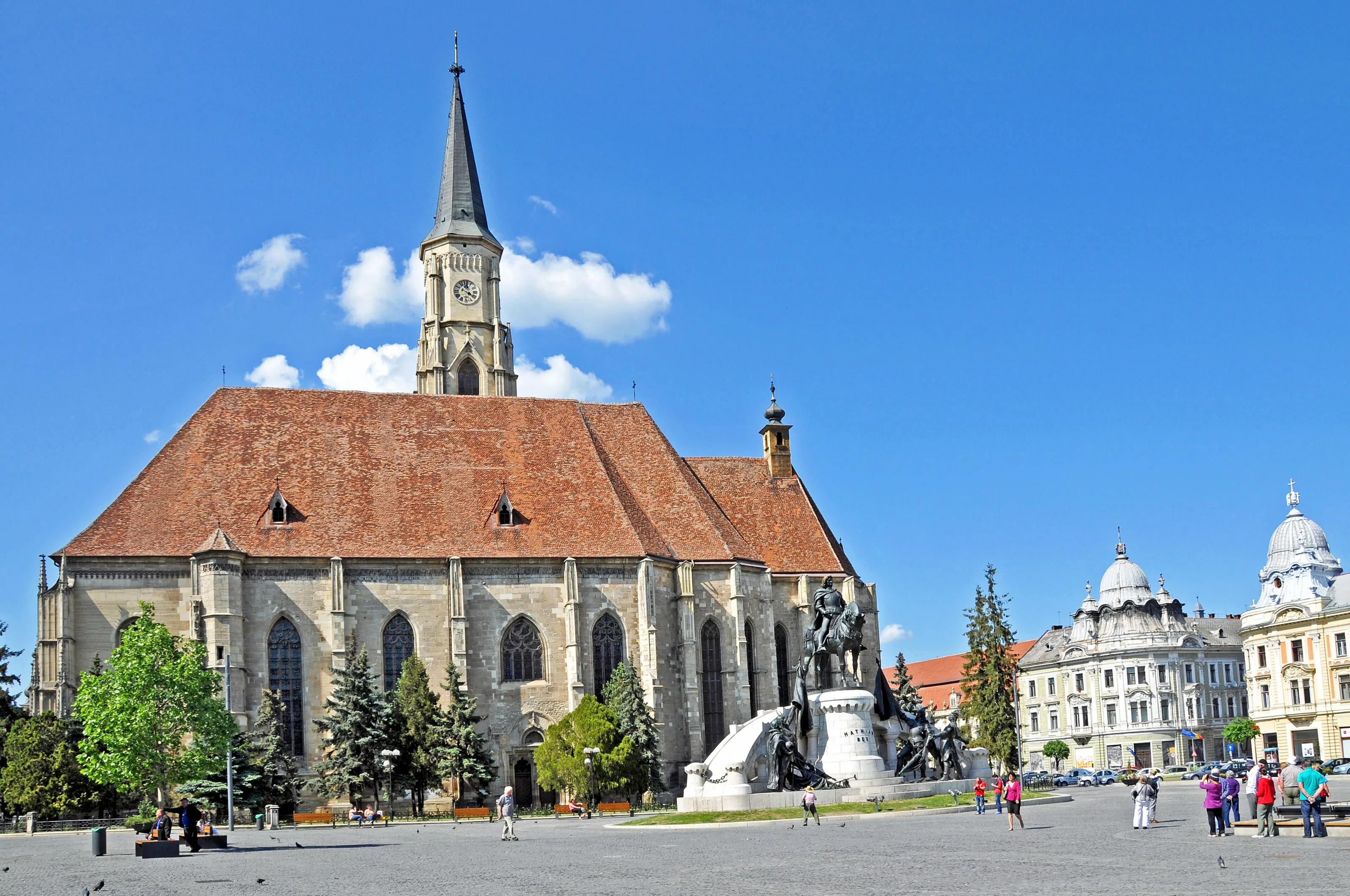
Union Square and St Michael's Church
Union Square gathers St Michael's Church, the National Art Museum, the statue of Matthias Corvinus and Roman remains, according to Wikivoyage (EN). The church, one of the most valuable in Transylvania, is Gothic; its 50 m neo-Gothic tower was built in 1860 according to the same source.
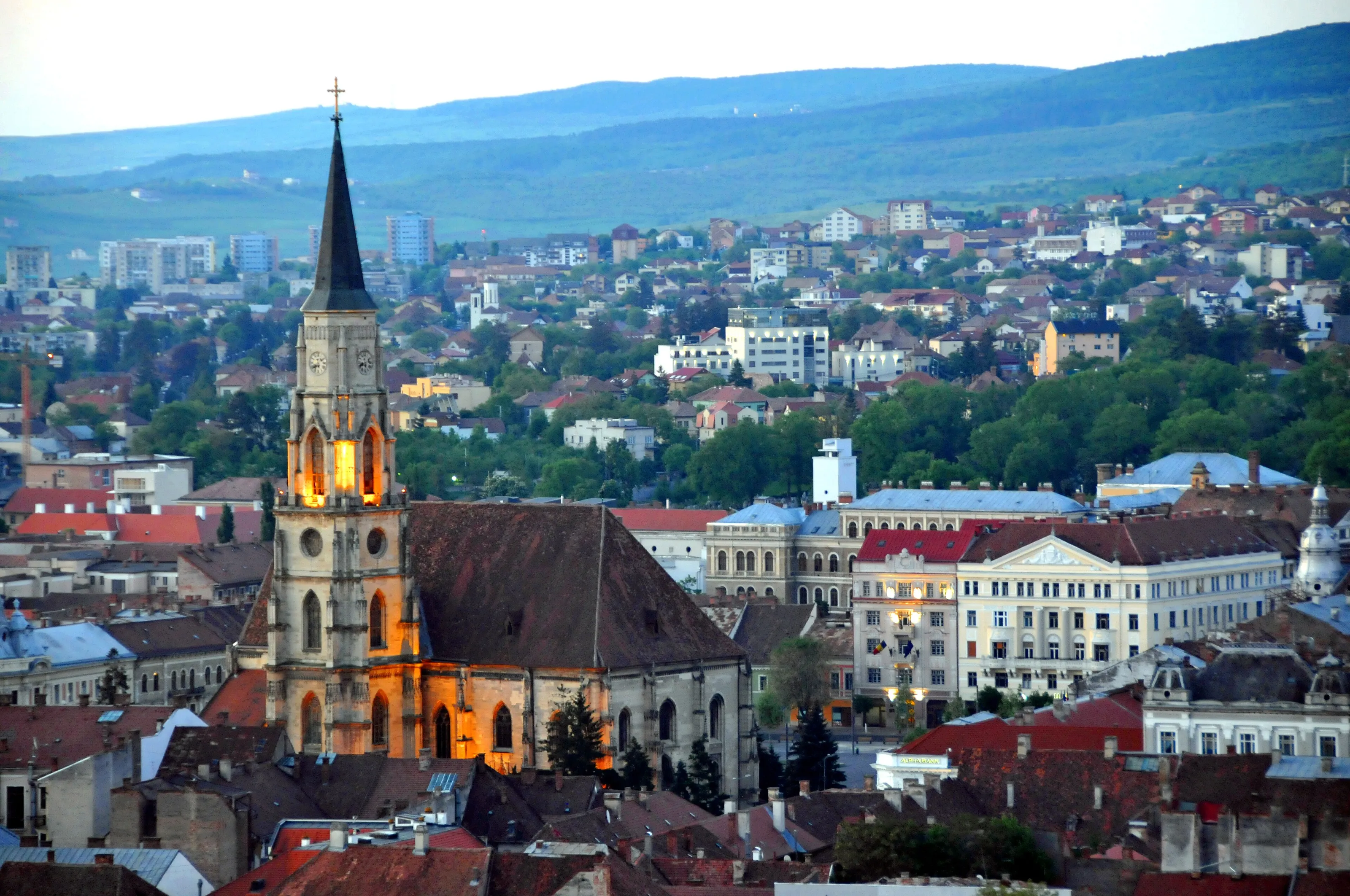
The church from above, at dusk
In the evening St Michael's Church is lit and its spire rises above the roofs of the centre. Fortress Hill (Dealul Cetății), a viewpoint reached on foot by steps from the centre according to Wikivoyage (EN), is the classic spot for taking in the whole city.
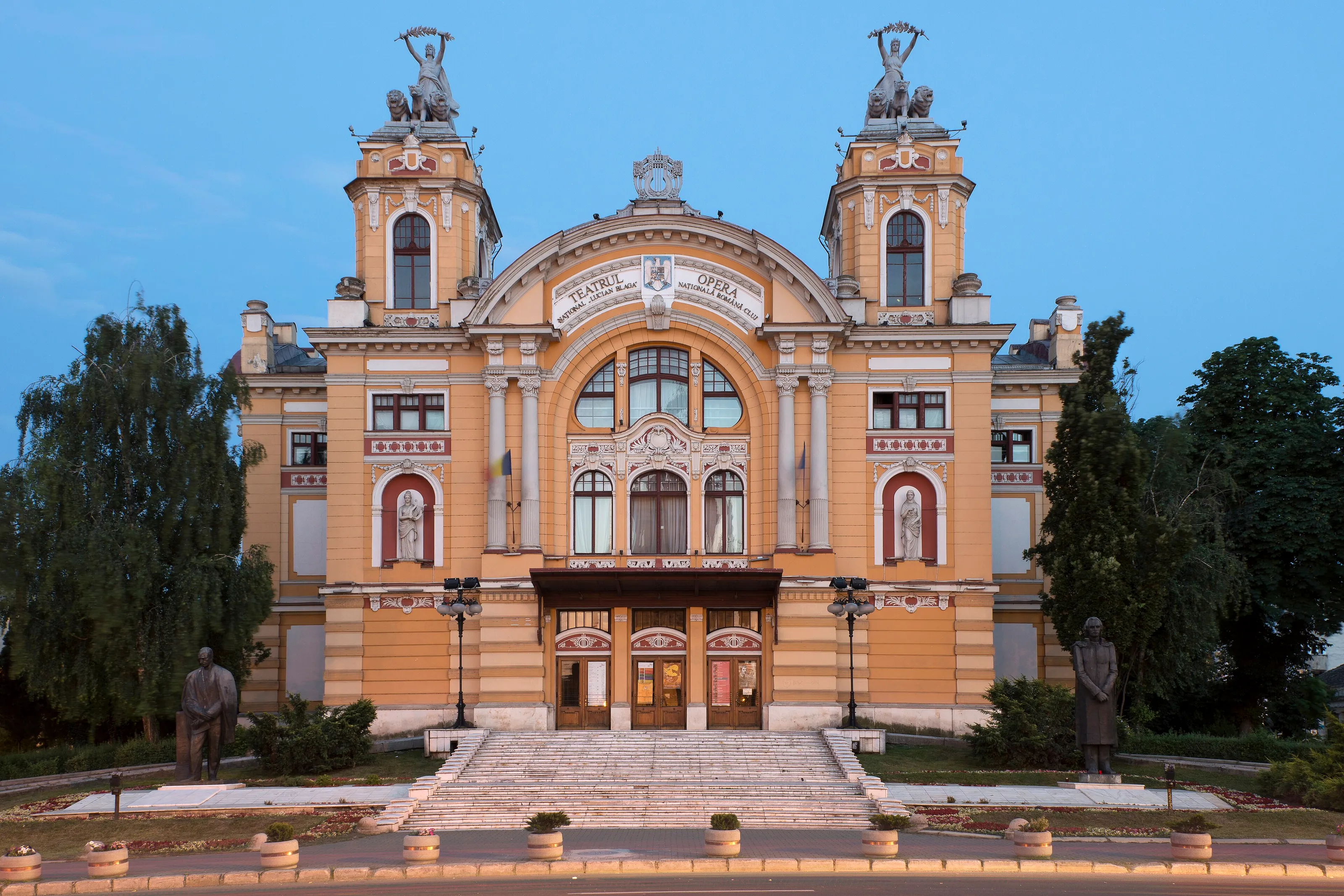
The Romanian National Opera
The Romanian National Opera shares its building with the Lucian Blaga National Theatre according to Wikivoyage (EN). It belongs to the Avram Iancu Square ensemble, which also includes the Palace of Justice, built between 1898 and 1902 according to Wikipedia (EN).
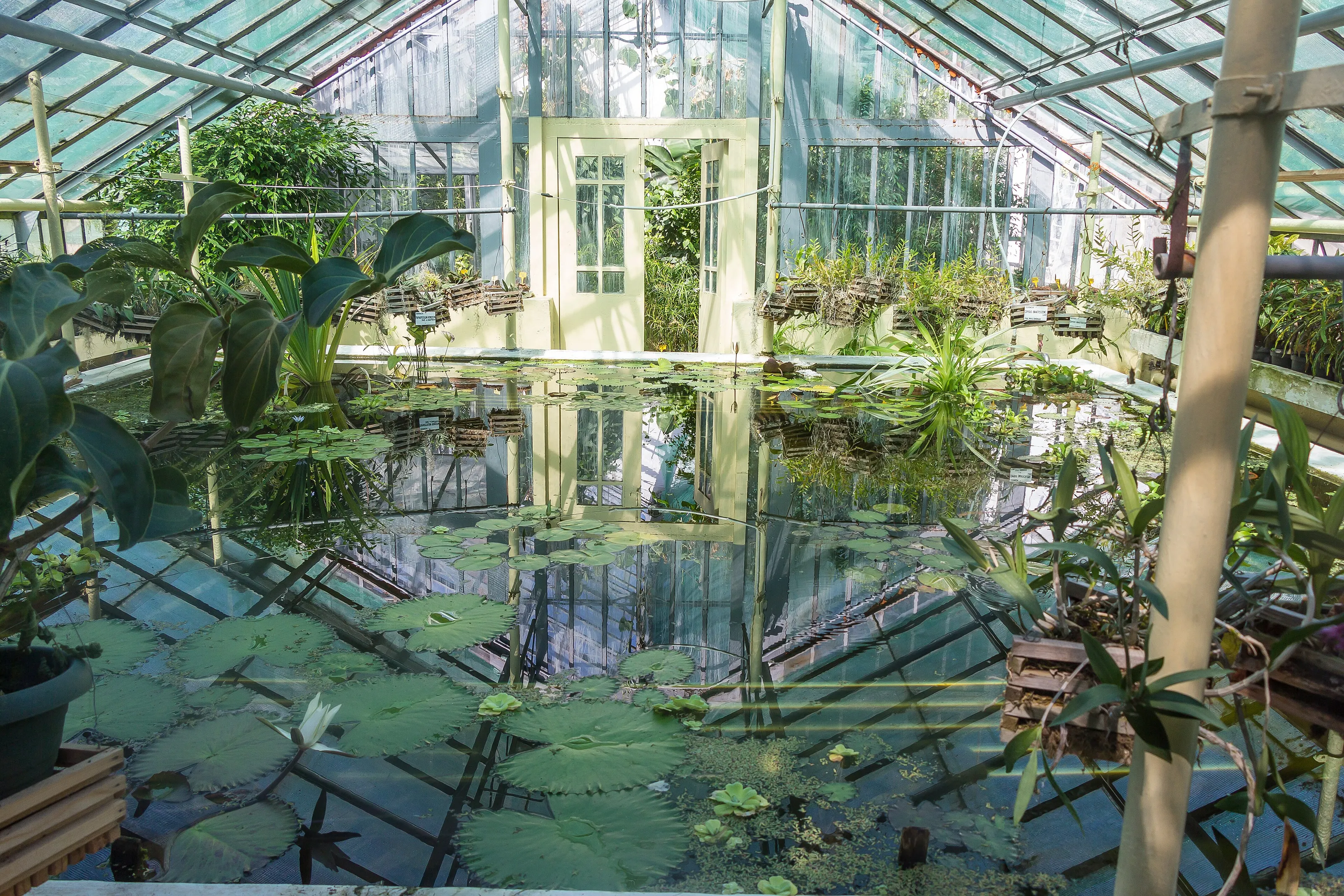
The botanic garden
The botanic garden, south of the centre, covers 14 hectares according to Wikivoyage (EN) and includes a greenhouse complex. It is a green pause that locals enjoy and a good refuge on rainy days.
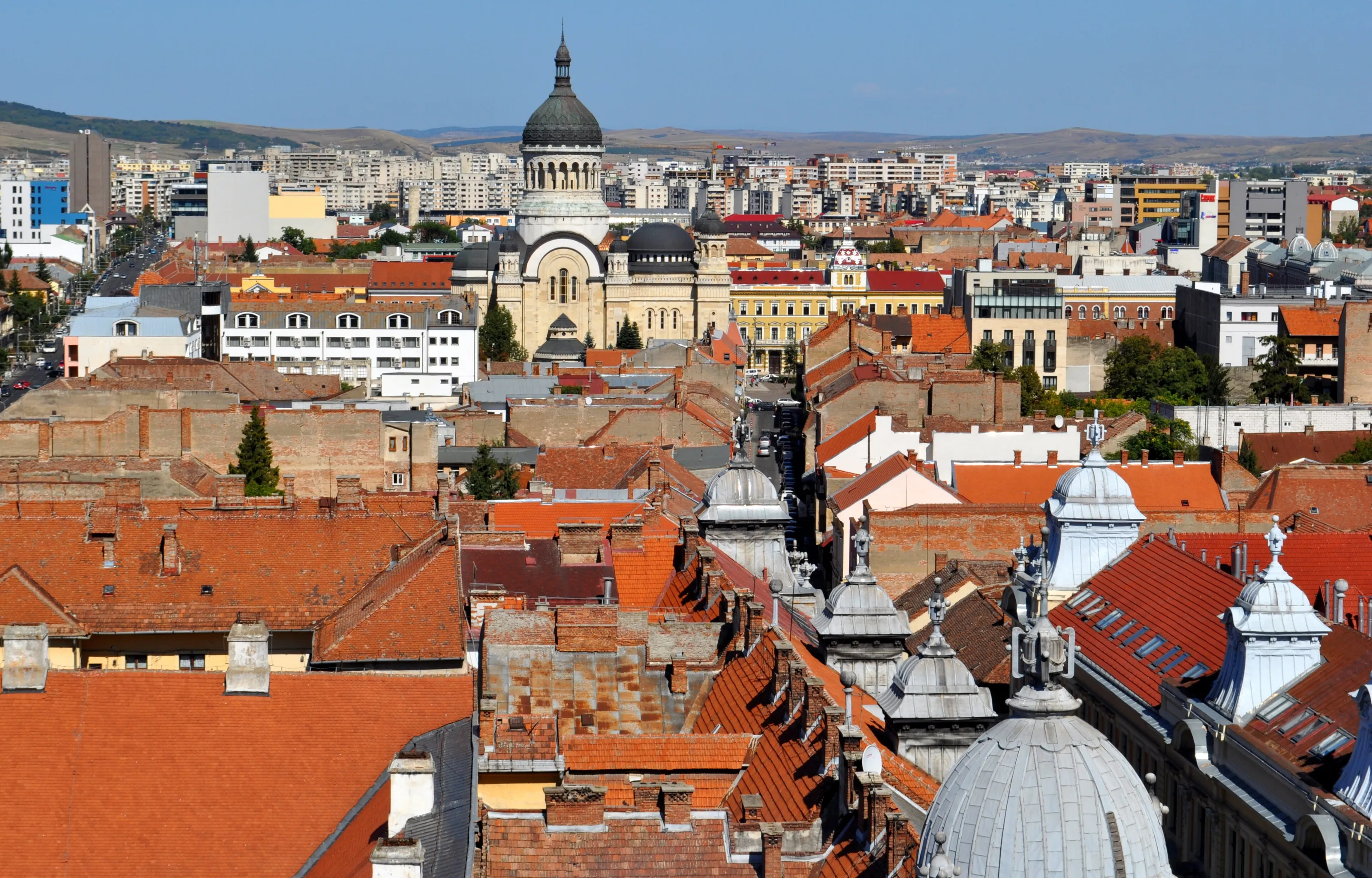
The roofs of the historic centre
The tiled roofs of the centre, the streets around Union Square and Iuliu Maniu Street, an architectural ensemble from the late 19th century according to Wikivoyage (EN), make a typical Austro-Hungarian townscape. In the background the Orthodox cathedral rises above the centre.
Other places are worth a detour: Museum Square, with the Franciscan monastery and the obelisk; Iuliu Maniu Street, also called Mirror Street; Central Park, with its lake and the 19th-century Old Casino restored in 2012 according to Wikivoyage (EN); the Tailors' Bastion, well preserved with a stretch of the medieval wall; and the Turda salt mine, about 40 minutes by bus according to SniperAir's Romania page.
Museums and culture
Museums: art, Transylvanian history and pharmacy
The National Art Museum
It occupies the Bánffy Palace, built between 1774 and 1775 according to Wikivoyage (EN), described by Wikipedia (EN) as the most representative Baroque civil building in Transylvania. It holds extensive collections of Romanian art.
The National Museum of Transylvanian History
Located in the centre, near Museum Square, this national museum is devoted to the history of Transylvania according to Wikivoyage (EN).
The Ethnographic Museum of Transylvania and the Romulus Vuia park
The museum presents the traditions of the region. The open-air ethnographic park gathers, over 16 hectares, buildings from Transylvanian villages of the 18th and 19th centuries, including churches and farmyards, according to Wikivoyage (EN).
The Pharmacy Museum
Housed in the Hintz House, which held the city's first pharmacy according to Wikivoyage (EN), it shows a medieval laboratory, powders and old remedies. The same source mentions a free audio guide.
Food and drink
Food and drink: Transylvanian cooking, tripe soup and cafes
Transylvanian cooking
According to Wikivoyage (EN), Transylvanian cooking blends Romanian and Hungarian traditions; Cluj also offers Italian, Asian and international restaurants. The local dish to try is varză à la Cluj, a cabbage dish served in simple places. Ciorbă de burtă, tripe soup, is another classic.
Traditional restaurants and homemade spirit
Some traditional restaurants tell the history of their dishes on the menu, and may offer a homemade spirit as a starter, according to Wikivoyage (EN). Meat dishes, soups and pastries are found everywhere in the centre.
Cafes and student life
Around Museum Square, bars and cafes put out terraces by day. Thanks to its many students, the city has a lively nightlife, with bars and clubs for every budget according to Wikivoyage (ES).
Getting around
Getting around Cluj-Napoca
On foot in the centre
The centre is compact: Union Square, Museum Square, Eroilor Boulevard and Iuliu Maniu Street can be covered on foot. The hills of the Fortress and Feleac are steeper.
Buses, trolleybuses and trams
The city has an urban network of buses, trolleybuses and trams according to Wikipedia (EN). Wikivoyage (EN) advises validating your ticket on board: checks are frequent and fines are sizable. Ticket-selling rules change: check the network's website.
Train and coach
The railway station is about 2 km north of the centre according to Wikipedia (EN). InterCity trains link it with Oradea, Arad, Timișoara, Brașov, Sighișoara and Bucharest according to Wikivoyage (EN), and there are connections to Budapest.
Taxi: choose a recognised company
Wikivoyage (EN) advises taking a taxi from a company identified by its name on the door and avoiding unmarked drivers who approach travellers at the station and airport. Booking apps are also common.
Budget and precautions
Budget and precautions
Price level
Romania uses the leu (RON), not the euro. According to Wikivoyage (EN), prices in Cluj are high compared with other Romanian cities but well below those of Western Europe. No figures are published here: prices vary and change every year.
Precautions
As in any big city, watch your belongings on crowded transport and in stations. Avoid unmarked taxis. The pedestrian streets of the centre are lively in the evening. Also check your own country's official travel advice before you leave.
When to go
When to go to Cluj-Napoca
Spring (March to May)
The change from winter to spring usually comes in the second half of March according to Wikipedia (FR); temperatures range from 0 to 22 degrees C according to Wikipedia (EN), with more frequent but milder rain.
Summer (June to August)
Warm, with an average of about 20 degrees C according to Wikipedia (EN), peaks of 35 degrees C in the centre and sometimes violent storms. June is the rainiest month according to Wikipedia (FR). Festivals cluster in summer.
Autumn (September to November)
Temperatures range from 0 to 22 degrees C according to Wikipedia (EN); the change to winter comes in November according to Wikipedia (FR).
Winter (December to February)
Temperatures are often below 0 degrees C but rarely drop below minus 10; snow covers the ground for about 65 days each winter according to Wikipedia (EN).
The climate is humid continental, with warm summers and cold winters according to Wikipedia (EN) and (FR). Aim for May to September for the city, or December for the winter atmosphere; July and August are the warmest months.
By length of stay
How many days in Cluj-Napoca
Historic centre
Two days are enough for Union Square, St Michael's Church, Museum Square, Fortress Hill and Central Park.
Museums and gardens
With three days, add the National Art Museum, the Ethnographic Museum, the Romulus Vuia park and the botanic garden.
Trips into Transylvania
With five days, head out to the Turda salt mine or Bonțida castle, then return for a last evening in the centre.
In pictures
Cluj-Napoca in pictures
You might also like
Similar destinations
FAQ
Frequently asked questions about flights to Cluj-Napoca
Where is Cluj-Napoca airport?
Avram Iancu Airport (CLJ) is about 9 km east of the centre, in the Someșeni district. Buses 5 and 8 and an express line reach the city according to Wikivoyage (EN).
What currency is used in Cluj-Napoca?
Romania uses the Romanian leu (RON), not the euro. Bank cards are widely accepted; change money at an official exchange office.
What should I see first in Cluj-Napoca?
Union Square and St Michael's Church, Museum Square, the National Art Museum, Fortress Hill, Central Park and the botanic garden.
When is the best time to visit Cluj-Napoca?
May to September for terraces and festivals, or December for the winter atmosphere. Winter is cold, with snow cover for about 65 days according to Wikipedia (EN).
Is English spoken in Cluj-Napoca?
Yes: according to Wikivoyage (EN), most educated people speak reasonably good English. Romanian is the official language and Hungarian is widely spoken.
Can I visit Transylvania from Cluj?
Yes, Cluj is a practical base: trains reach Brașov, Sighișoara and Oradea, and the Turda salt mine is about 40 minutes away by bus.
How much does a flight to Cluj-Napoca usually cost?
The price depends mainly on your departure city, the time of year and how far ahead you book. The "opportunities" section above shows real examples of prices SniperAir has already detected to this destination.
How do I get alerted when a flight to Cluj-Napoca drops below my budget?
Create an alert profile with your departure airport, Cluj-Napoca (CLJ) as the destination and your maximum budget. You are notified automatically as soon as a matching price is detected. SniperAir monitors and alerts, it does not sell or book tickets.
Ready to head to Cluj-Napoca?
Set your budget and let SniperAir monitor fares for you.
Create my alert