
Cheap flights to Vigo
Set your departure airport and maximum budget: SniperAir tracks prices to Vigo and alerts you the moment a deal matching your criteria appears.
Quick summary
Country
Spain
Continent
Europe
Airport
VGO
Currency
Euro (EUR)
Time zone
UTC+1 (UTC+2 during daylight saving time)
Deals already spotted to Vigo
Real flight examples detected by SniperAir, with their reference price.
Loading examples…
Why track Vigo with SniperAir
Galicia's big fishing port, facing the Cies Islands
Choose your departure
Enter your departure airport and your maximum budget for a flight to Vigo (VGO).
SniperAir keeps watch
Our systems continuously compare new prices with the real price history of the route. SniperAir monitors prices and alerts you: it does not sell or book tickets.
You receive an alert
As soon as a price matches your criteria, you are notified, without having searched for anything yourself.
Vigo is the most populous municipality in Galicia, in the province of Pontevedra in north-western Spain. English Wikipedia gives it 295,523 inhabitants in 2024 and ranks it 14th in Spain, and the municipal area stretches to include the Cies Islands. It sits on the southern shore of the Ria de Vigo, the southernmost of the Rias Baixas, around a natural harbour at the foot of Monte do Castro. Wikipedia (DE) calls it home to the largest fishing fleet in Spain, and Wikivoyage (EN) is frank about the rest: an industrial port, a big car factory and an old town, Casco Vello, that climbs steeply from the harbour. It is also known as the "city of olives" after a tree said to have survived a royal order to cut down Galicia's olive trees, and the olive remains on the city seal (Wikipedia EN). Visitors come for seafood, the ria, and above all the Cies Islands, about 15 km offshore, where the Rodas beach was named the best in the world by The Guardian in 2007 (Wikipedia EN, FR). This guide uses open sources only; SniperAir watches flight prices to VGO, compares them with the real history of the route and alerts you when one drops below your budget.
Airport and getting into town
An airport 10 to 15 km east of the centre, linked by city bus
Vigo - Vigo-Peinador Airport (VGO)
Vigo-Peinador Airport (VGO) lies east of the city, straddling the municipalities of Vigo, Redondela and Mos (Wikipedia EN, ES). The sources disagree on the distance to the centre: about 9 km in Spanish Wikipedia, 10 km in English and French Wikipedia and German Wikivoyage, 12 km in the English article on the city and 15 km in English Wikivoyage. Plan on 10 to 15 km by road. A city bus line run by Vitrasa (called 9A or C9A depending on the source) serves the airport roughly every 30 minutes (Wikipedia EN, ES; Wikivoyage EN). English Wikivoyage adds that flights are frequent from Madrid and that there is a daily flight from Barcelona and a summer service from London; routes change, so check them. We publish no timetable or fare.
Distance per Wikipedia (ES): 9 km; Wikipedia (FR, EN) and Wikivoyage (DE): 10 km; Wikivoyage (EN): 15 km. Santiago de Compostela (SCQ) and Porto (OPO) are nearby alternatives mentioned by Wikivoyage (EN). No fares or timetables are published, as they change.
For price alerts, VGO is the code to follow. Wikivoyage (EN) also suggests looking at flying into Santiago or Porto, since Porto has a shuttle bus to Vigo and trains run from Santiago, so extra alerts on those airports can be worthwhile. Entry rules, travel advice and flight availability can differ depending on where you start from: check your own government's official guidance and confirm the actual flights before you book.
Landmarks
Harbour, ria, the Cies Islands and the old town
Vigo is above all a city of sea landscapes: a harbour, a ria lined with beaches and a protected archipelago. The six views below are followed by other places mentioned in the sources.
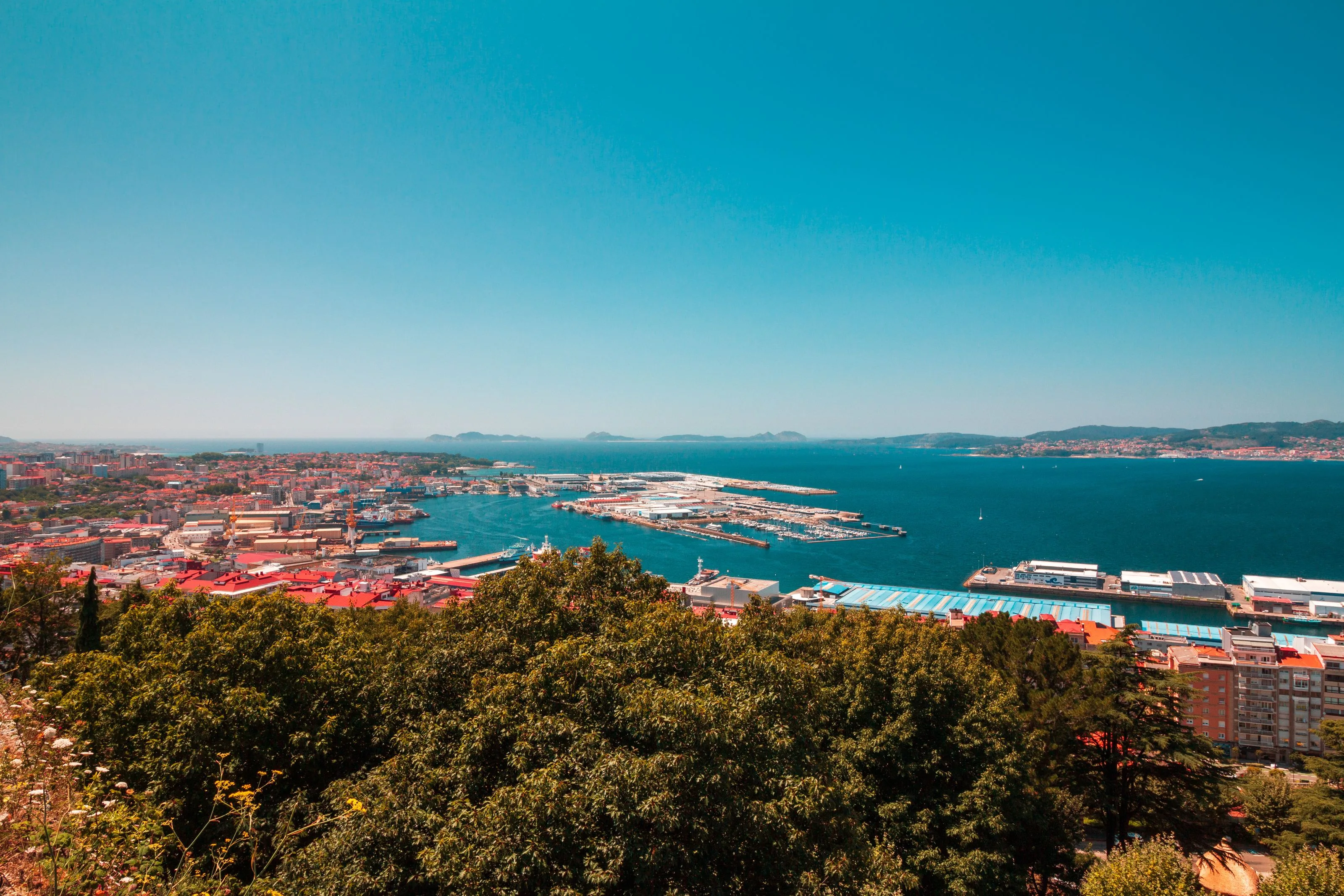
The harbour and ria from above
From the hills you can take in the whole port and the ria, about 35 km long according to Wikipedia (DE), opening out to the Atlantic. The city grew around this natural harbour, one of the largest in Spain (Wikipedia DE). The port also receives cruise ships, from which the old town is an easy walk (Wikipedia DE; Wikivoyage DE).
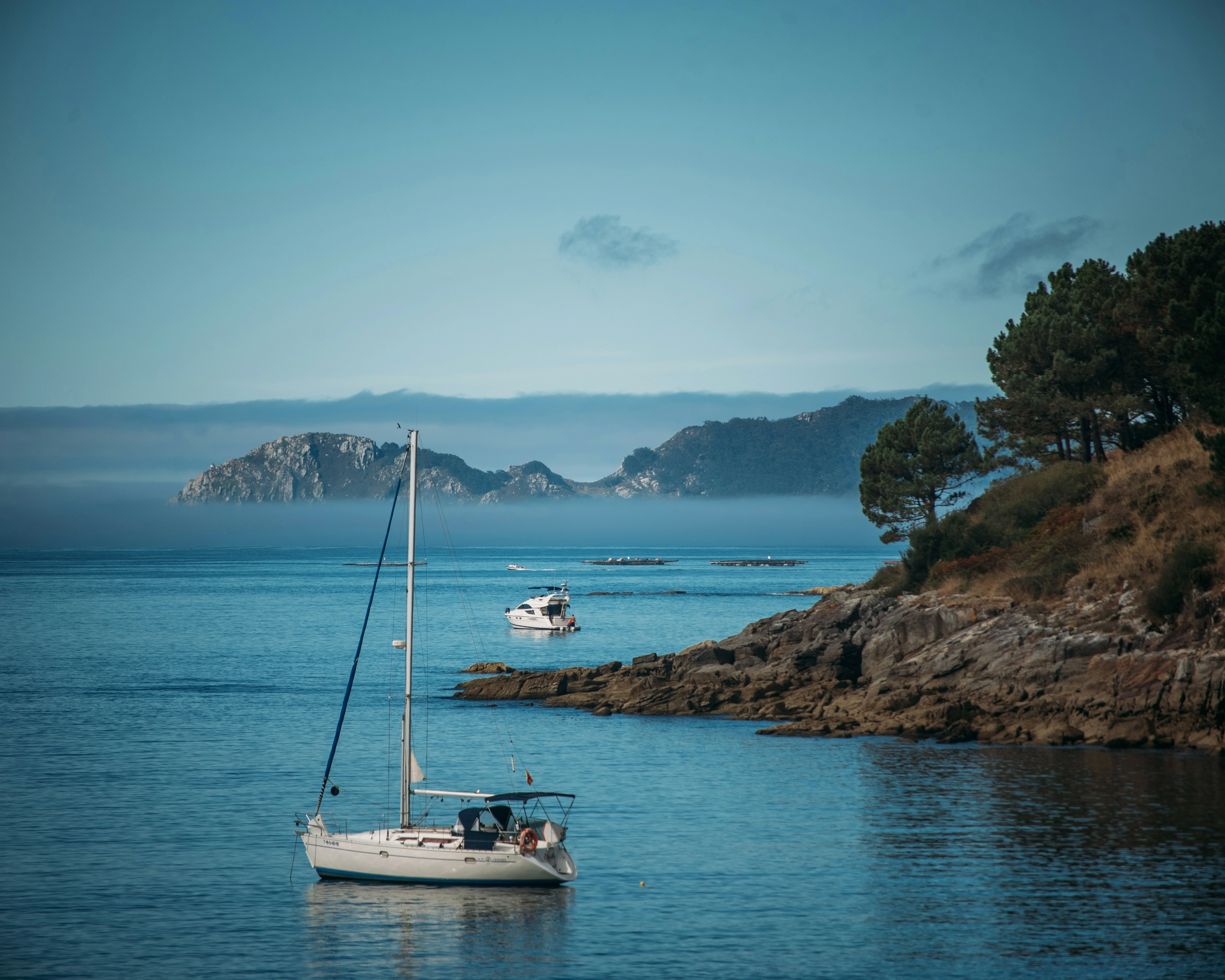
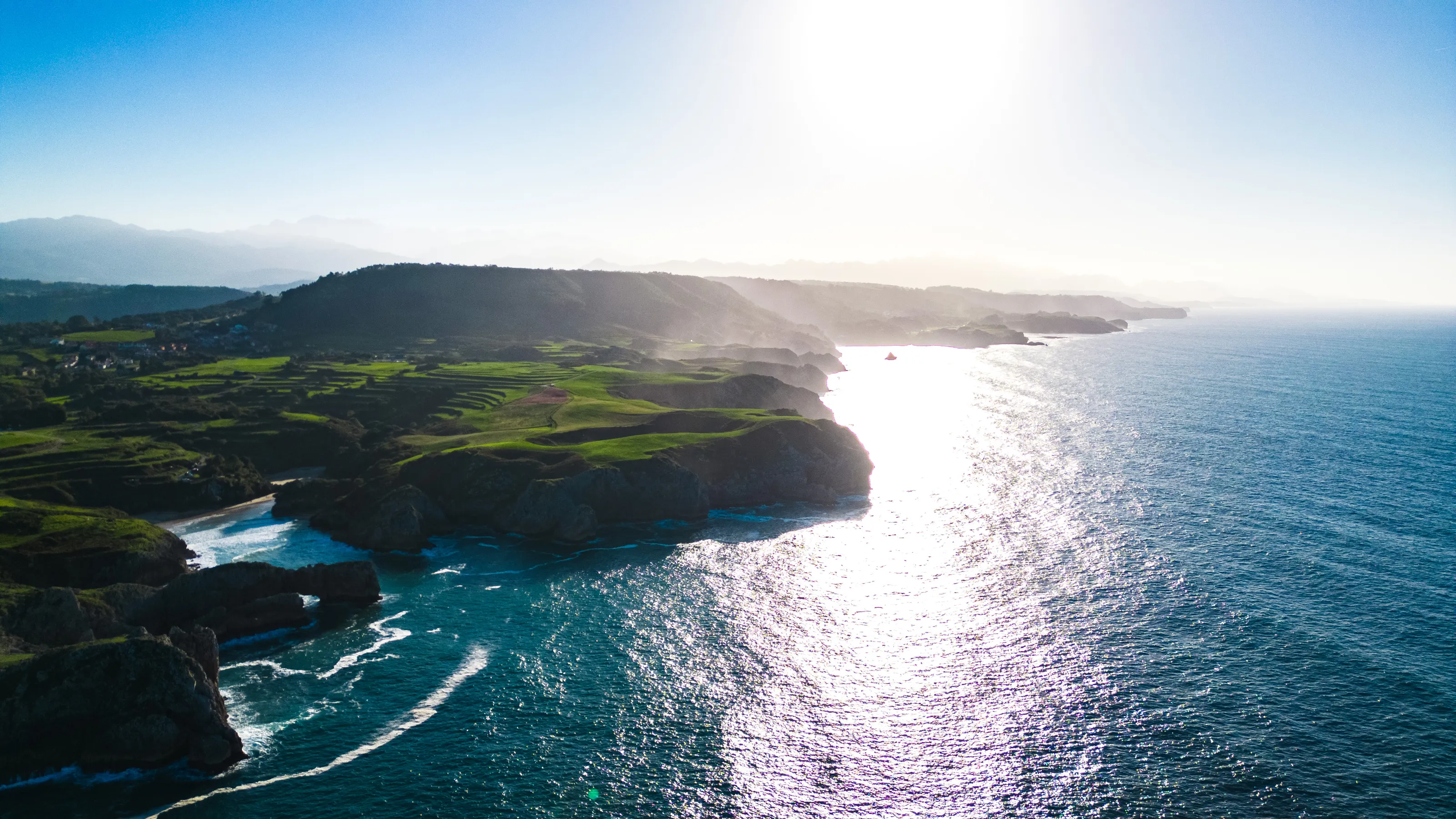
A rocky shoreline on the ria
The Ria de Vigo is the southernmost of the Rias Baixas, the deep estuaries of Galicia (Wikipedia EN). Its shores alternate rocky points, pines and calm water, with islands drawn faintly on the horizon. Regular ferries link Vigo with Cangas and Moana (Wikipedia EN, ES).
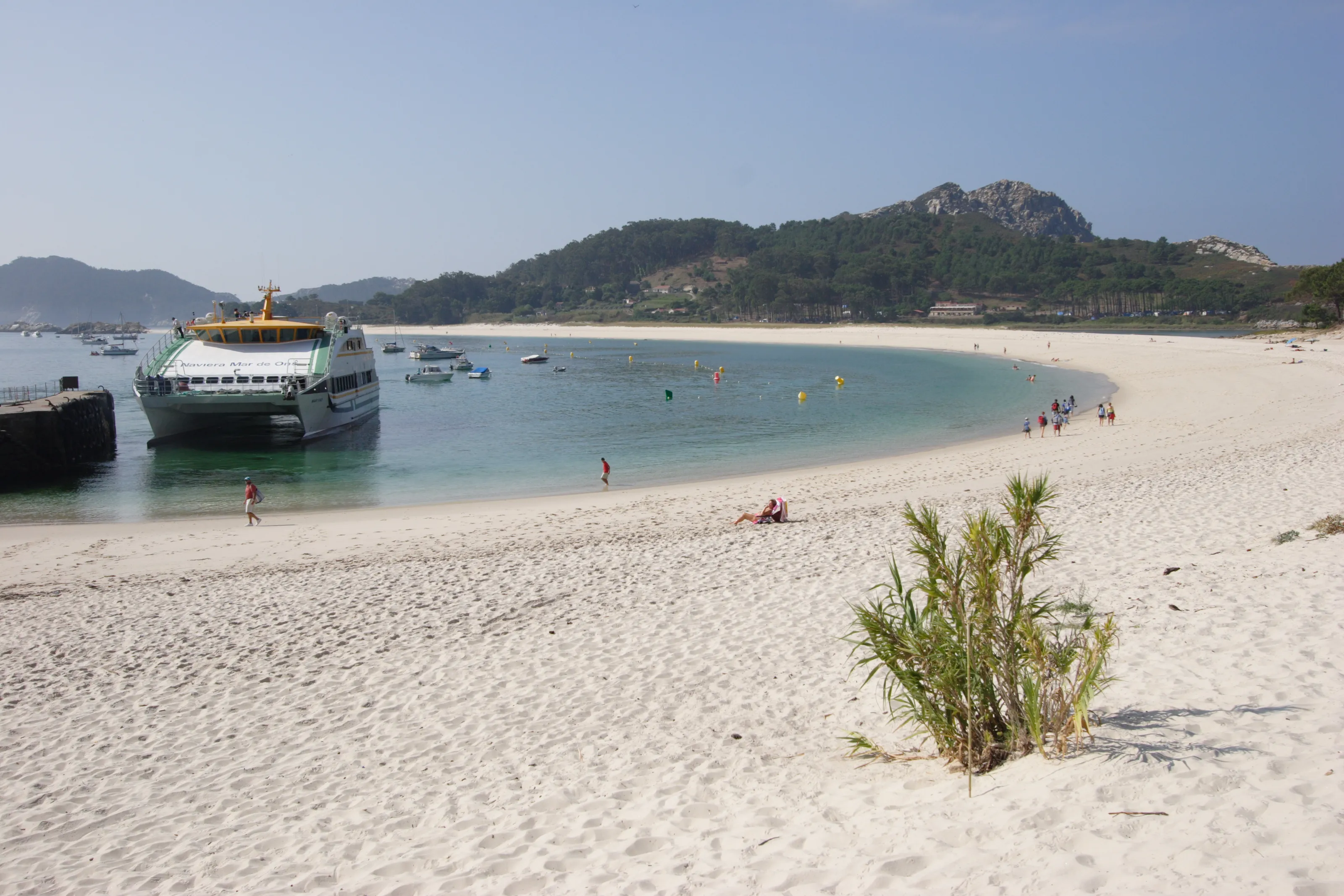
Rodas beach on the Cies Islands
The Cies are an archipelago at the mouth of the ria, about 15 km from Vigo, declared a nature reserve in 1980 and part of the Atlantic Islands of Galicia National Park created in 2002 (Wikipedia EN). Rodas beach, with fine white sand and clear water, was chosen by The Guardian as the best in the world in 2007 (Wikipedia EN, FR). In summer boats link the islands with Vigo, Baiona and Cangas (Wikipedia EN, ES), and German Wikivoyage says a free permit must be obtained before the crossing. There are no bins on the islands, so you take your rubbish back (Wikipedia EN).
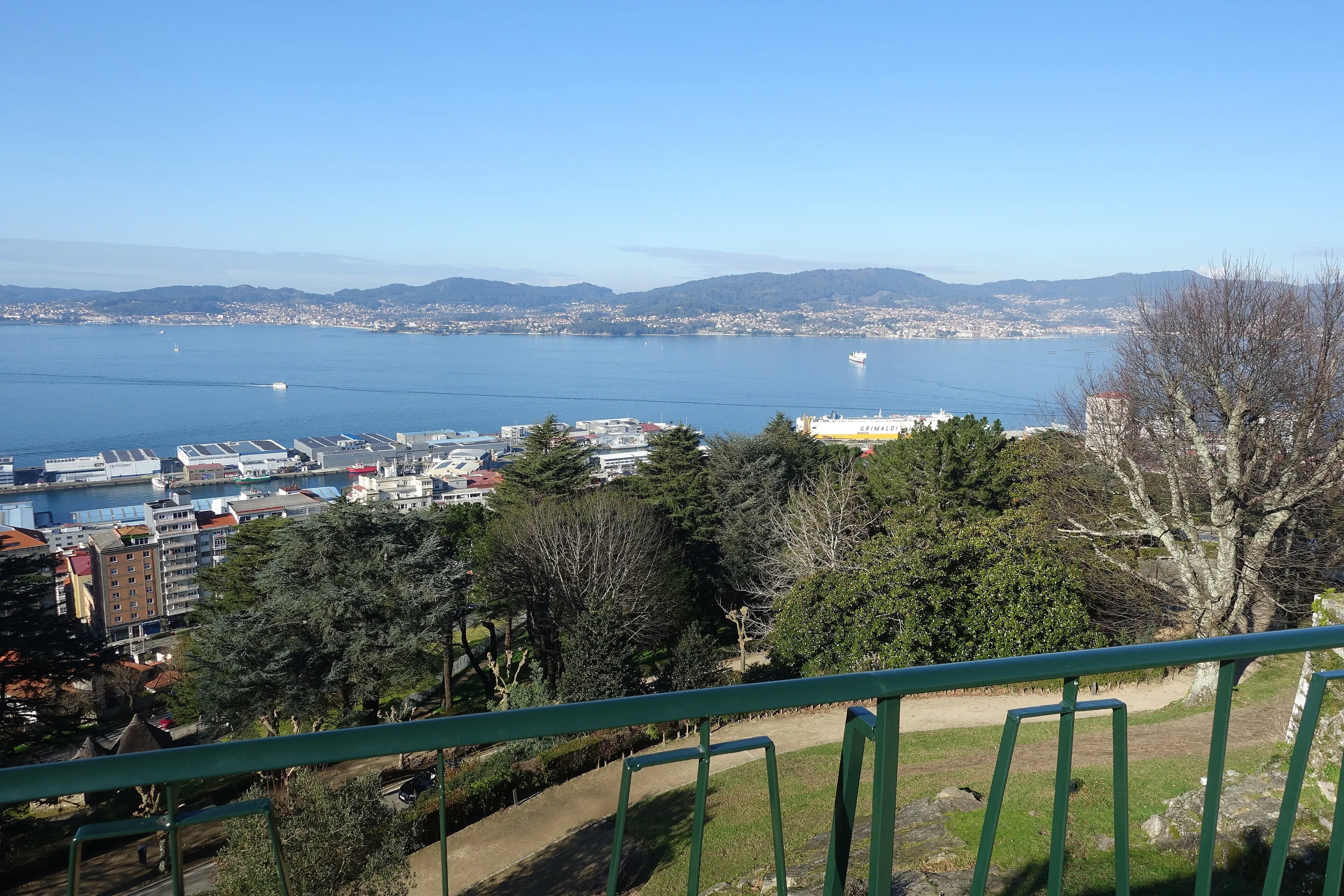
Castro Park and its fortress
Monte do Castro overlooks the centre. It holds the remains of a hillfort and a fortress with wide views across the ria (Wikipedia EN, ES). The Castle of San Sebastian, built in 1656 (Wikivoyage EN), stands lower down near the city hall. Spanish Wikipedia lists the Castro site and the fortress tunnels among the municipal museums.
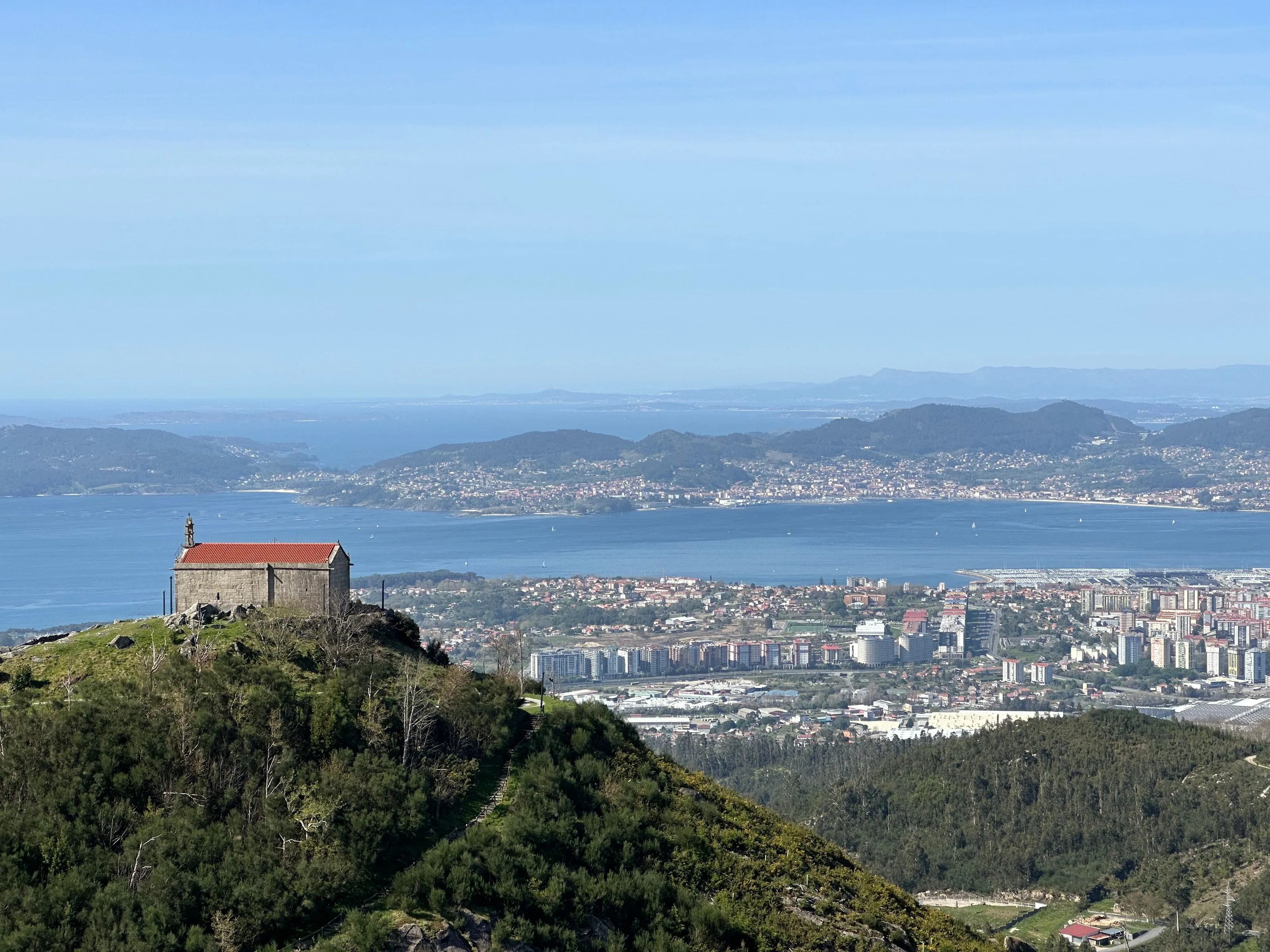
The hills around the city
Wooded hills rise around the ria and carry small chapels and walking trails. Spanish Wikipedia devotes a section to the municipality's natural areas: beaches, parks, hiking routes and the VigoNature programme.
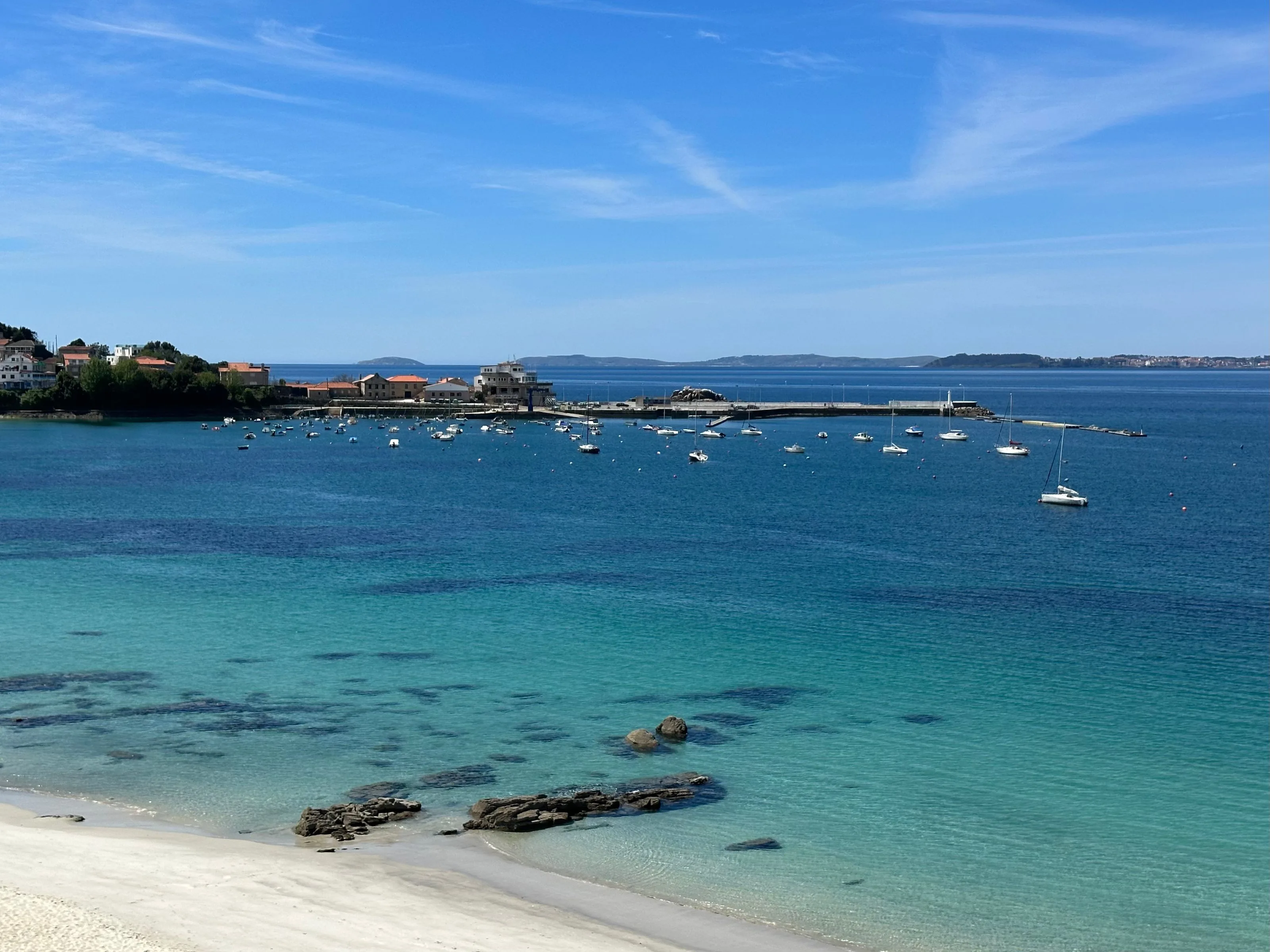
Beaches of the ria
English and Spanish Wikipedia count 47 coves and beaches within the municipality, from family beaches to wild coves; several have flown the Blue Flag in some years, which changes with each edition. The closest to the centre are Bouzas and Santa Baia (Wikivoyage EN); Samil, Rodas and Vao are among those named by Wikipedia (EN).
Also worth knowing: the Casco Vello, a historic quarter declared a site of cultural interest, with streets such as Cesteiros and Pescaderia and the Berbes square (Wikipedia ES); the neoclassical Co-Cathedral of Santa Maria, early 19th century (Wikivoyage EN; Wikipedia FR); the Puerta del Sol, a meeting point in the heart of the old walled town, adorned by the statue of the Sireno, a merman with legs (Wikivoyage EN); the Jules Verne monument on the waterfront, showing the writer on a giant squid, recalling the chapter of Twenty Thousand Leagues under the Sea set in Vigo Bay after the battle of 1702 (Wikivoyage EN; Wikipedia FR); and Castrelos Park, the city's main green lung (Wikipedia ES).
Museums and culture
Sea museum, contemporary art and foundations
The Museum of the Sea
The Museo do Mar de Galicia is dedicated to the sea, fishing and the canning industry and includes an aquarium of regional marine species (Wikipedia FR, EN). The building was designed by well-known architects including Aldo Rossi and Cesar Portela (Wikipedia EN). We give no prices or opening hours.
MARCO and the Quinones de Leon museum
MARCO, the Museum of Contemporary Art, occupies the former courthouse and shows photography, sculpture and painting (Wikipedia FR); English Wikipedia counts it among the most important contemporary art museums in Spain. The Quinones de Leon municipal museum at Castrelos is the oldest in the city and was donated by the Marquis of Alcedo in 1925 (Wikipedia FR, EN).
Verbum, Liste and more
Wikipedia (EN, ES) also names Verbum, the House of Words, devoted to languages and communication, the Liste ethnographic museum, the Francisco Fernandez del Riego picture gallery and a museum of the canning industry; Wikivoyage (EN) adds the Garcia Barbon theatre. Programmes and opening days change, so check before you go.
Food and drink
Seafood, Galician octopus and queimada
Fish and shellfish
According to Spanish Wikipedia, Vigo's cooking rests on Galicia's coastal cuisine: rice with lobster, squid in its ink, scallop empanada, Galician-style octopus, Galician-style monkfish, grilled sardines and shellfish, which visitors prize. French Wikipedia describes an unusual market in the Berbes quarter where women sell oysters to be eaten in the neighbouring bars.
Desserts and drinks
Desserts follow Galician tradition: filloas, fried milk and cheesecake (Wikipedia ES). Wikivoyage (EN) notes that the crisp white wines of Galicia and northern Portugal are close by, and describes queimada, a marc-style spirit flavoured with herbs, sugar, lemon peel and cinnamon, set alight while a traditional spell is recited. Spanish Wikipedia also mentions the furanchos, home-run wine houses that open during the San Blas festival in Bembrive.
Where to eat
The streets of the Berbes and the Casco Vello are the main places for tapas and seafood; Wikivoyage (EN) simply says that the city has "squillions" of bars serving tapas. We name no restaurants or brands.
Getting around
Buses, public lifts, boats and trains
Buses and public lifts
The city is built on slopes, and Spanish Wikipedia describes a network of more than fifteen lifts, staircases and moving ramps under the Vigo Vertical plan, now the most used way to get around, ahead of the city bus. Urban buses are run by Vitrasa (Wikipedia EN; Wikivoyage EN). We publish no fares.
Boats to the islands and the north shore
Ferries link Vigo with Cangas and Moana, and tourist services extend to the Cies, Ons, San Simon and Tambo islands in summer (Wikipedia ES; Wikivoyage EN). German Wikivoyage says access to the Cies needs a prior permit, so check the current rules.
Rail and road
Vigo has two railway stations, Urzaiz and Guixar (Wikipedia ES; Wikivoyage EN), about 500 m apart according to Wikivoyage (EN). That guide mentions frequent trains to Santiago de Compostela and a train to Porto, while Wikipedia (DE) lists links to Madrid, Barcelona, Valencia and Bilbao. By road, Santiago is roughly 86 to 90 km away and Porto about 150 km (Wikipedia FR; Wikivoyage DE).
Budget and precautions
Budget, health and general precautions
Price level
Wikivoyage (EN) presents Vigo as an industrial port city rather than a polished resort. The open sources we read do not allow us to publish reliable, cross-checked price ranges, so we give no amounts. The currency is the euro.
Flights, entry rules and insurance
SniperAir monitors prices to VGO and compares them with the route's history, but it does not sell or book tickets. Entry rules, travel advice and health cover depend on where you travel from and may change, so check your government's official guidance before booking.
Rain, sea and local checks
Pack a waterproof layer even in summer (see the climate section). For swimming, beaches vary in quality and services: follow local signs and safety instructions.
When to go
A mild Atlantic climate, wet in winter and drier in summer
Winter
Winters are mild but wet: English Wikipedia notes that the heaviest rain falls in winter, and English Wikivoyage sums up the climate as "mild and rainy", dominated by the Atlantic.
Spring
A mild transition season. The Reconquest festival marks the ousting of Napoleonic troops on 28 March 1809 and is usually held a week or two later, in April, depending on Easter (Wikivoyage EN).
Summer
Summer is markedly drier: Wikipedia (EN, ES) mentions a pronounced summer dry spell, which makes it the best season for the Cies Islands and the beaches. Spanish Wikipedia warns that the airport weather station is colder and foggier than the city, so its readings understate how mild the city is.
Autumn
The season brings the Atlantic rains back; English Wikipedia calls Vigo the rainiest city in Galicia.
English Wikipedia describes a warm-summer Mediterranean climate (Csb), Spanish Wikipedia a temperate oceanic one (Cfb): the label varies, the picture of a mild, damp climate does not. The airport station records about 1,700 mm of rain and 126 to 130 rainy days a year (Wikipedia EN, ES), higher figures than in the city centre according to Spanish Wikipedia.
By length of stay
What to do in Vigo depending on how long you stay
The essentials
The Casco Vello and the Berbes, the co-cathedral, the Puerta del Sol, the Castro for the view, and a seafood meal.
Vigo in depth
The Museum of the Sea, MARCO, Castrelos Park, the ria's beaches and a crossing to the Cies Islands in season, with a prior permit.
Beyond the city
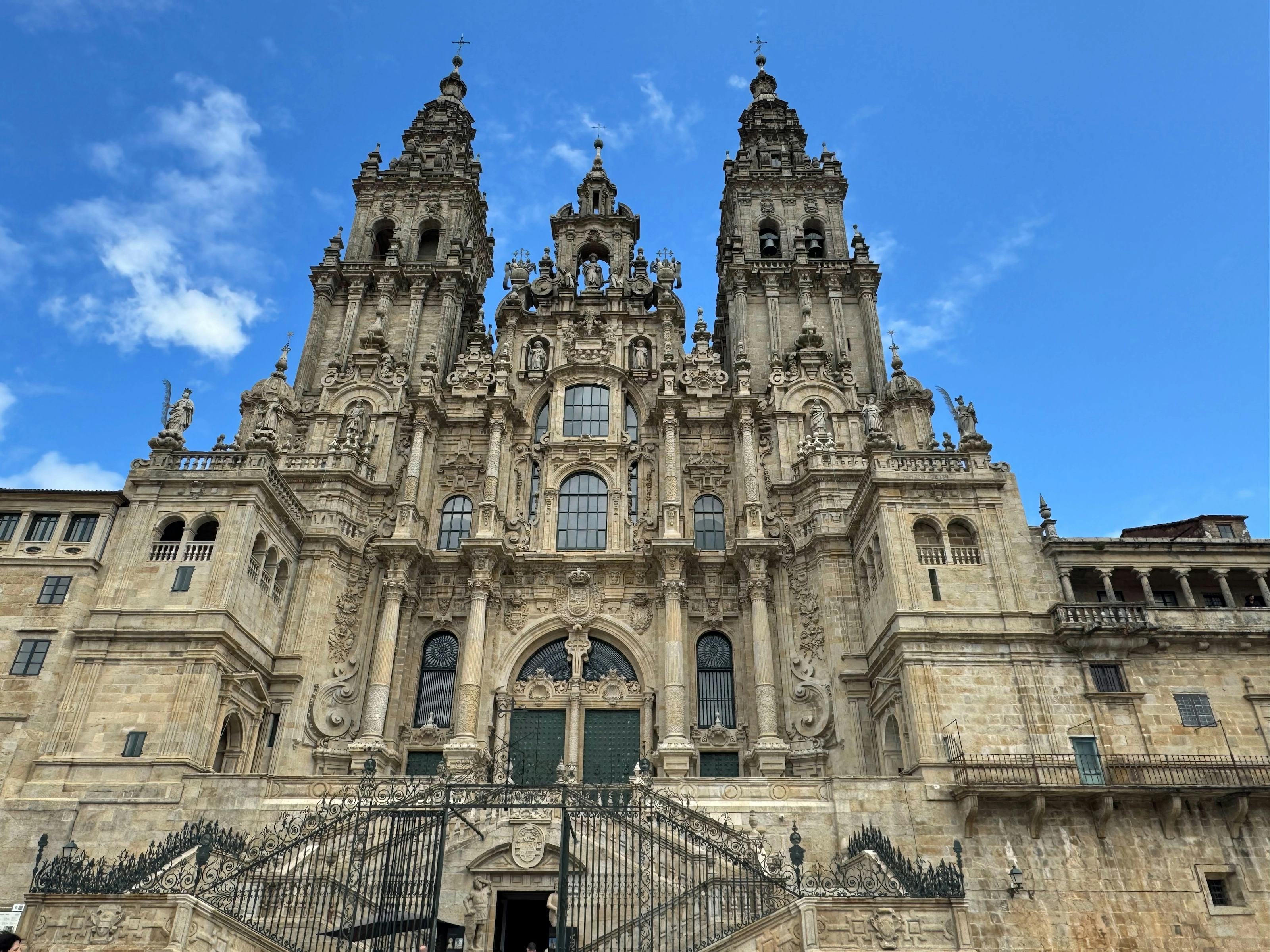
Baiona, Pontevedra, Santiago de Compostela, Tui or Porto. Wikivoyage (EN) notes that Vigo is the start of the Portuguese Coastal Way to Santiago, about 100 km.
In pictures
Vigo in pictures
You might also like
Similar destinations
FAQ
Frequently asked questions about flights to Vigo
How far is VGO airport from Vigo?
Vigo-Peinador Airport (VGO) is east of the city, roughly 10 to 15 km depending on the source (Wikipedia FR, EN; Wikivoyage EN, DE), with a Vitrasa bus line to the centre (Wikipedia EN, ES).
What should I see first in Vigo?
The Casco Vello and the Berbes, the co-cathedral, the Castro with its view over the ria and above all the Cies Islands, according to Wikipedia (FR, EN, ES) and Wikivoyage (EN).
Can I visit the Cies Islands from Vigo?
Yes, by seasonal boats from Vigo, Baiona and Cangas (Wikipedia EN, ES). German Wikivoyage says a free permit is required, so check the current rules before you travel.
What should I eat in Vigo?
Shellfish, Galician octopus, monkfish, grilled sardines and oysters in the Berbes, according to Wikipedia (ES, FR). English Wikivoyage also describes the queimada.
What entry requirements apply for Spain?
They depend on where you travel from and may change: check your own government's official guidance before booking.
How many days do I need in Vigo?
Two days cover the city and its harbour, three or four add the museums, beaches and the Cies Islands, and five or more allow trips to Baiona, Pontevedra and Santiago de Compostela.
How much does a flight to Vigo usually cost?
The price depends mainly on your departure city, the time of year and how far ahead you book. The "opportunities" section above shows real examples of prices SniperAir has already detected to this destination.
How do I get alerted when a flight to Vigo drops below my budget?
Create an alert profile with your departure airport, Vigo (VGO) as the destination and your maximum budget. You are notified automatically as soon as a matching price is detected. SniperAir monitors and alerts, it does not sell or book tickets.
Ready to head to Vigo?
Set your budget and let SniperAir monitor fares for you.
Create my alert