
Cheap flights to Vancouver
Set your departure airport and maximum budget: SniperAir tracks prices to Vancouver and alerts you the moment a deal matching your criteria appears.
Quick summary
Country
Canada
Continent
North America
Airport
YVR
Currency
Canadian dollar
Time zone
UTC-8
Deals already spotted to Vancouver
Real flight examples detected by SniperAir, with their reference price.
Loading examples…
Sea to sky
Flights to Vancouver, where you can swim and ski on the same day
Flights to Vancouver land you on the Burrard Peninsula, between Burrard Inlet and the Fraser River, facing the North Shore Mountains. Within one metro area you get the Pacific, a rainforest park and ski slopes, which is why the city is long ranked among the most liveable in the world.
The mildest climate in Canada
Sheltered by the mountains and open to the Pacific, Vancouver has a mild, wet oceanic climate, the most temperate of any major Canadian city. Its position on the coast also puts it on the migration route of several whale species.
Hollywood North
Vancouver is also a major film and television production hub, nicknamed "Hollywood North".
Stanley Park
A rainforest park on the edge of downtown
About 400 hectares of trees and shoreline
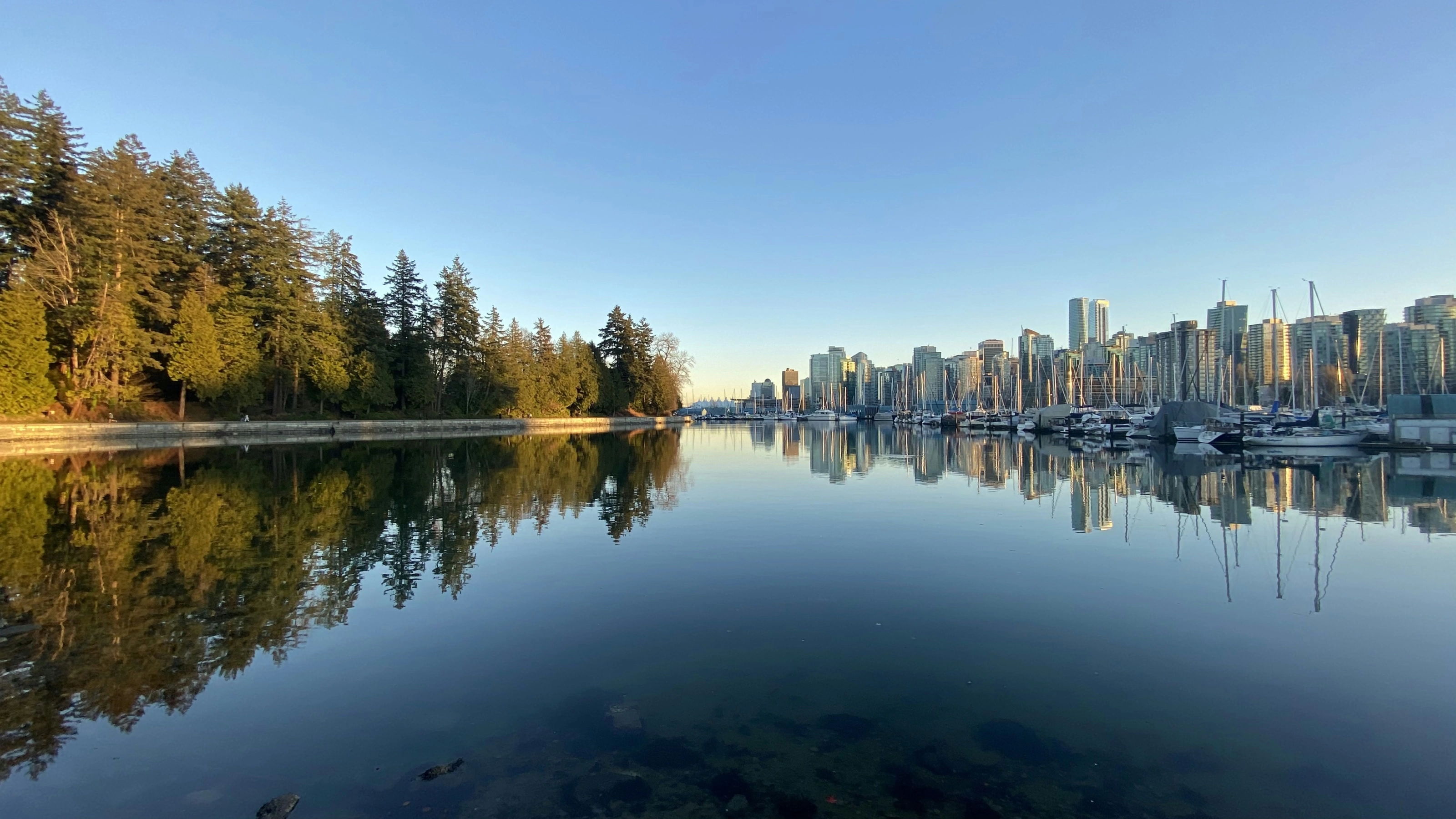
Opened in 1888, Stanley Park covers about 400 hectares of temperate rainforest at the tip of the peninsula, next to downtown. Look out for its totem poles, its beaches and the Vancouver Aquarium. It is one of the largest urban parks in North America and the natural first stop of any visit.
The Seawall
The Vancouver Seawall, a waterfront path, wraps around the park and continues along the shore of the city. It is the favourite route for walking and cycling, with views of the harbour, the mountains and the Pacific.
A young city
Gastown, Coast Salish land and the city's neighbourhoods
Gastown, the original district
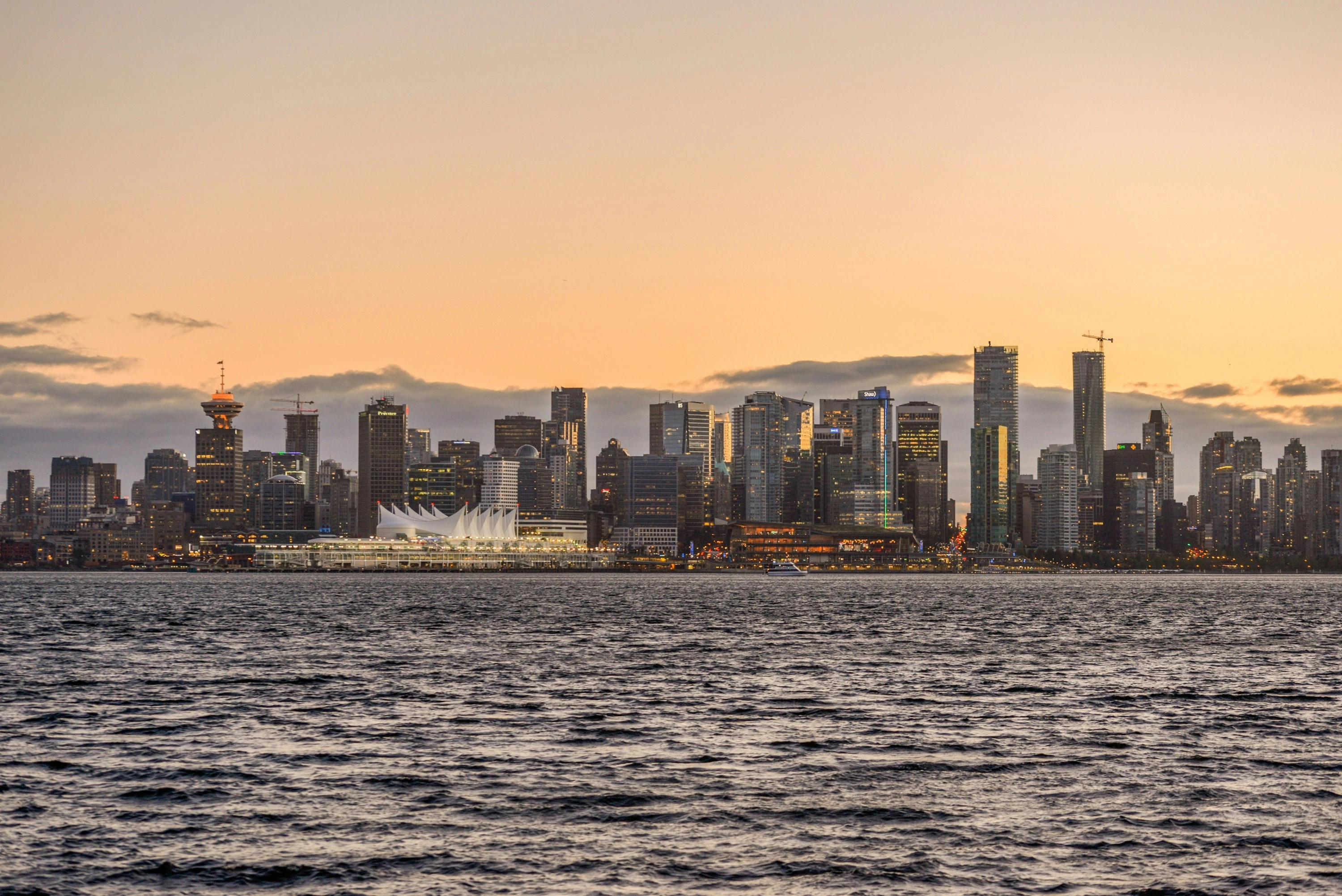
Vancouver was only incorporated in 1886, but Indigenous communities shaped this land for a very long time before. Gastown, the oldest district, grew around a saloon opened in 1867. Its heritage brick buildings now hold restaurants, cafes, shops and cocktail bars, and its steam clock is a favourite photo stop.
Yaletown, the West End, Kitsilano and Davie Village
The other neighbourhoods to explore. Yaletown fills former warehouses with restaurants; Davie Village, the historic LGBTQ+ district, is lively all year.
Coast Salish peoples
The Squamish, Musqueam and Tsleil-Waututh nations, all Coast Salish, lived here long before Europeans arrived. The Museum of Anthropology at the University of British Columbia is the place to discover that heritage. The city was incorporated on 6 April 1886 and largely destroyed by fire two months later.
City beaches
Sandy beaches inside the city
Vancouver has real city beaches: English Bay, Kitsilano, Spanish Banks and Jericho, plus Wreck Beach near the university campus, which is clothing-optional. They are at their best from mid-June to early September, when the weather is dry and sunny; the water stays cool.
North Shore
Grouse Mountain and the Capilano canyon
The Capilano Suspension Bridge
The bridge hangs about 70 m above the river in North Vancouver, a short drive or shuttle ride from downtown, and is one of the region's headline attractions.
Grouse Mountain
Nearby, Grouse Mountain offers views over the city, skiing in winter and hiking the rest of the year. More broadly, the mountains make Vancouver a base for hiking and outdoor sports.
The SeaBus
This passenger ferry links downtown to North Vancouver in about a dozen minutes: a simple, scenic crossing.
Asian gardens
Two gardens for a pause
The Dr. Sun Yat-Sen Classical Chinese Garden
Described as the first authentic classical Chinese garden built outside China, it was made using fourteenth-century methods, without power tools. Koi ponds and traditional architecture, in Chinatown.
The Nitobe Memorial Garden
A peaceful Japanese garden with koi ponds and arched bridges, on the university campus.
Museums and culture
First Nations, fine art and science
Museum of Anthropology (UBC)
On the University of British Columbia campus, it presents the art and culture of the Indigenous peoples of the Pacific Northwest Coast, including large totem poles. It is the museum not to miss.
Vancouver Art Gallery
Housed in the former courthouse near Robson Square, it focuses on Canadian and West Coast art, with temporary exhibitions.
Science World
An interactive science museum under a geodesic dome beside False Creek, popular with families. Check opening hours and closures; we do not quote fares, which change.
Food
Pacific flavours and Asian influences
Restaurants reflect the city's strong Asian heritage. Sushi and Pacific Northwest cuisine are the signatures, alongside coffee culture and a big craft-beer scene.
Granville Island Public Market
A large covered market of fresh produce, seafood, specialities and light bites. The restaurants around it cost more, so eating a casual lunch outside is often the better choice.
Dine Out Vancouver
From late January to mid-February this festival, billed as Canada's largest food celebration, brings hundreds of restaurants together around fixed-price menus.
Richmond and its night market
Just south of the city, Richmond is known for authentic Asian cooking: Chinese, Japanese, Vietnamese. From May to October its night market offers dumplings, skewers and bubble waffles.
Getting there
An airport about 12 km away, linked to downtown by SkyTrain
Vancouver International
It sits on Sea Island in Richmond, about 12 km south of downtown. The Canada Line, part of the SkyTrain, reaches downtown in about 25 minutes, with an airport surcharge on fares. A taxi takes 20 to 30 minutes depending on traffic, on fixed zone fares. When the SkyTrain is closed overnight, a night bus takes over. The terminal handles both international and domestic flights.
Distances and times are indicative, cross-checked on Wikivoyage (EN, FR); they vary with traffic. Fares are not quoted because they change.
Whistler, the world-famous ski resort, is about two hours away by road. For a stay in the city itself, a car is not necessary.
Getting around
SkyTrain, buses and the SeaBus on one network
SkyTrain, buses and SeaBus
The TransLink network combines the SkyTrain, an automated light metro, many bus routes and the SeaBus to North Vancouver. A single fare allows transfers for a limited time.
Compass Card and contactless
A Compass Card gives discounted fares, and contactless bank cards also work at the gates. Children 12 and under ride free. Fares depend on the zones crossed and are simpler on weekends and evenings.
On foot, by bike, by taxi
Downtown is walkable and the Seawall is ideal by bike. A small ferry serves Granville Island from downtown. Taxis and ride-hailing are available.
Budget and entry
A high price level, among the most expensive cities in Canada
Price level
Vancouver is regarded as one of the most expensive cities in Canada, on a par with Toronto, and accommodation is the biggest item. Markets, neighbourhood meals and public transport help keep costs down. We give no figures, because prices vary with the season and exchange rate.
Flights
The flight is the most variable cost. SniperAir tracks prices to YVR and compares them with the route's history; it does not sell or book tickets.
Entry and precautions
Canada generally requires an electronic travel authorisation or a visa depending on nationality: check the official Government of Canada website. Also consult your home country's official travel advice. In town, usual city common sense is enough; some parts of the east side of downtown have visible social problems, so stay aware. In the mountains, check the weather and wildlife advice before any hike. Tipping is customary in restaurants, as service is not always included in the bill.
When to go
When to visit Vancouver
Spring (March to May)
Cooler and still damp, but blossoms and flowers brighten the city from early March.
Summer (mid-June to early September)
Long, sunny and dry, with comfortable temperatures, around 23 C by day in late July. This is the best time for the beaches, the Seawall and day trips.
Autumn (September to November)
The first months are still pleasant, then the rain returns; the city is quieter and cheaper.
Winter (November to March)
Mild but wet and grey, often 5 to 8 C by day, with little snow in town. In the mountains the ski season is in full swing.
Vancouver is sometimes nicknamed the Wet Coast: pack a rain jacket in any season. The best window for a first visit runs from June to September.
Day trips
Whistler, Squamish and Victoria
Whistler
A world-famous ski resort and a venue of the 2010 Winter Olympics, about two hours by road along the Sea to Sky Highway.
Squamish
About an hour north, a base for climbing and hiking.
Victoria
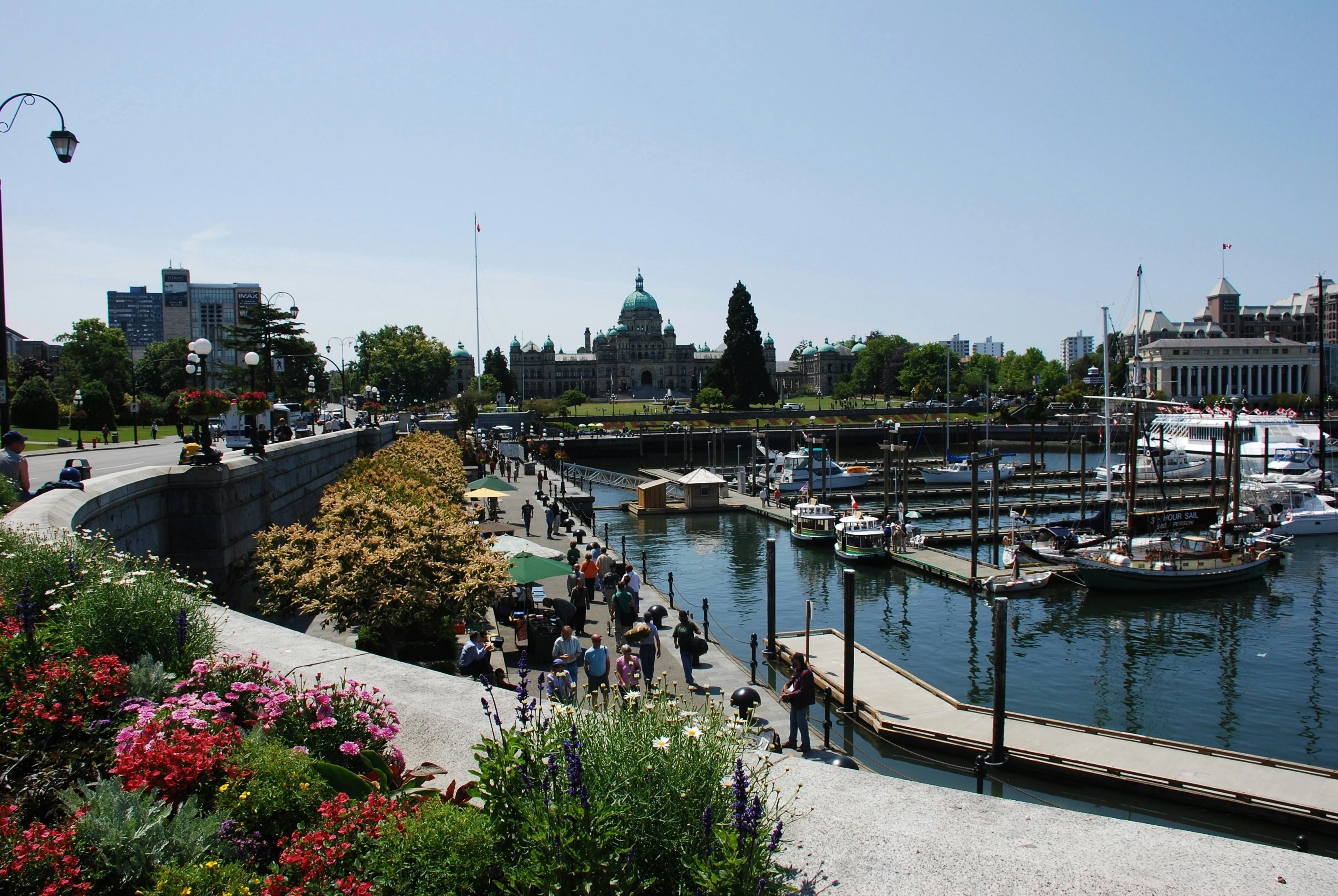
On Vancouver Island, reached by ferry from the Tsawwassen terminal in roughly an hour and a half to two hours.
By length of stay
What to do in Vancouver depending on your stay
The essentials
Stanley Park and the Seawall, Gastown, Granville Island market.
Going deeper
Add Capilano and Grouse Mountain, the Museum of Anthropology and an Asian garden.
Further afield
A trip to Whistler or Victoria, or a boat trip to watch whales.
Why track Vancouver with SniperAir
Your budget, our watch
Pick your departure
Tell us your departure airport and maximum budget for a flight to Vancouver.
SniperAir watches
Our systems continuously compare new prices against the route's real price history.
You get an alert
The moment a price matches your criteria, you're notified, with no searching on your end.
In pictures
Vancouver in pictures
You might also like
Similar destinations
FAQ
Frequently asked questions about flights to Vancouver
How do I get from Vancouver airport to downtown?
The airport (YVR) is about 12 km south. The Canada Line SkyTrain reaches downtown in about 25 minutes; a taxi takes 20 to 30 minutes depending on traffic.
When is the best time to visit Vancouver?
From mid-June to early September, when it is dry and sunny. November to March is wetter, but it is ski season in the mountains.
Is Vancouver expensive?
The price level is high, among the most expensive cities in Canada, especially for accommodation. Markets, neighbourhood meals and public transport help keep the budget in check.
How many days do you need in Vancouver?
Three to four days for the city and its nearby sights, more if you add Whistler or Victoria.
How do you get around Vancouver?
By SkyTrain, bus and SeaBus on one network, and on foot or by bike along the Seawall. You do not need a car for the city.
What should you eat in Vancouver?
Pacific Northwest produce and Asian cuisine, notably in Richmond, whose night market runs from May to October. Granville Island Public Market is a good place to taste on the spot.
What are the top things to see in Vancouver?
Stanley Park on foot or by bike, Gastown, the Capilano Suspension Bridge and Grouse Mountain, the Museum of Anthropology, then the Dr. Sun Yat-Sen Classical Chinese Garden.
How much does a flight to Vancouver usually cost?
It mostly depends on your departure city, the season and how far ahead you book. The "deals" section above shows real examples of prices already detected by SniperAir for this destination.
How do I get alerted when a flight to Vancouver drops below my budget?
Create an alert profile with your departure airport, Vancouver as the destination and your maximum budget. You'll be notified automatically the moment a matching price is detected.
Ready to head to Vancouver?
Set your budget and let SniperAir monitor fares for you.
Create my alert