
Cheap flights to Hobart
Set your departure airport and maximum budget: SniperAir tracks prices to Hobart and alerts you the moment a deal matching your criteria appears.
Quick summary
Country
Australia
Continent
Oceania
Airport
HBA
Currency
Australian dollar
Time zone
UTC+10 (UTC+11 during austral daylight saving time)
Deals already spotted to Hobart
Real flight examples detected by SniperAir, with their reference price.
Loading examples…
Why track Hobart with SniperAir
You do not need to compare prices every day
Choose your departure
Enter your departure airport and your maximum budget for a flight to Hobart (HBA).
SniperAir watches
Our systems continuously compare new fares with the route's real price history. SniperAir tracks prices and alerts you: it does not sell or book tickets.
You receive an alert
As soon as a fare matches your criteria, you are notified, without having searched for anything yourself.
Airport and getting into town
An airport about 15 to 20 km east, 20 to 30 minutes from the centre
Hobart (HBA)
Hobart International Airport is about 15 to 20 km east of the centre, on the other side of the Derwent estuary. By taxi or ride-hailing allow about 20 to 30 minutes depending on traffic; shuttles and buses link the airport with the centre. Most connections go through a large Australian city such as Melbourne or Sydney: from Europe, the journey almost always involves at least one connection, often several.
Distances and times are approximate, cross-checked on Wikipedia (FR, EN, DE, ES) and Wikivoyage; they vary with traffic. Fares are not given because they change.
Hobart is the capital of Tasmania, the island state at the south of Australia, with about 250,000 people in the metropolitan area according to recent censuses. Founded in 1804 as a British penal colony, it is the second-oldest capital in the country after Sydney. It spreads along the Derwent estuary at the foot of Mount Wellington, and its centre is easy to explore on foot. Note that Port Arthur and Wineglass Bay, two of the most famous sites, are outside the city; their distances are given below.
Landmarks
A colonial port at the foot of Mount Wellington, and historic sites outside the city
Central Hobart concentrates a colonial sandstone heritage, working docks and market-lined streets, at the foot of a mountain often capped with cloud. The four places below come with photos; the harbour and waterfront (including Salamanca Place and Battery Point) are described in text only.
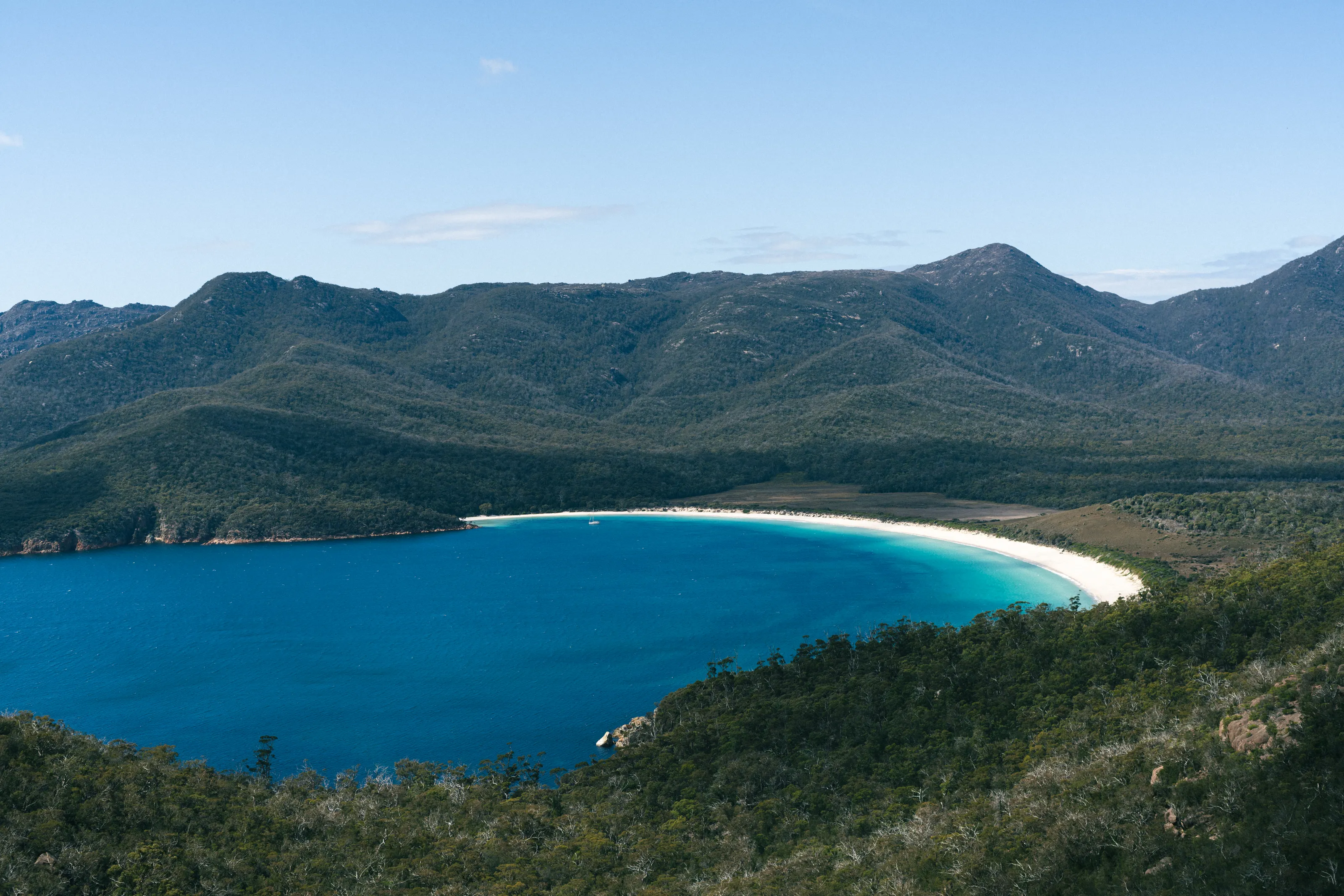
Hobart and Mount Wellington (kunanyi)
Mount Wellington, which Tasmanians also call kunanyi, towers over the city at about 1,271 m. A road leads close to the summit, which offers a view of the city, the Derwent estuary and the islands; it can be closed in case of snow or ice, including outside winter. Bring warm clothes: the weather changes fast and it is much colder at the top.
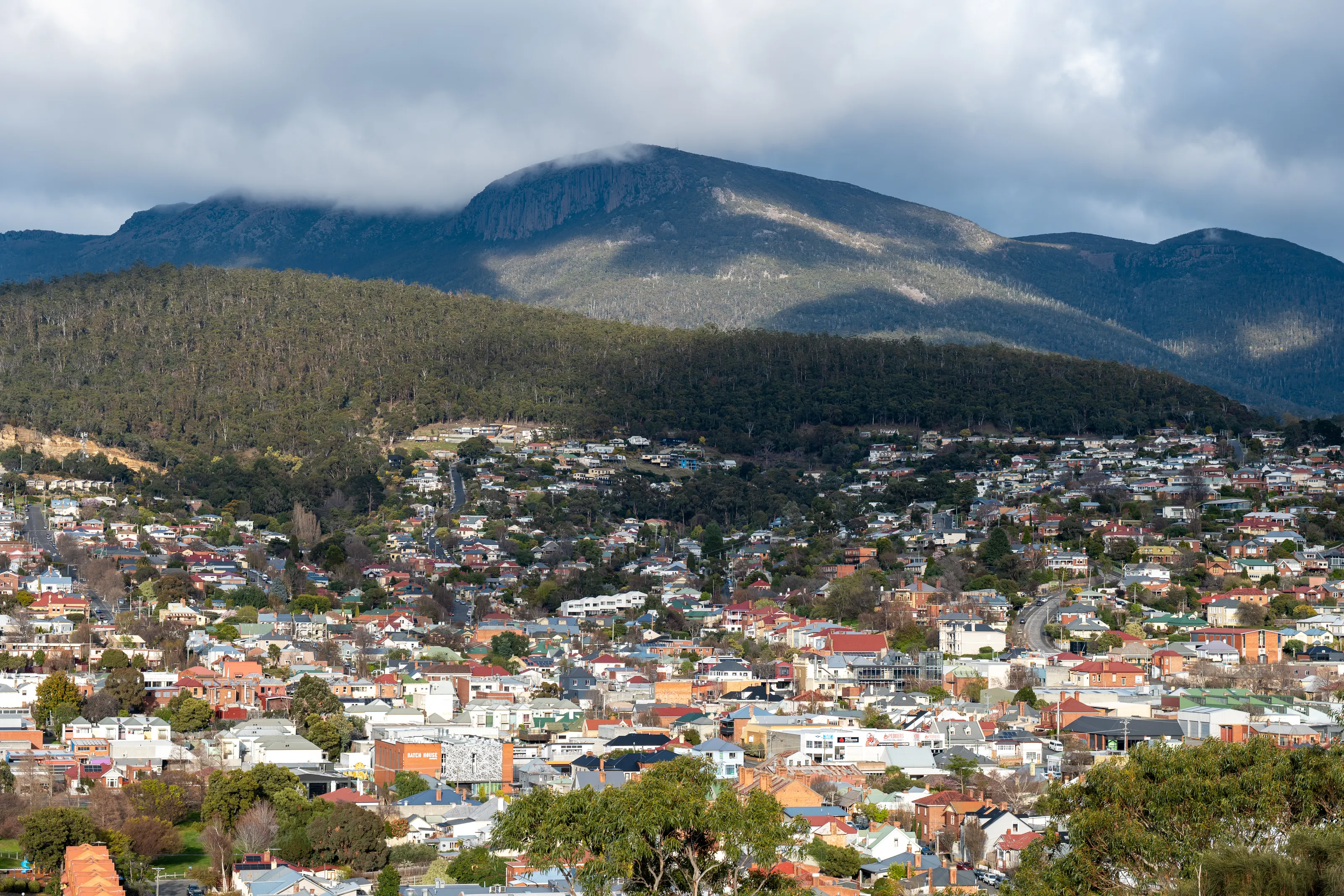
Port Arthur: the penitentiary
Port Arthur is a former convict colony about 100 km by road south-east of Hobart, roughly an hour and a half to two hours. It is part of the Australian Convict Sites inscribed on the UNESCO World Heritage List. The large sandstone penitentiary, seen here from the water, stands out against the wooded hills of the Tasman Peninsula.
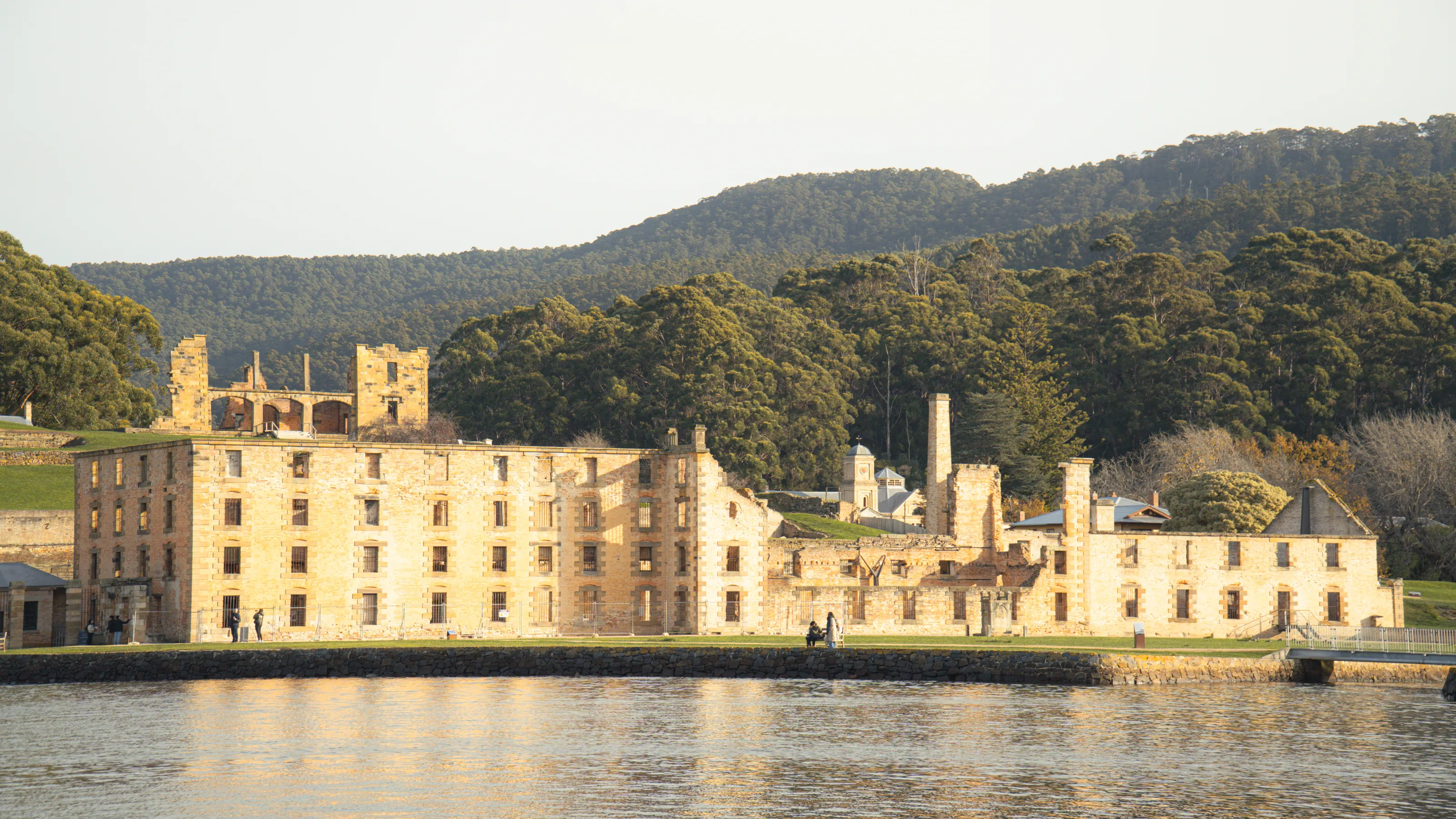
Port Arthur: ruins and historic buildings
The site covers several hectares, with sandstone ruins, officials' houses, a church and gardens. You visit it on foot in half a day or more; guided tours and a boat crossing are offered. Bring comfortable shoes and a warm layer, as the peninsula is often windy. The site combines a difficult history with beautiful scenery: ask on site about the routes.
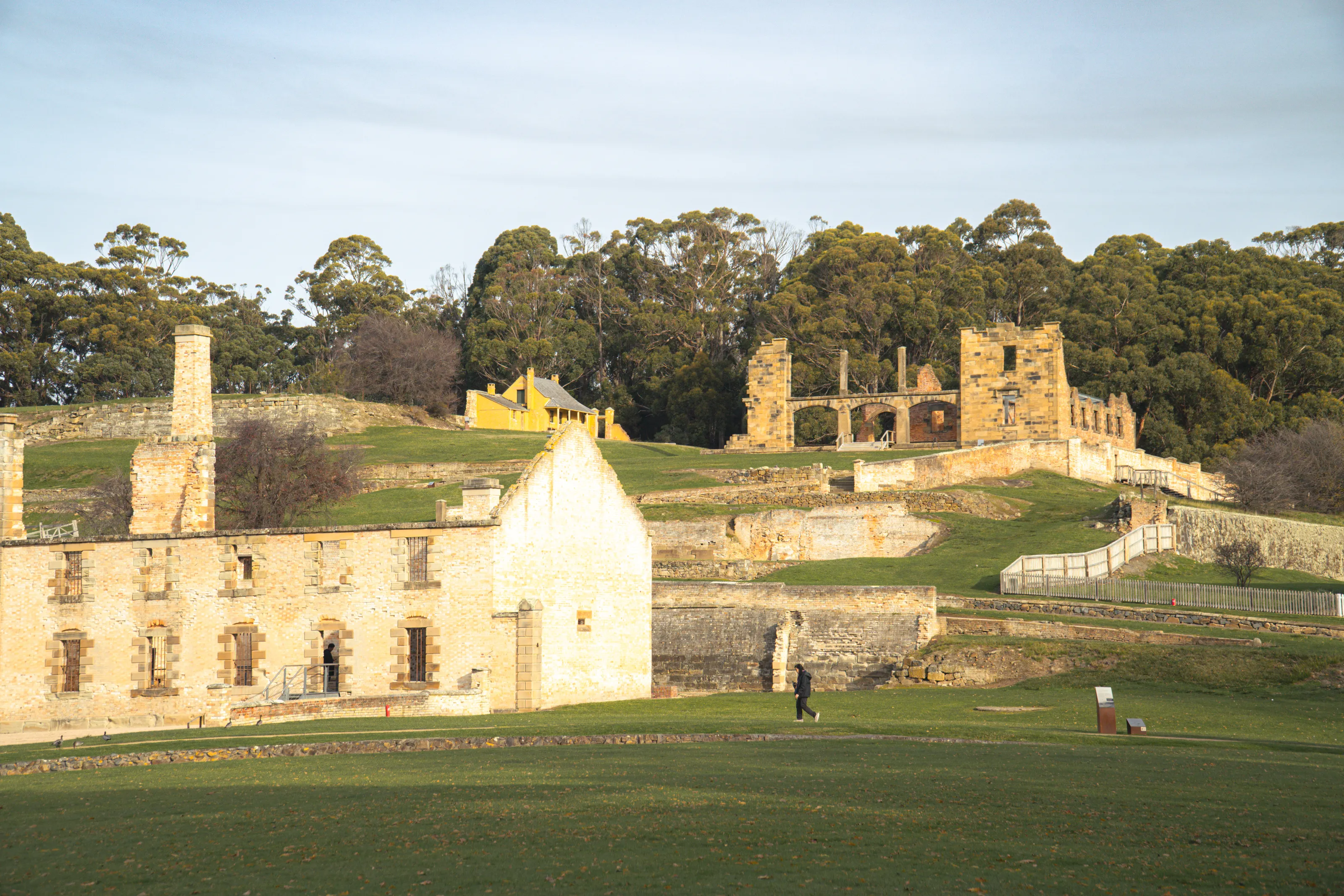
Wineglass Bay, in Freycinet National Park
Wineglass Bay, famous for its crescent of white sand, lies in Freycinet National Park on Tasmania's east coast, more than 150 km from Hobart by road, roughly two and a half to three hours. It is a long excursion: many travellers stay overnight nearby. A trail leads to the lookout, with a climb of about an hour return according to park guidance, from where you see the bay; going down to the beach takes more time.
Day trips and nature
A penitentiary, wild bays and mountains around Tasmania's capital
Salamanca Place, the docks and Battery Point
Hobart's waterfront is explored on foot. Salamanca Place, a row of sandstone warehouses turned galleries and restaurants, hosts a large market on Saturday mornings; Battery Point, a district of colonial houses, is explored along small lanes. The harbour, where fishing boats moor near old and modern buildings, is also the finish of the Sydney to Hobart yacht race in late December.
Beyond the city: Bruny Island, the Tasman Peninsula
To the south, Bruny Island is reached by ferry and offers cliffs, beaches and local producers; the Tasman Peninsula, with Port Arthur and its coastal cliffs, is a day trip. Wildlife (wallabies, wombats, Tasmanian devils) is seen mainly at dawn and dusk: drive carefully, as animals often cross the road.
The east coast and Freycinet
The sunnier, drier east coast strings together bays, vineyards and fishing villages as far as Freycinet. Plan at least one night nearby for Wineglass Bay rather than a return trip from Hobart.
Museums and culture
Contemporary art, convict history and a maritime museum
MONA, the Museum of Old and New Art
Located at Berriedale, about a dozen kilometres north of the centre, this contemporary art museum, carved into a cliff on the Derwent, has become one of the best-known cultural venues in the country. You get there by boat from the waterfront or by car; it also has vineyards, a restaurant and a concert venue. It is not pictured here: it is described in text only.
Tasmanian Museum and Art Gallery
The Tasmanian Museum and Art Gallery, in the heart of the city, presents the natural and cultural history of the island, colonial and contemporary art and collections devoted to Aboriginal cultures. Entry to the permanent collections is often free depending on the period; check on site.
Maritime history and convicts
The Maritime Museum of Tasmania, near the waterfront, traces the history of ships, whaling and trade around the Derwent. The Penitentiary Chapel, a former nineteenth-century place of justice, and the Theatre Royal, one of the oldest in the country, complete a colonial trail. The Dark Mofo festival enlivens the city in June, during the austral winter. We do not give prices, which change.
Food and drink
Seafood, cheese, whisky and cool-climate wine
A seafood table
Tasmania is known for its oysters, salmon, rock lobster and scallops; scallop pie and fish and chips from the harbour stalls are classics. Restaurants on the waterfront and in Battery Point highlight local seasonal produce.
Cheese, whisky and cool-climate wine
The cool climate suits pinot noir and sparkling-wine vineyards, cideries, craft breweries and several whisky distilleries. The Derwent valley and the east coast offer tastings. Cheese, apples and berries are flagship products of the island.
Markets and cafés
The Salamanca Market (Saturday morning) and other farmers' markets, notably on Sundays, are good places to try producers and craftspeople. Neighbourhood cafés are very popular; check opening hours, which change.
Getting around
Bus, car and ferry: where a car becomes useful
In town
The centre is compact and walkable. Buses serve the neighbourhoods and suburbs; taxis and ride-hailing complete the offer. Fares are paid with a dedicated card or, in some cases, a contactless card: check before boarding.
Where a car becomes useful
For Port Arthur, Bruny Island, the east coast and Freycinet, a car or an organised tour is almost essential. Australians drive on the left; roads are sometimes winding and wildlife crosses at dawn and dusk.
Ferry and boats
A ferry runs to the MONA museum from the waterfront; Derwent cruises, boats to Port Arthur and a ferry to Bruny Island complete the options.
Budget and entry
A high price level, with peaks in summer and during festivals
Price level
Hobart is expensive compared with many European countries, especially for accommodation in summer and during major events (Christmas, Dark Mofo). Markets, simple meals and free walks help keep the budget down. We do not give figures: prices vary with the season and the exchange rate.
Flights
The long-haul flight remains the most variable item. SniperAir tracks prices to HBA and compares them with the route's history.
Entry and precautions
Australia generally requires an electronic travel authorisation or a visa depending on nationality: check the official Australian government websites. Also consult the official advice of your country of departure. In the mountains, bring warm clothing and follow park safety instructions.
When to go
A cool temperate climate, with mild summers and cold winters
Austral summer (December to February)
Mild and pleasant, with highs of about 21 to 23 °C, long days and good conditions for the beach and walks; this is high season.
Austral autumn (March to May)
Mild temperatures, beautiful light and autumn colours; fewer crowds and a good time for the vineyards.
Austral winter (June to August)
Cool, with highs of about 12 to 13 °C and cold nights; snow can cover Mount Wellington. The Dark Mofo festival enlivens the city in June.
Austral spring (September to November)
The weather stays variable, between fine days and showers; gardens are in bloom and whales pass offshore.
Beware of the reversed seasons: Australia is in the southern hemisphere, so austral summer runs from December to February and winter from June to August, the opposite of Europe.
Hobart has a cool temperate oceanic climate, cooler than the other large Australian cities, with mild summers and cold winters. Rainfall is moderate, but the weather can change within hours: pack a windproof jacket even in summer. From December to March the weather is at its most stable.
By length of stay
What to do in Hobart depending on your length of stay
The essentials
Salamanca Place, the docks, Battery Point, a museum and some time on Mount Wellington.
Port Arthur
A full day at Port Arthur, about 100 km by road to the south-east, or a day trip to Bruny Island.
Freycinet
Two days on the east coast, with a night near Freycinet for Wineglass Bay, more than 150 km from Hobart by road.
In pictures
Hobart in pictures
You might also like
Similar destinations
FAQ
Frequently asked questions about flights to Hobart
How do I get from Hobart airport to the centre?
The airport (HBA) is about 15 to 20 km east of the centre. Taxi, ride-hailing or shuttle: usually 20 to 30 minutes depending on traffic.
When is the best time to visit Hobart?
From December to March for the mildest temperatures; autumn is pleasant and winter (June to August) is cold, with the Dark Mofo festival. Seasons are reversed compared with Europe.
Is Hobart expensive?
The price level is high, especially for accommodation in summer and during major events. Markets and simple meals help keep the budget under control.
How long should I stay in Hobart?
Two days for the city, one more for Port Arthur and at least one night if you want to see Wineglass Bay, more than 150 km away by road.
How do I get around Hobart and the surrounding area?
On foot in the centre, by bus for the neighbourhoods; a car or an organised tour is needed for Port Arthur, Bruny Island and Freycinet. Australians drive on the left.
What should I eat in Hobart?
Tasmanian seafood, cheese, whisky and cool-climate wine, with the Salamanca Market on Saturday morning.
How much does a flight to Hobart usually cost?
The price depends mainly on your departure city, the period and the booking date. The "opportunities" section above shows real examples of prices already detected by SniperAir for this destination.
How do I get alerted when a flight to Hobart drops below my budget?
Create an alert profile with your departure airport, Hobart as the destination and your maximum budget. You are notified automatically as soon as a matching fare is detected.
Ready to head to Hobart?
Set your budget and let SniperAir monitor fares for you.
Create my alert