
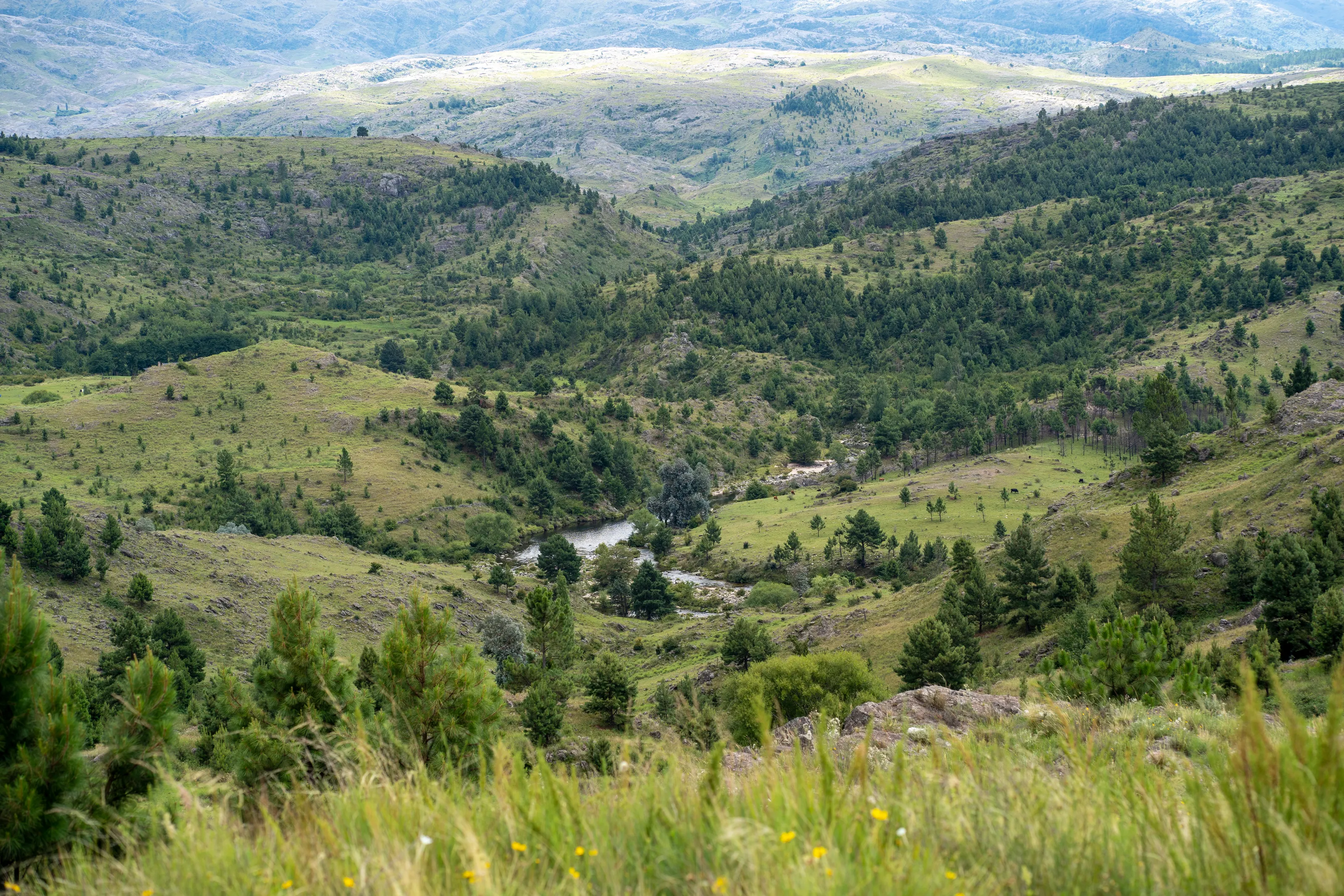
Cheap flights to Córdoba
Set your departure airport and maximum budget: SniperAir tracks prices to Córdoba and alerts you the moment a deal matching your criteria appears.
Quick summary
Country
Argentina
Continent
South America
Airport
COR
Currency
Argentine peso
Time zone
UTC-3
Deals already spotted to Córdoba
Real flight examples detected by SniperAir, with their reference price.
Loading examples…
Why track Córdoba with SniperAir
You do not need to compare prices every day
Choose your departure
Enter your departure airport and your maximum budget for a flight to Córdoba (COR).
SniperAir keeps watch
Our systems continuously compare new prices with the real history of the route. SniperAir monitors prices and alerts you: it does not sell or book tickets.
You receive an alert
As soon as a price matches your criteria, you are notified, without having searched for anything yourself.
Airport and transfer
An airport north of the city, about ten kilometres away
Ingeniero Ambrosio L. V. Taravella International Airport (Pajas Blancas)
The airport lies north of the centre, about 10 km according to Wikivoyage (DE) and 11.5 km according to Wikipedia (ES). It is the third busiest airport in the country (Wikipedia EN), with domestic flights and a few international links. From the terminal, city bus line 25, an AeroBus service, taxis and remises (pre-booked taxis) reach the centre; the main car rental companies have desks on site (Wikivoyage ES). Bus drivers sometimes refuse large luggage (Wikivoyage DE, ES). The trip takes in the order of 20 to 30 minutes by taxi outside rush hour (indicative).
Distances taken from Wikivoyage (DE) and Wikipedia (ES); they differ (10 to 11.5 km). Time is indicative, fares are not given because they change.
Córdoba, capital of the province of the same name, lies in central Argentina, about 710 km from Buenos Aires, 614 km from Mendoza and 407 km from Rosario (Wikipedia FR). It is the country's second most populous city, with about 1.3 million inhabitants according to Wikivoyage (ES), at the foot of the Sierras Chicas on the Suquía River.
The city
La Docta: a university city founded in 1573
History and university
Córdoba was founded on 6 July 1573 by Jerónimo Luis de Cabrera (Wikipedia FR, EN, ES). The Jesuits arrived in 1599 and founded the Colegio Máximo, from which the university, today the National University of Córdoba, grew in 1613; it is the oldest in Argentina according to Wikipedia (FR, DE). This tradition earned the city its nickname La Docta, and the 1918 University Reform started here.
A young city
About 200,000 students live in the city according to Wikivoyage (ES): it is lively, especially in Nueva Córdoba, south of the centre, full of bars and cafés, and in Güemes, known for its restaurants and craft market. Cuarteto, a festive music genre from the region, is a local symbol (Wikivoyage DE).
Historic centre
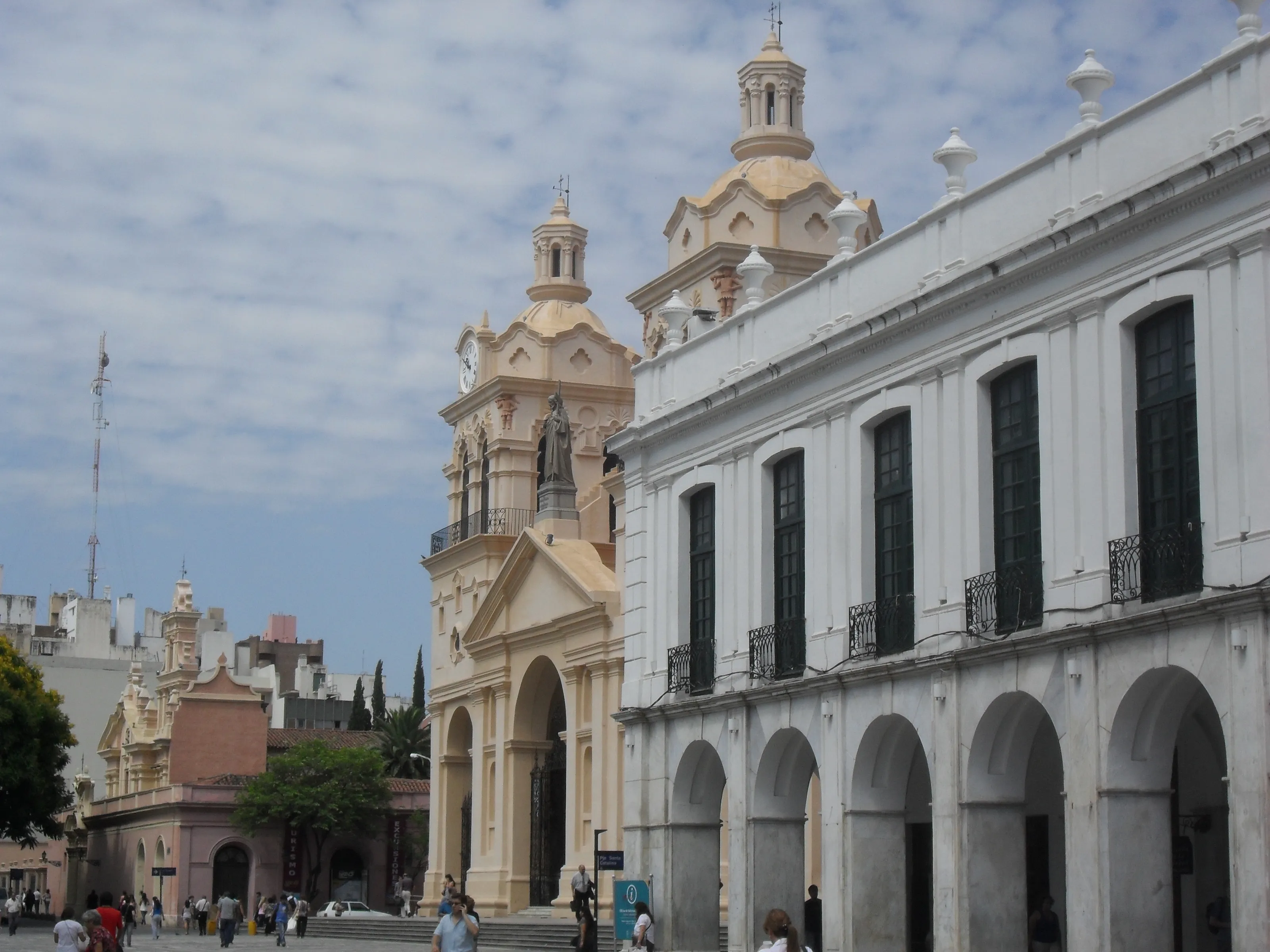
Plaza San Martín, Cabildo and cathedral
The heart of the old city is organised around Plaza San Martín. There you find the Cabildo, the former seat of colonial power, which now houses exhibitions and a tourist information point (Wikivoyage DE), and the cathedral, whose construction began in 1580 and finished much later, in 1758, according to Wikipedia (FR). The centre is pedestrian in places and easy to explore on foot.
Around the centre, the colonial canal La Cañada and the Nueva Córdoba district offer the most pleasant areas for a stroll, according to Wikivoyage (ES). We have no photo of the whole Plaza San Martín or of Parque Sarmiento, a park of about 17 ha south of the centre (Wikipedia EN).
Cabildo and cathedral
The white Cabildo, with its arcades and wrought-iron balconies, stands next to the cathedral, whose towers and domes rise above the square. The sky is hazy here: in good weather, colours stand out better in the morning.
Jesuits and churches
Jesuit Block, estancias and the Capuchin church
The Jesuit Block
The Jesuit Block groups 17th-century Jesuit buildings: the Colegio Nacional de Monserrat, the Church of the Society of Jesus and the former university, now the University's historical museum (Wikipedia FR). Together with the province's estancias, the whole is a UNESCO World Heritage Site since 2000. We have no photo of the Block.
The Jesuit estancias
The estancias (Caroya, Jesús María, Santa Catalina, Alta Gracia, La Candelaria) lie between 38 and 130 km from the city (Wikipedia EN); the Route of the Jesuit Estancias is about 250 km long. Alta Gracia, the closest to Córdoba, grew around its estancia. The exact number of estancias varies by source, from five to six.
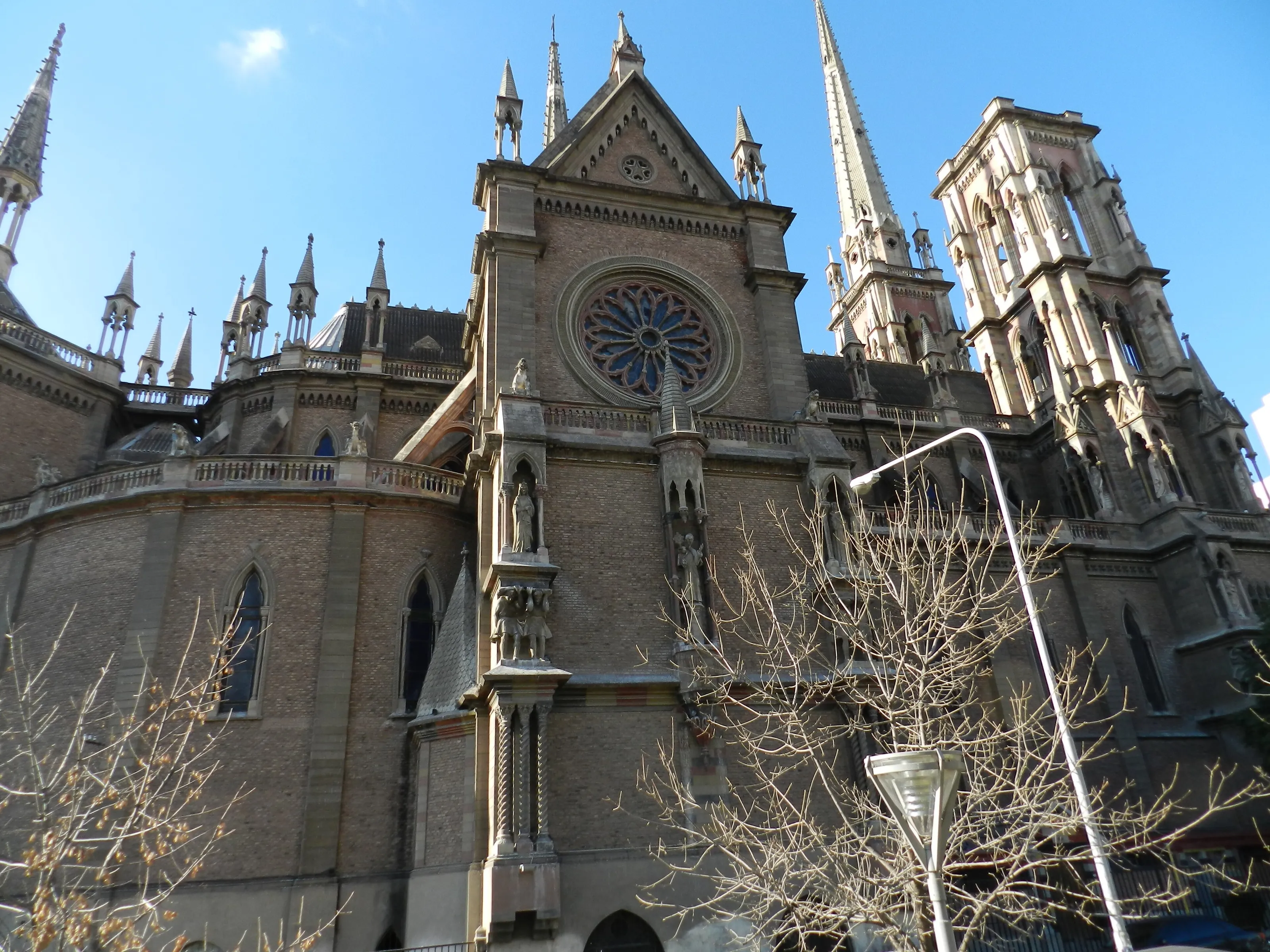
The Capuchin church
The Capuchin church, also called Sagrados Corazones, stands out for its brick, neo-Gothic style, slender spires and large rose window. It rises in the Paseo del Buen Pastor area, a former convent turned into a cultural and dining space (Wikipedia ES); we have no photo of the Paseo.
Museums and culture
Art museums, memory, observatory and Museum Night
Art and history
The University's historical museum, in the Jesuit Block, traces Jesuit and university history. The Museo Emilio Caraffa presents contemporary Argentine and Latin American art, and other art and religious-art museums complete the offer (Wikivoyage DE). We give neither fares nor opening hours.
Memory and science
A memorial site, set in a former clandestine detention centre, honours the victims of the 1976-1983 dictatorship, and the astronomical observatory, long the most important in the southern hemisphere, has a small museum (Wikivoyage DE). Two or three times a year, the Noche de los Museos opens many museums free of charge until late at night (Wikivoyage ES).
The sierras
Hills, rivers and villages of the Córdoba sierras
A range within bus reach
West of the city, the Córdoba sierras are the country's second most popular tourist destination after the Atlantic coast, according to Wikivoyage (ES). The nearest resorts are about twenty kilometres from the ring road. Several valleys stand out, including Punilla (Villa Carlos Paz, Río Ceballos), Calamuchita (Villa General Belgrano) and Traslasierra; we give no precise distances. Regional buses leave every 15 to 20 minutes for Alta Gracia, Villa Carlos Paz or Río Ceballos (Wikivoyage DE).
Rivers and roads
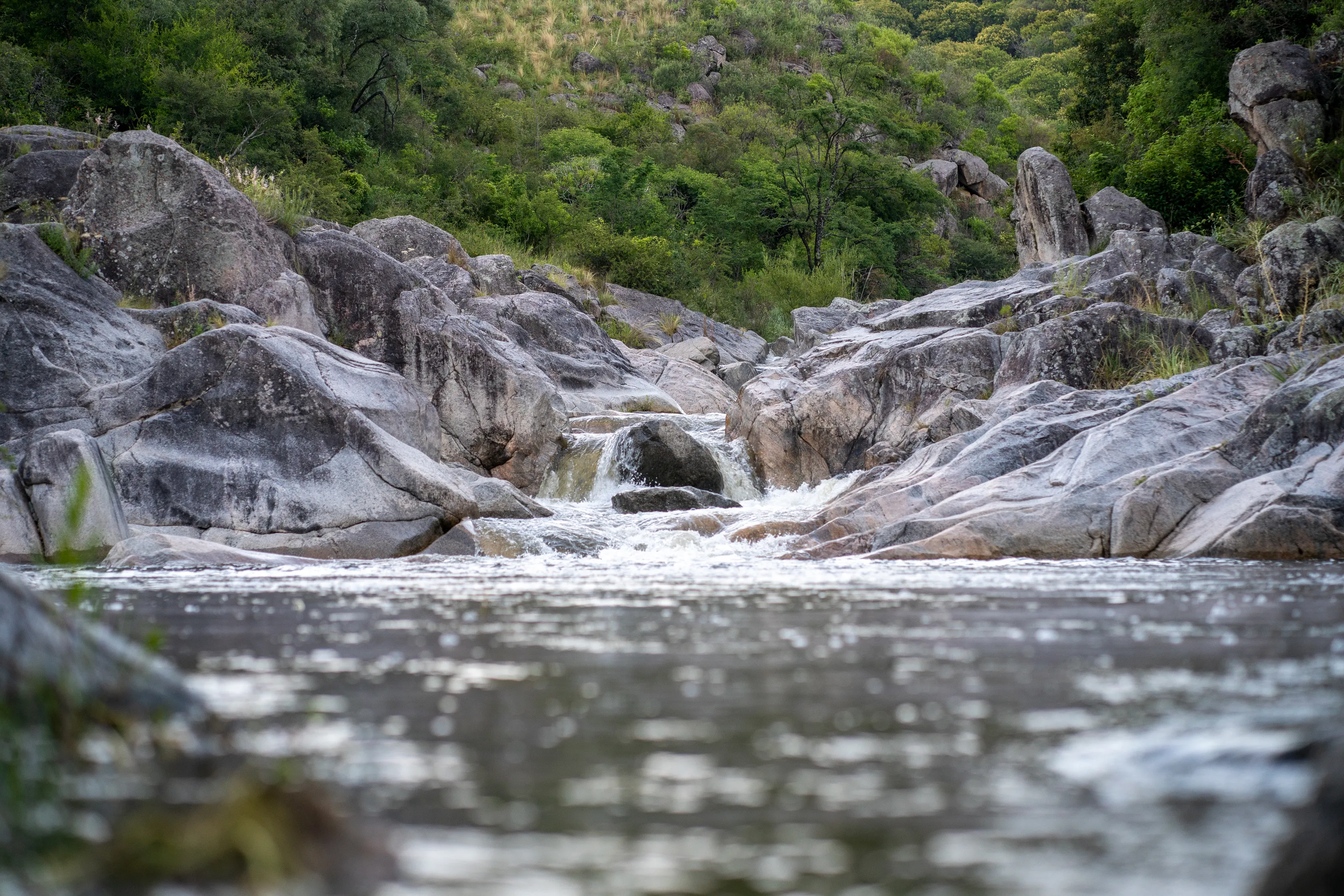
The rivers run between granite rocks and form cascades and pools, popular for swimming in summer; mountain roads offer wide views over the plain. A rental car makes excursions easier, but buses link the main towns well.
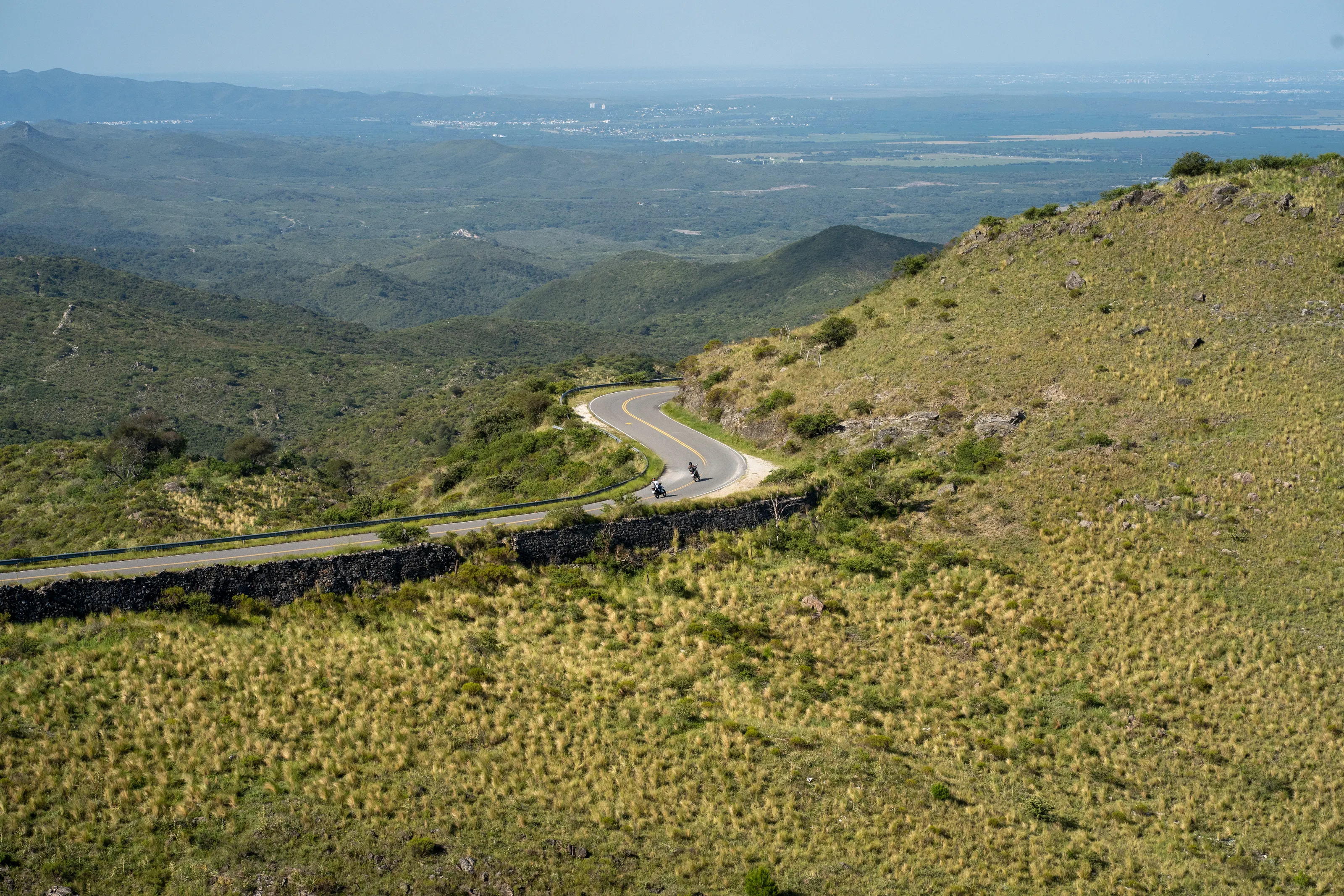
A mountain road
The road winds through the hills, with long views over the valleys and the plain in the distance. It is a favourite with motorcyclists and drivers; stay careful, the road is twisting.
River and rocks at Ascochinga
At Ascochinga, a village in the sierras, the river tumbles over grey granite boulders. The water is cool; check the level and local advice before swimming.
Food and drink
Locro, asado, alfajores and Córdoba's fernet
The cuisine reflects that of central Argentina: asado (meat grilled over embers), choripán (chorizo sandwich), sold at stands near Parque Sarmiento and the river (Wikivoyage ES), and locro, a stew of maize, beans and meat, a traditional dish for festive days. Alfajores, biscuits filled with dulce de leche, can be found notably at the Paseo de las Artes craft market in Güemes (Wikivoyage ES).
The city is also associated with fernet con coca, a bitter drink made from fernet mixed with cola, often cited as emblematic of Córdoba; drink in moderation. Dining hubs are in the centre (General Paz, Illia and Colón avenues), Cerro de las Rosas and Güemes (Wikivoyage ES). For markets, look for the Mercado Norte and Mercado Sur.
Getting around
City buses, taxis, ride-hailing and a car for the sierras
In town
City buses run on a rechargeable card (Red Bus) and are often crowded; residents criticise the network according to Wikivoyage (DE). Taxis (yellow) and remises (green) are common, with a meter; ride-hailing apps also exist. The centre can be explored on foot, and a public bike system has existed since 2023 (Wikivoyage ES).
To the sierras and other cities
For the sierras, take a regional bus from the terminal or rent a car. The bus terminal is under a kilometre east of the centre; Mitre station next door has only rare rail services (Wikivoyage DE, 2023).
Be careful
The city is considered safer than Buenos Aires or Rosario, but watch your belongings, especially on buses (Wikivoyage ES). Check the official recommendations of your country of departure before you go.
Budget
A medium budget, with differences depending on the plan
Córdoba sits at the Argentine average: taxis and buses remain cheap compared with Europe, and restaurants and lodging range from affordable to medium. Well-located lodging, car rental and excursions in the sierras are what push the bill up. We give no figures, because prices change with the season and the exchange rate.
The plane ticket remains the most variable item. SniperAir monitors prices to COR and compares them with the route's history.
When to go
When to go to Córdoba? Four seasons, humid subtropical climate, reversed seasons
Austral summer (December to February)
Hot, with days of 28 to 33 °C according to Wikipedia (EN) and frequent thunderstorms; heat waves above 38 °C are possible.
Autumn (March to May)
Pleasant: in April, highs of about 24 °C and lows of about 12 °C, and drier weather (Wikipedia EN). First frosts may appear in May.
Austral winter (June to August)
Dry and cool, with highs of about 18 °C and lows of about 4 °C; the warm north-west wind, the zonda, can bring warm spells (Wikipedia EN).
Spring (September to November)
Very variable and windy: cool spells, heat waves and violent thunderstorms, sometimes with hail (Wikipedia EN). October: about 26 °C by day, 11 °C at night.
The annual mean is about 18 °C, with about 750 mm of rain a year (Wikipedia EN). The best periods are generally March to May and September to November. The southern hemisphere reverses the seasons: summer starts in December, winter in June.
By length of stay
How many days in Córdoba
The essentials
The historic centre (Plaza San Martín, Cabildo, cathedral), the Jesuit Block and Nueva Córdoba.
Go deeper
Add a museum, Güemes and its restaurants, and a day in the sierras or at Alta Gracia.
Surroundings
Add the Punilla, Calamuchita or Traslasierra valleys, or the Route of the Jesuit Estancias.
In pictures
Córdoba in pictures
You might also like
Similar destinations
FAQ
Frequently asked questions about flights to Córdoba
How do I get from Córdoba airport to the centre?
The airport (COR) is about ten kilometres north of the centre (10 to 11.5 km depending on the source). Bus 25, the AeroBus, taxis and remises reach the city; allow in the order of 20 to 30 minutes by taxi outside rush hour.
When is the best time to visit Córdoba?
The most pleasant periods are generally March to May and September to November. Summer is hot and stormy, winter dry and cool; seasons are reversed compared with Europe.
Is Córdoba expensive?
It sits at the Argentine average: taxis and buses are cheap compared with Europe, with a medium budget if you add lodging, a car and excursions. We give no figures.
How many days should I plan in Córdoba?
Two days are enough for the historic centre and the Jesuit Block; three or four days let you add a museum and the sierras; five days or more leave time for the valleys and the estancias.
How do I get around Córdoba?
On foot in the centre, by city bus with a rechargeable card, by taxi or remis. For the sierras, regional buses or a rental car.
What should I try in Córdoba?
Locro, asado, choripán, Córdoba-style alfajores and fernet con coca, the emblematic local drink, to be enjoyed in moderation.
How much does a flight to Córdoba usually cost?
The price depends mainly on your departure city, the period and the booking date. The opportunities section above shows real examples of prices already detected by SniperAir to this destination.
How do I get alerted when a flight to Córdoba drops below my budget?
Create an alert profile with your departure airport, Córdoba as the destination and your maximum budget. You are notified automatically as soon as a matching price is detected.
Ready to head to Córdoba?
Set your budget and let SniperAir monitor fares for you.
Create my alert