
Cheap flights to Puerto Iguazú
Set your departure airport and maximum budget: SniperAir tracks prices to Puerto Iguazú and alerts you the moment a deal matching your criteria appears.
Quick summary
Country
Argentina
Continent
South America
Airport
IGR
Currency
Argentine peso
Time zone
UTC-3
Deals already spotted to Puerto Iguazú
Real flight examples detected by SniperAir, with their reference price.
Loading examples…
Why track Puerto Iguazú with SniperAir
You do not need to compare prices every day
Choose your departure
Enter your departure airport and your maximum budget for a flight to Puerto Iguazú (IGR).
SniperAir keeps watch
Our systems continuously compare new prices with the real history of the route. SniperAir monitors prices and alerts you: it does not sell or book tickets.
You receive an alert
As soon as a price matches your criteria, you are notified, without having searched for anything yourself.
Airport and transfer
An airport close to town, about ten kilometres away
Cataratas del Iguazú International Airport
Puerto Iguazú's airport lies about ten kilometres from the centre according to Wikipedia (DE); other sources give somewhat longer distances, and it is close to the national park. According to Wikivoyage (EN), several flights a day serve Buenos Aires. From the terminal, a public bus reaches the bus station in roughly 30 minutes; there is also a remis (pre-booked taxi) desk, a minibus and taxis. You can also arrive through the Brazilian airport at Foz do Iguaçu (IGU), about half an hour away by road, with an immigration check at the border.
Distances and times are indicative, taken from Wikipedia (DE) and Wikivoyage (EN), and sources differ. We do not give fares, which change.
Puerto Iguazú is in Misiones province, in the far north-east of Argentina, where the Iguazú and Paraná rivers meet, facing Brazil and Paraguay. The town lives on tourism and is the base for the falls, about 18 km away (14 km according to Wikipedia ES). Wikivoyage (EN) describes it as a small tourist town in the jungle; outside the centre, the feel is that of an ordinary provincial town.
The national park
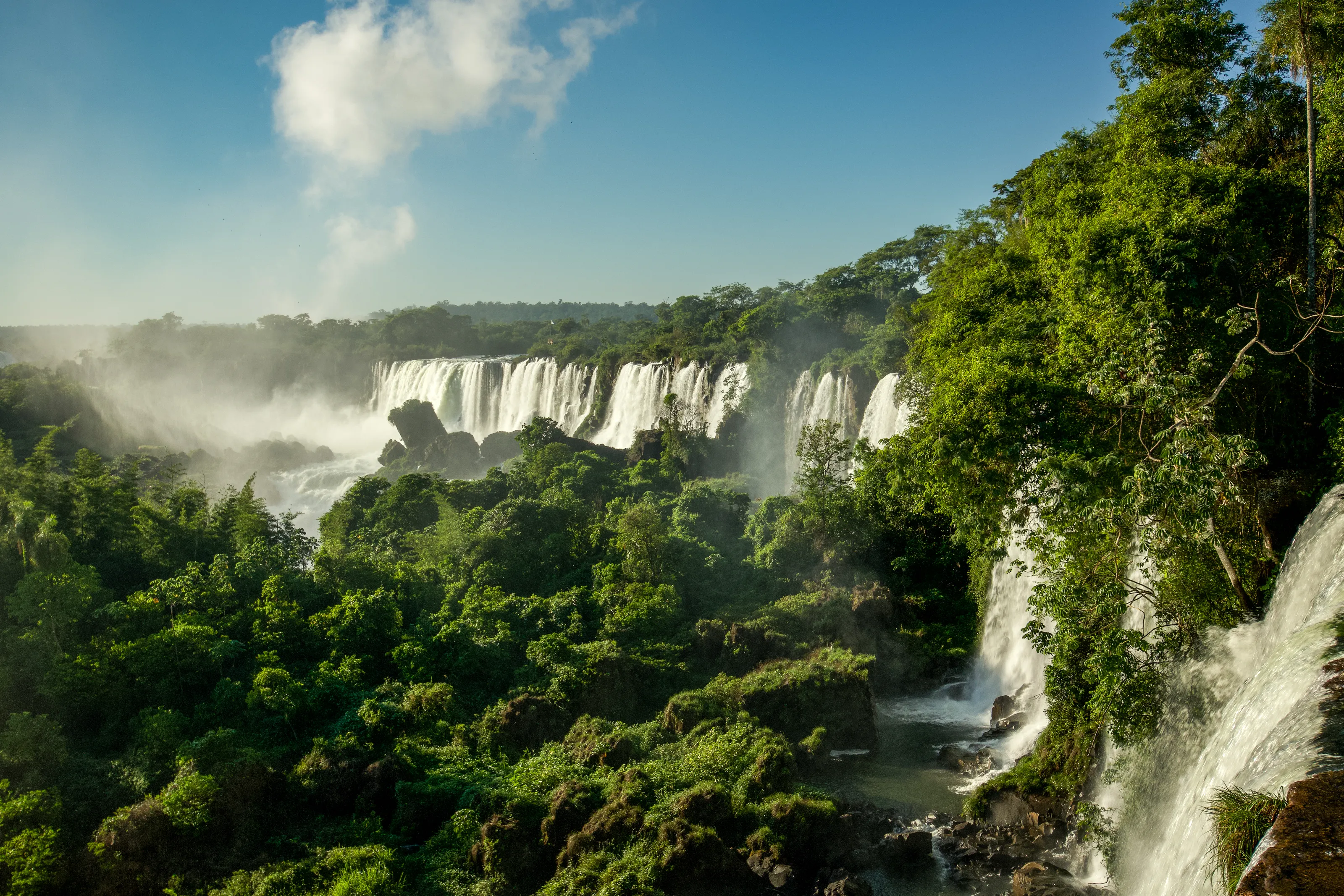
Iguazú Falls on the Argentine side: walkways and circuits
A UNESCO World Heritage Site
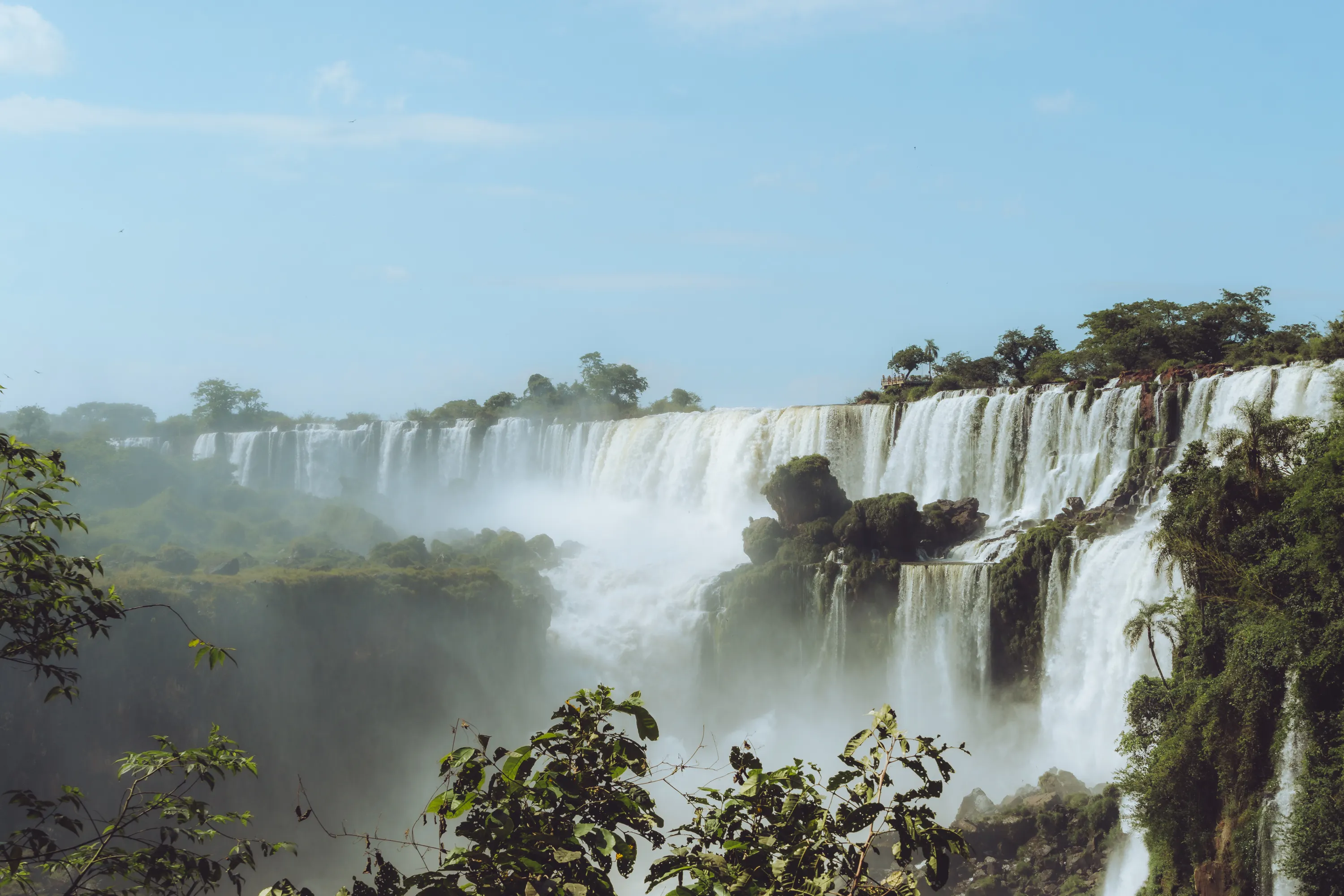
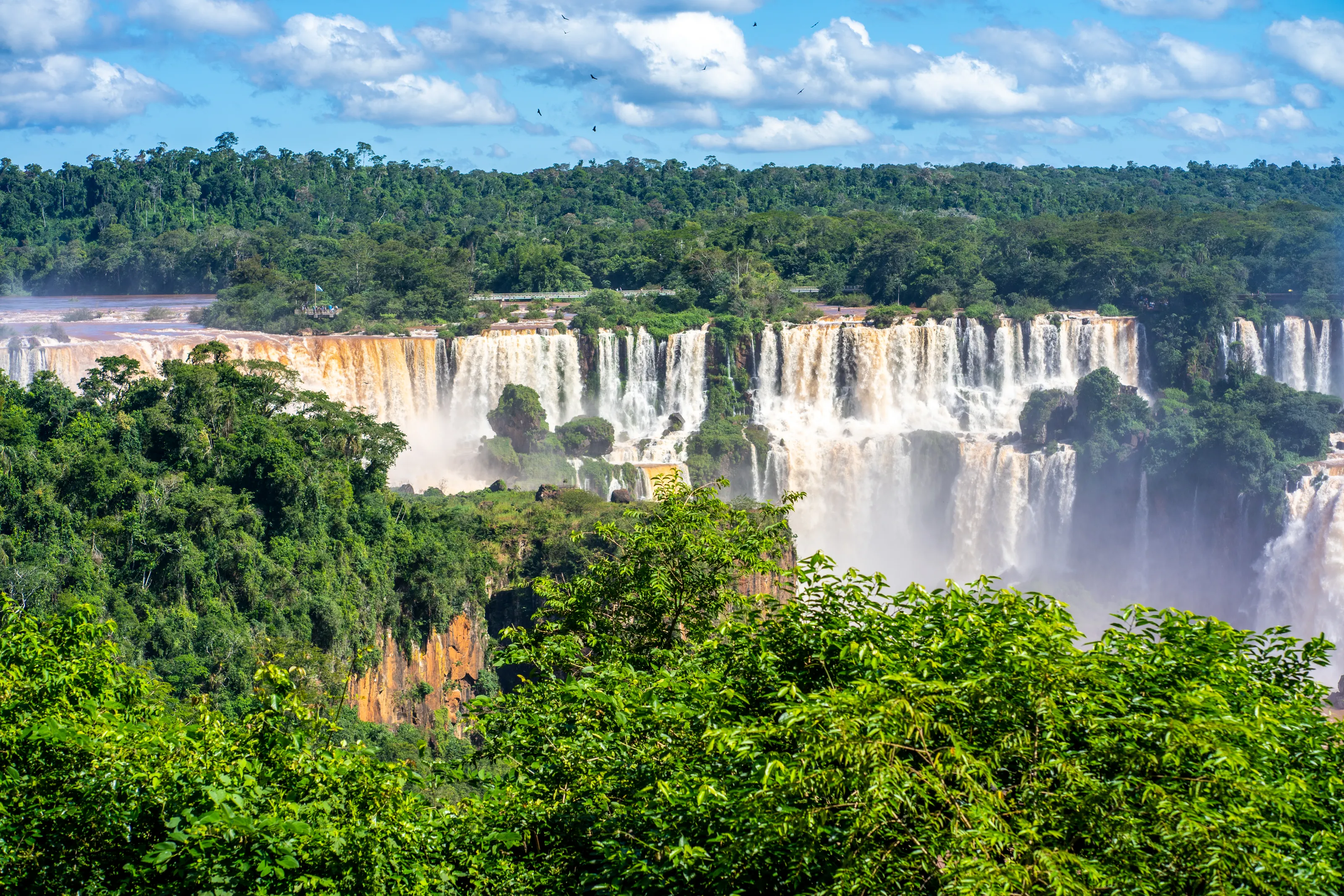
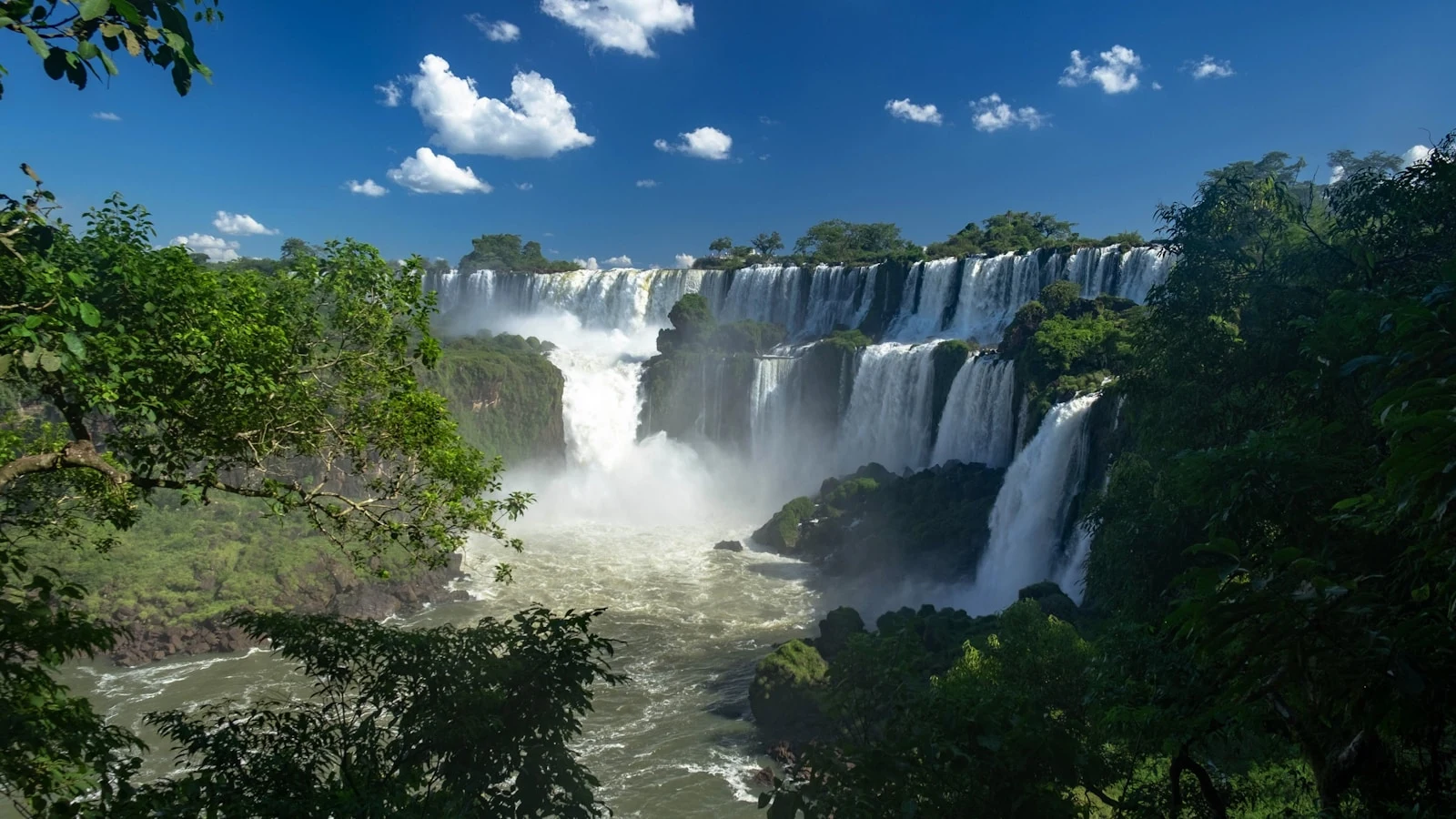
Iguazú National Park, created in 1934 and covering 677 km2, has been a UNESCO World Heritage Site since 1984, like its Brazilian neighbour (Wikipedia EN, DE). It protects the falls and a large stretch of subtropical forest. The falls are a series of cascades rather than a single curtain: most of them lie on the Argentine side, which explains the many walkways close to the water.
Circuits and walkways
You tour the site on walkways: the Lower Circuit, which goes down towards the foot of some cascades, the Upper Circuit, which runs along the top of the falls, and the walkway to the Garganta del Diablo (Devil's Throat). According to Wikipedia (EN), a small train, the Tren Ecológico de la Selva, links the circuits; check whether it is running and its schedule on the park's official site. An island in the river, Isla San Martín, is also mentioned among excursions, depending on conditions: to be checked.
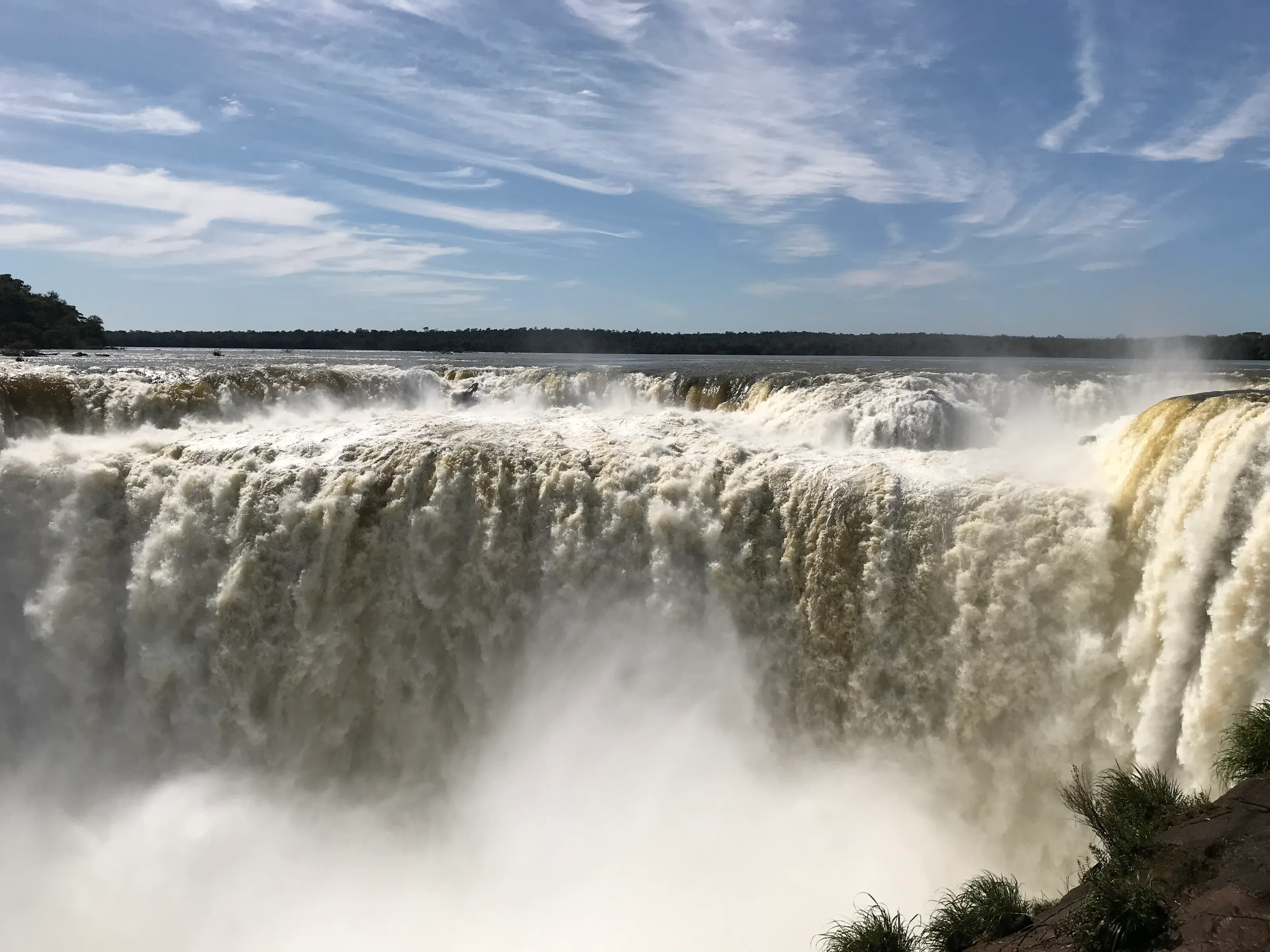
The Garganta del Diablo
The Garganta del Diablo is the most spectacular spot: water pours into a horseshoe-shaped gorge and rises in a cloud of mist. The walkways let you get close to the edge; bring a waterproof layer and protect your camera.
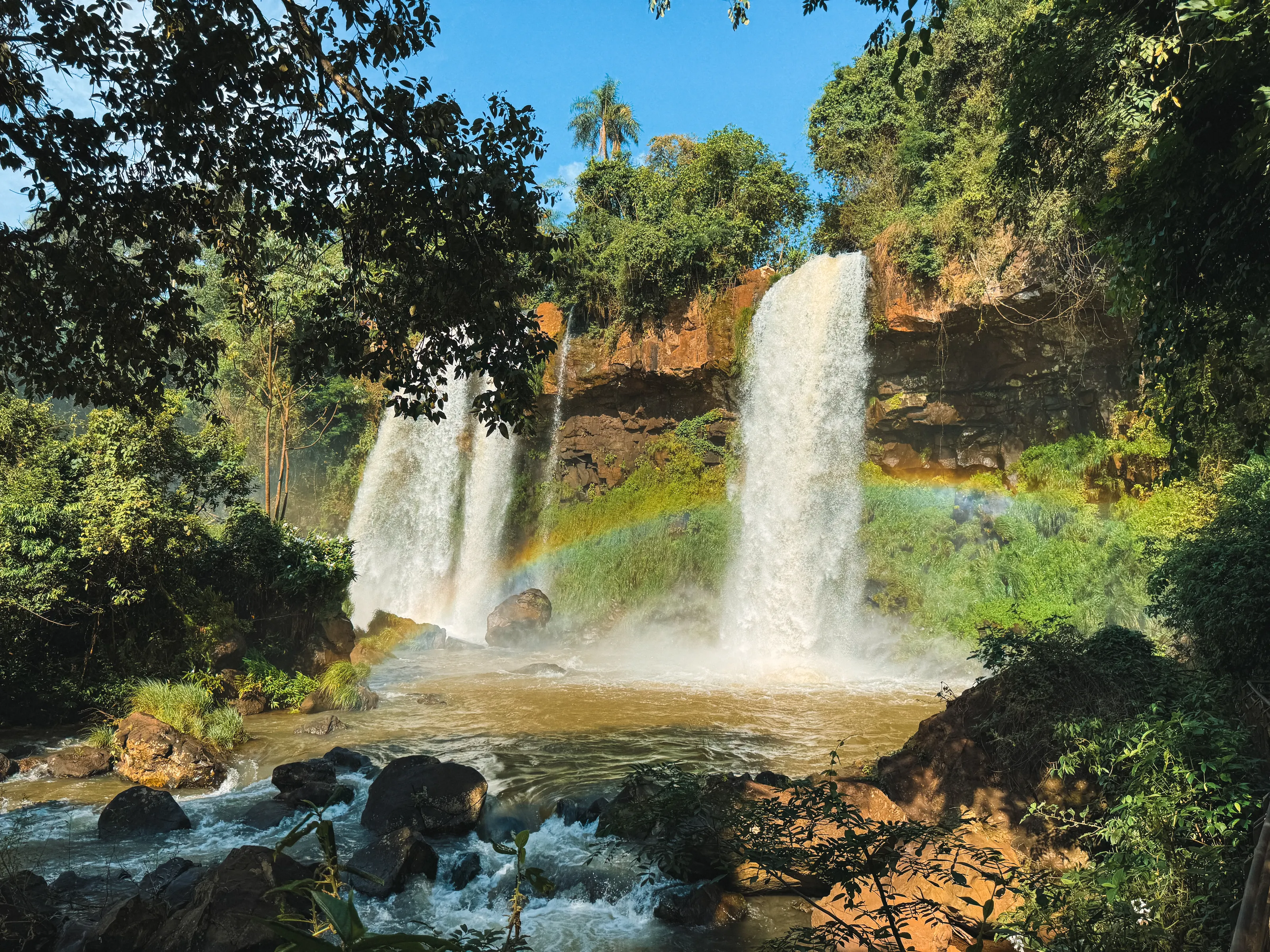
The Lower Circuit
At the bottom of the route, twin cascades, known as Dos Hermanas, fall into the forest. In sunny weather, sunlight in the spray often draws a rainbow at the foot of the falls.
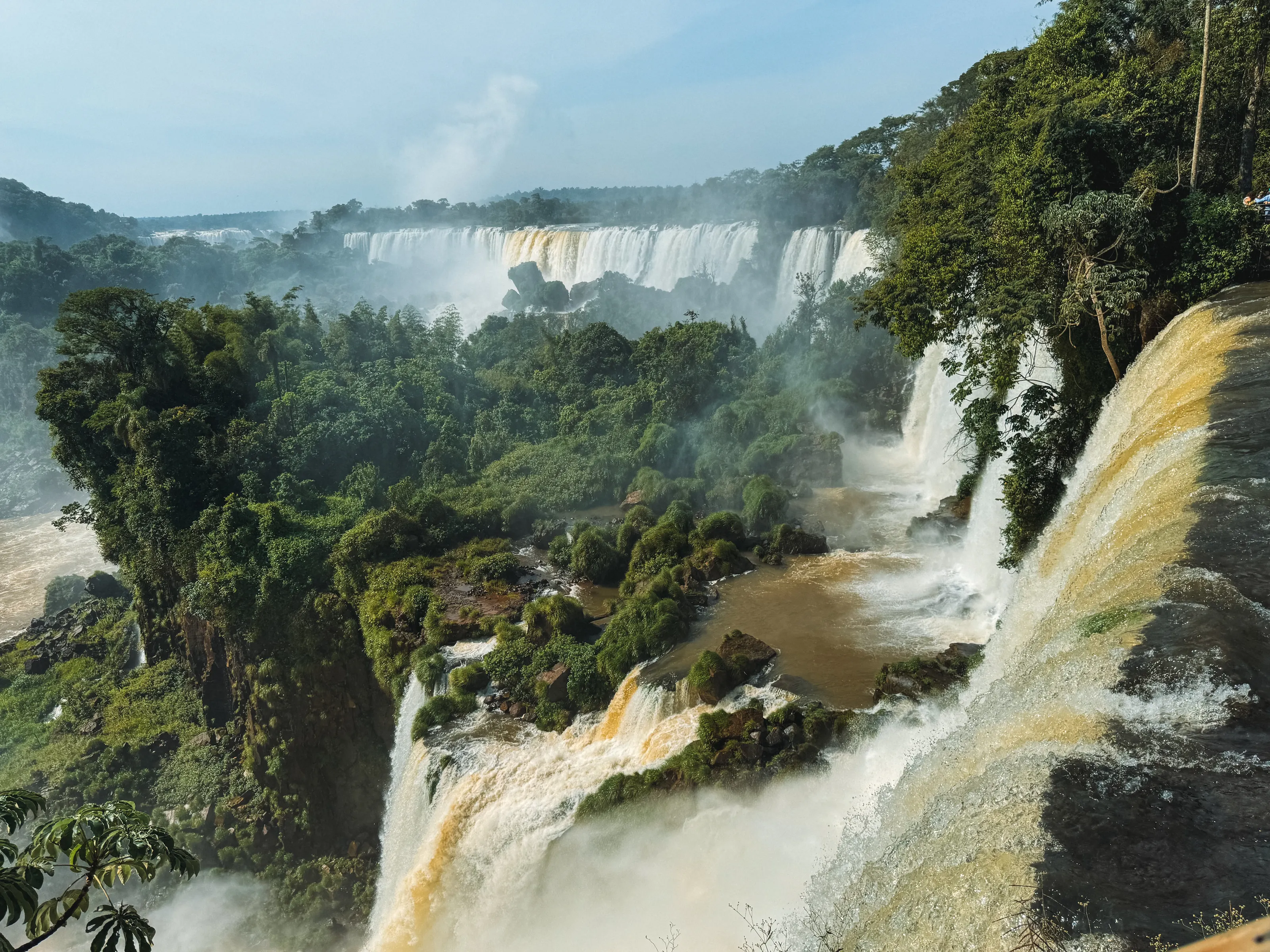
Views from above
From the viewpoints you look down on the cascades and the surrounding forest. The flow changes with the season: there is more water in the rainy season, according to Wikipedia (DE), and the colour of the river varies after heavy rain.
Forest and wildlife
Coatis, toucans, monkeys and Atlantic forest
The park shelters one of the last large fragments of Atlantic forest in South America. You can see birds (including toucans), butterflies, coatis and, more discreetly, monkeys. Rarer animals, such as the jaguar, the tapir or the ocelot, also live in the park, but they are very seldom seen (Wikipedia EN, DE).
Coatis often approach visitors and beg for food (Wikipedia EN). Do not feed them: it makes them dependent, sometimes aggressive, and exposes them to disease. Keep your bags and meals closed, stay at a distance and follow the signs in the park.
A waterfall in the jungle
Away from the main viewpoints, smaller falls drop into the dense forest. The paths are shaded but hot and humid: bring water and mosquito repellent.
Town and Triple Frontier
Hito Tres Fronteras, a street market and Mbyá villages
Hito Tres Fronteras
At the meeting of the Iguazú and Paraná rivers, this viewpoint shows Brazil and Paraguay across the water; each country has its own marker in its national colours (Wikipedia DE). According to Wikivoyage (EN), entry is free on the Argentine side. We have no photo of this place.
La Feirinha and the evening scene
La Feirinha, a market with terraces in the Brazilian style, serves beers and sharing plates in the late afternoon (Wikivoyage EN). The town also hosts a carnival, the Carnaval Cataratas, according to Wikipedia (DE).
Mbyá Guaraní communities
Several Mbyá Guaraní communities live around the town; some offer cultural visits (Wikipedia ES, Wikivoyage EN). Ask locally and choose visits organised with the communities themselves.
Museums and culture
Güirá Oga, the Aripuca and jungle museums
Wildlife and nature
Güirá Oga is a centre that takes in and rehabilitates animals, notably birds, with a guided visit of around an hour and a half according to Wikivoyage (EN): check hours and conditions. The Jardín de los Picaflores is home to many hummingbirds.
Museums and places
The Museo de Imágenes de la Selva (woodcarvings), the Museo Mbororé and the Aripuca, a timber tourist complex, are cited by Wikipedia (EN) and Wikipedia (ES). The Luis Honorio Rolón municipal nature park completes the list. We give neither fares nor opening hours.
Around town
The Wanda mines (agates, amethysts) and the Jesuit ruins of San Ignacio Miní, on the road to Posadas, are possible excursions (Wikipedia EN, Wikivoyage EN).
Brazilian side
The falls seen from Foz do Iguaçu, a day's visit away
The Tancredo Neves bridge links Puerto Iguazú to Foz do Iguaçu, in Brazil, about 15 km away according to Wikipedia (DE). Many travellers spend a day on the other bank, which offers mainly overall views of the cascades: see our Foz do Iguaçu page. Buses and agencies make the crossing.
Crossing the border involves an immigration check: bring the required travel documents, keep the papers handed to you at the post, and check the current formalities with the official authorities.
Food and drink
Asado, river fish, empanadas and cheese bread
The town is full of tourist restaurants: you eat asado (meat grilled over embers), empanadas and river fish, with Argentine wine (Wikivoyage EN). Among the specialities of the Misiones region, people mention surubí (a river fish), chipa (a cheese bread) and mate (a shared infusion), to be tried on the spot. Prices vary between a tourist address and a simpler table.
Getting around
City bus to the park, taxis and remises
To the park
A city bus leaves the bus station for the national park entrance about every 20 minutes according to Wikivoyage (EN); check times with your accommodation. Taxis work on fixed prices by zone, and round trips with waiting are possible. Remises are pre-booked taxis.
To other cities
Buses link the bus station with Buenos Aires (about 18 hours on the road), Posadas and other Argentine cities, as well as Foz do Iguaçu and Ciudad del Este (Wikipedia DE, Wikivoyage EN).
Be careful
Keep an eye on your belongings and consult the official recommendations of your country of departure before you go (health and safety). On the trails, stay on the walkways and do not feed the animals.
Budget
A medium to high budget, with park fees and tours adding up
Puerto Iguazú is a tourist destination: price levels are medium to high compared with Europe for well-located lodging, park entry and excursions, and gentler for simple meals and city transport. We give no figures, because prices change with the season and the exchange rate.
The plane ticket remains the most variable item. SniperAir monitors prices to IGR and compares them with the route's history.
When to go
When to go to Puerto Iguazú? Humid subtropical climate, reversed seasons
Austral summer (December to February)
Hot and humid, with days of 30 to 35 °C according to Wikipedia (EN) and storms that cool the air. The flow is generally stronger from January to March (Wikipedia DE).
Autumn (March to May)
Temperatures drop gradually; the cool season starts around late April. Rain remains possible.
Austral winter (June to August)
Cooler: in June the average highs are about 21 °C and the lows about 11 °C (Wikipedia EN). Cold spells are short but can surprise you.
Spring (September to November)
It warms up; November is the wettest month, with over 200 mm on average (Wikipedia EN). Peaks above 40 °C have been recorded in spring and summer.
The climate is humid subtropical: there is no dry season and every month receives more than 100 mm of rain on average (Wikipedia EN). The southern hemisphere reverses the seasons: summer starts in December, winter in June. Temperatures and the flow of the falls vary from year to year.
By length of stay
How many days in Puerto Iguazú
The essentials
One day in the national park: the Garganta del Diablo and one of the circuits.
Go deeper
Add the second circuit, the wildlife, the Hito Tres Fronteras and a place like Güirá Oga.
Brazilian side
Add a day on the other side of the falls, in Foz do Iguaçu, or an excursion to the Wanda mines or San Ignacio Miní.
In pictures
Puerto Iguazú in pictures
You might also like
Similar destinations
FAQ
Frequently asked questions about flights to Puerto Iguazú
How do I get from Puerto Iguazú airport to the centre?
The airport (IGR) is about ten kilometres from town according to one source (distances vary). A public bus reaches the bus station in around 30 minutes; taxis, remises and a minibus are also available.
When is the best time to visit Puerto Iguazú?
The climate is humid subtropical, with no dry season. The austral summer (December to February) is hot and stormy, with a stronger flow from January to March; winter is cooler.
Is Puerto Iguazú expensive?
Price levels are medium to high depending on lodging and excursions; park fees and tours add up, while simple meals and city buses stay gentler. We give no figures.
How many days should I plan in Puerto Iguazú?
One day covers the main part of the park; two days let you add a second circuit, the wildlife and the town; three days or more leave time for the Brazilian side too.
How do I get around Puerto Iguazú?
By city bus from the bus station to the park entrance, by taxi or by remis. Buses also link Foz do Iguaçu and Ciudad del Este; bring your travel documents.
What should I try in Puerto Iguazú?
Asado, empanadas, river fish such as surubí, chipa (cheese bread) and mate, in the town's restaurants.
How much does a flight to Puerto Iguazú usually cost?
The price depends mainly on your departure city, the period and the booking date. The opportunities section above shows real examples of prices already detected by SniperAir to this destination.
How do I get alerted when a flight to Puerto Iguazú drops below my budget?
Create an alert profile with your departure airport, Puerto Iguazú as the destination and your maximum budget. You are notified automatically as soon as a matching price is detected.
Ready to head to Puerto Iguazú?
Set your budget and let SniperAir monitor fares for you.
Create my alert