
Cheap flights to Florianópolis
Set your departure airport and maximum budget: SniperAir tracks prices to Florianópolis and alerts you the moment a deal matching your criteria appears.
Quick summary
Country
Brazil
Continent
South America
Airport
FLN
Currency
Brazilian real
Time zone
UTC-3
Deals already spotted to Florianópolis
Real flight examples detected by SniperAir, with their reference price.
Loading examples…
Why track Florianópolis with SniperAir
You do not need to compare prices every day
Choose your departure
Enter your departure airport and your maximum budget for a flight to Florianópolis (FLN).
SniperAir keeps watch
Our systems continuously compare new prices with the real history of the route. SniperAir monitors prices and alerts you: it does not sell or book tickets.
You receive an alert
As soon as a price matches your criteria, you are notified without having searched yourself.
Airport and transfers
An airport about 12 km from the centre, on the island
Florianópolis - Hercílio Luz
Hercílio Luz International Airport is on Santa Catarina island, about 12 km from the centre according to Wikivoyage (EN), in the south-west of the island according to Wikivoyage (ES). It is linked to the centre by city bus lines and by taxi; car rental firms are on site. Flights come mainly from São Paulo and other Brazilian cities; in the southern summer, charter flights arrive from Argentina and Chile. Wikivoyage (EN) says most international flights require a connection in São Paulo.
Distance taken from Wikivoyage (EN), a single source; times vary with traffic, very heavy in high season. We give no fares, which change.
Florianópolis, capital of Santa Catarina state, is mainly an island: about 97% of the municipality lies on Santa Catarina island, about 424 km² and 54 km long, linked to the mainland by bridges, including the Hercílio Luz. The municipality has about 420,000 inhabitants, but the population swells sharply in the southern summer. The city is nicknamed Floripa.
Landmarks and sights
The Hercílio Luz bridge and the historic centre
The historic centre is organised around Praça XV de Novembro, with the Cruz e Sousa palace, the metropolitan cathedral, the municipal market and the Teatro Álvaro de Carvalho, a theatre from the 1870s. The Velha Figueira, an old fig tree, is honoured in the city's anthem. Forts built from 1739 protected the island from possible Spanish attacks.
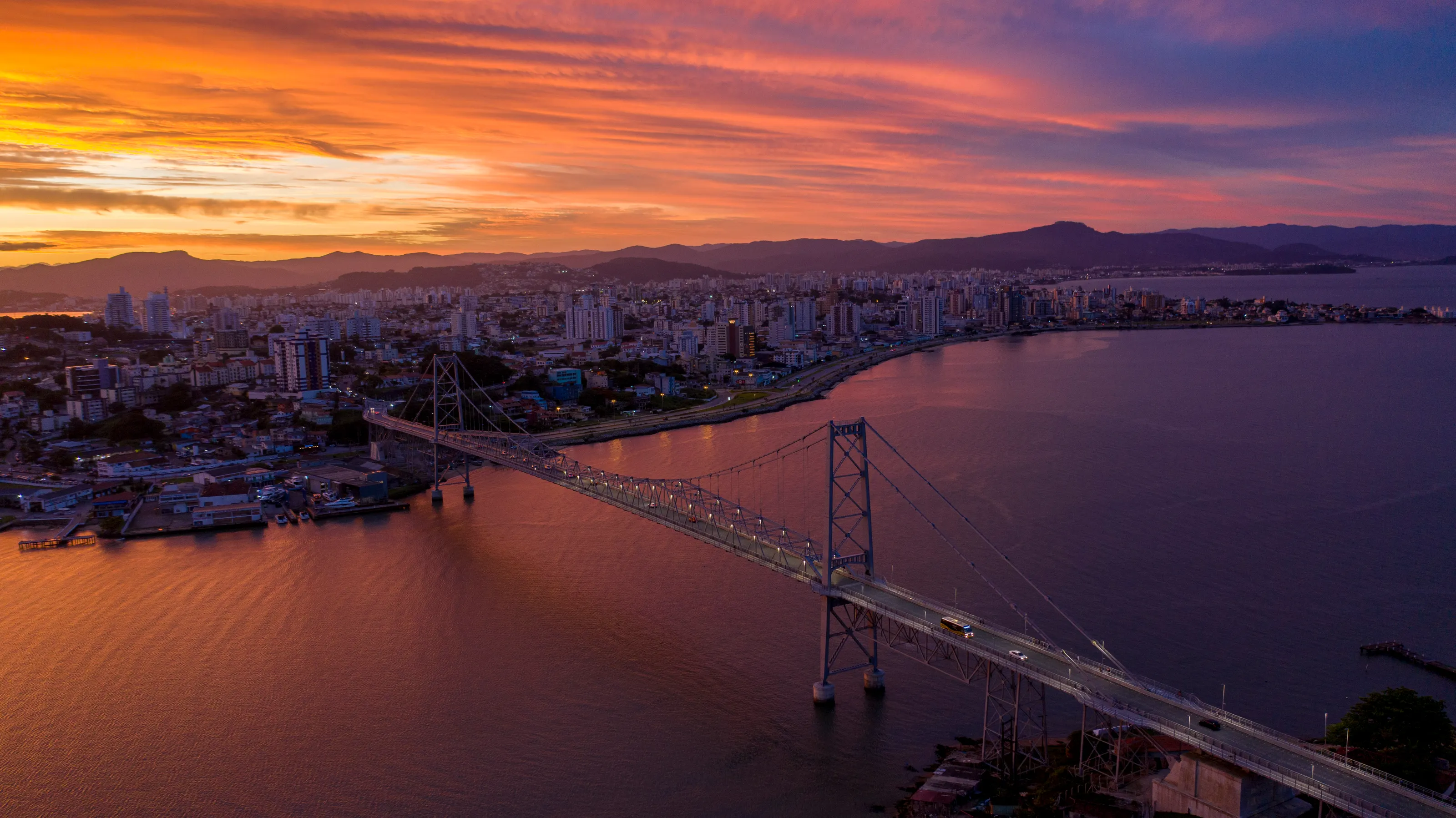
The Hercílio Luz bridge
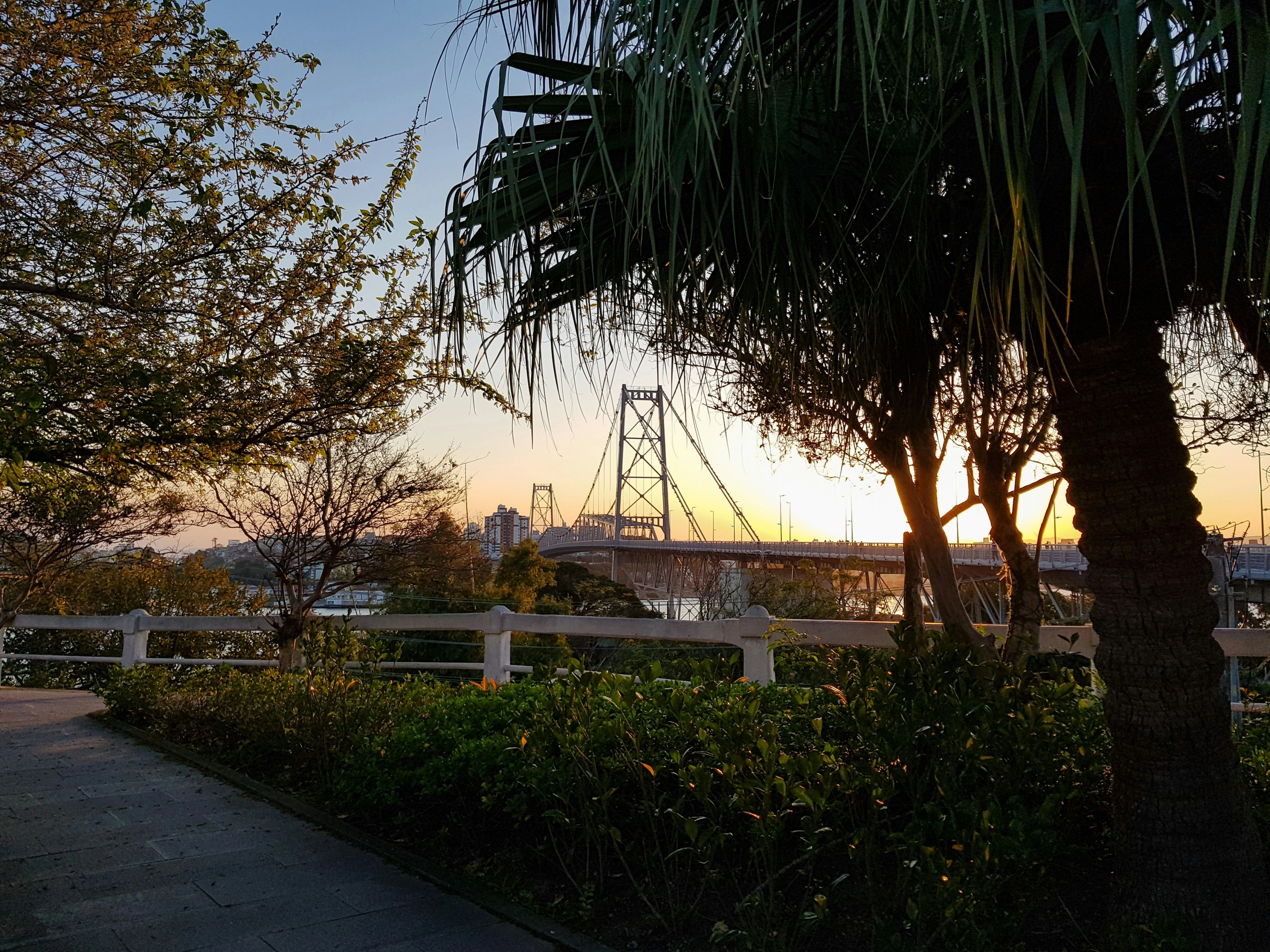
This suspension bridge, built between 1922 and 1926, is the city's emblem: it links the centre to the mainland and is photographed at sunset from the city's viewpoints. Check locally the conditions for crossing, especially on foot.
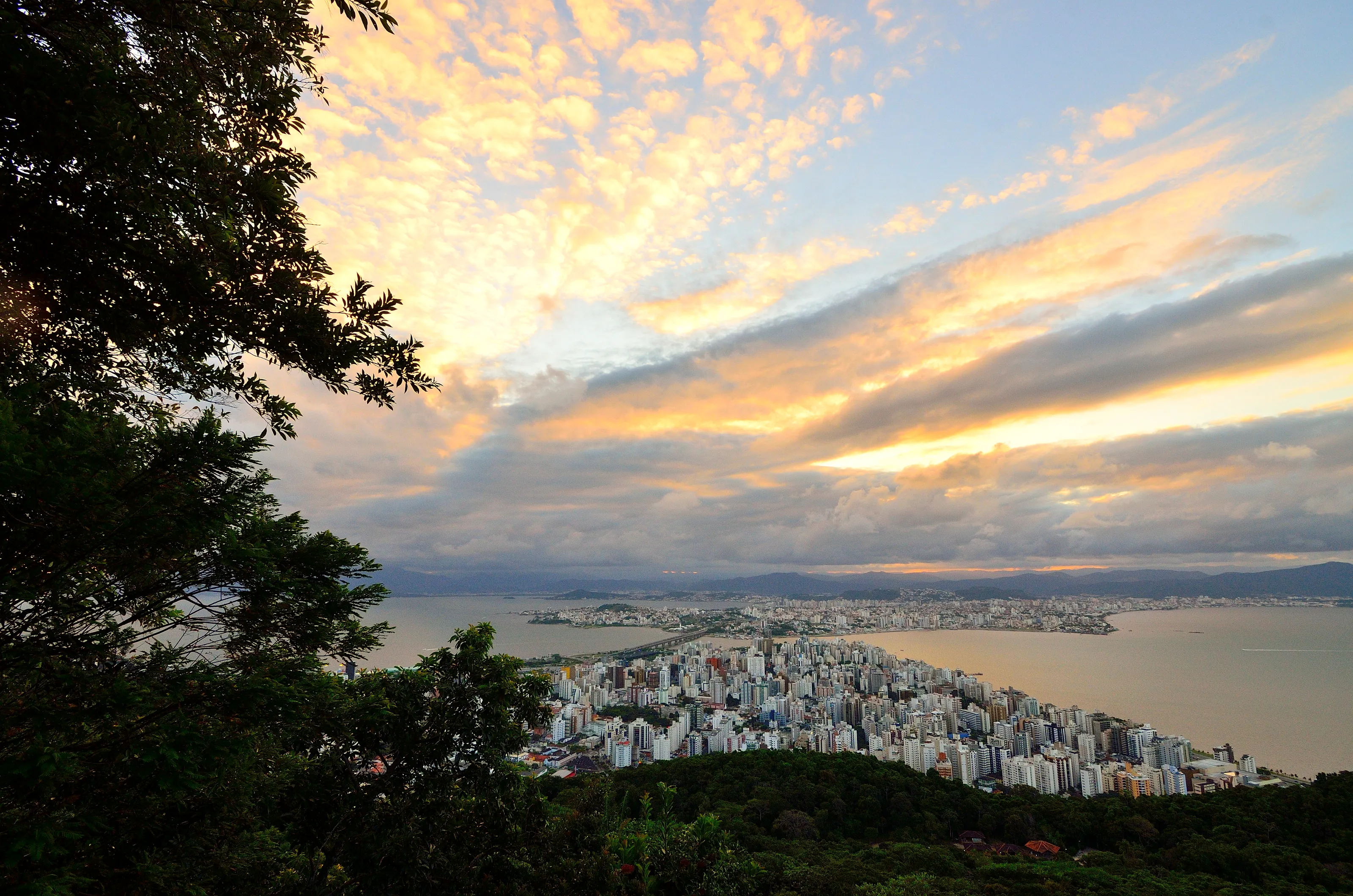
The city from a viewpoint
From the heights you see the dense centre, the strait separating the island from the mainland and the bays. The island's forested hills rise above 400 m according to Wikipedia (FR).
Beaches and nature
More than 40 beaches, dunes and trails
The island has more than 40 beaches according to Wikivoyage (EN), Wikipedia (DE) and Wikipedia (ES); a study cited by Wikipedia (ES) mapped more than 100, depending on how they are counted. In the north, Jurerê, Canasvieiras, Ingleses and Brava are busiest in summer and have plenty of hotels and restaurants. In the east, Joaquina, Mole and Moçambique are surf beaches popular with young people; in the south, Campeche, Armação and Matadeiro are also beautiful and good for surfing. The most isolated, such as Lagoinha do Leste and Naufragados, can only be reached on foot.
Praia Mole
A surf beach on the east coast, Praia Mole is known for its waves, paragliding and scuba diving, according to Wikivoyage (EN). It is very busy in high season.
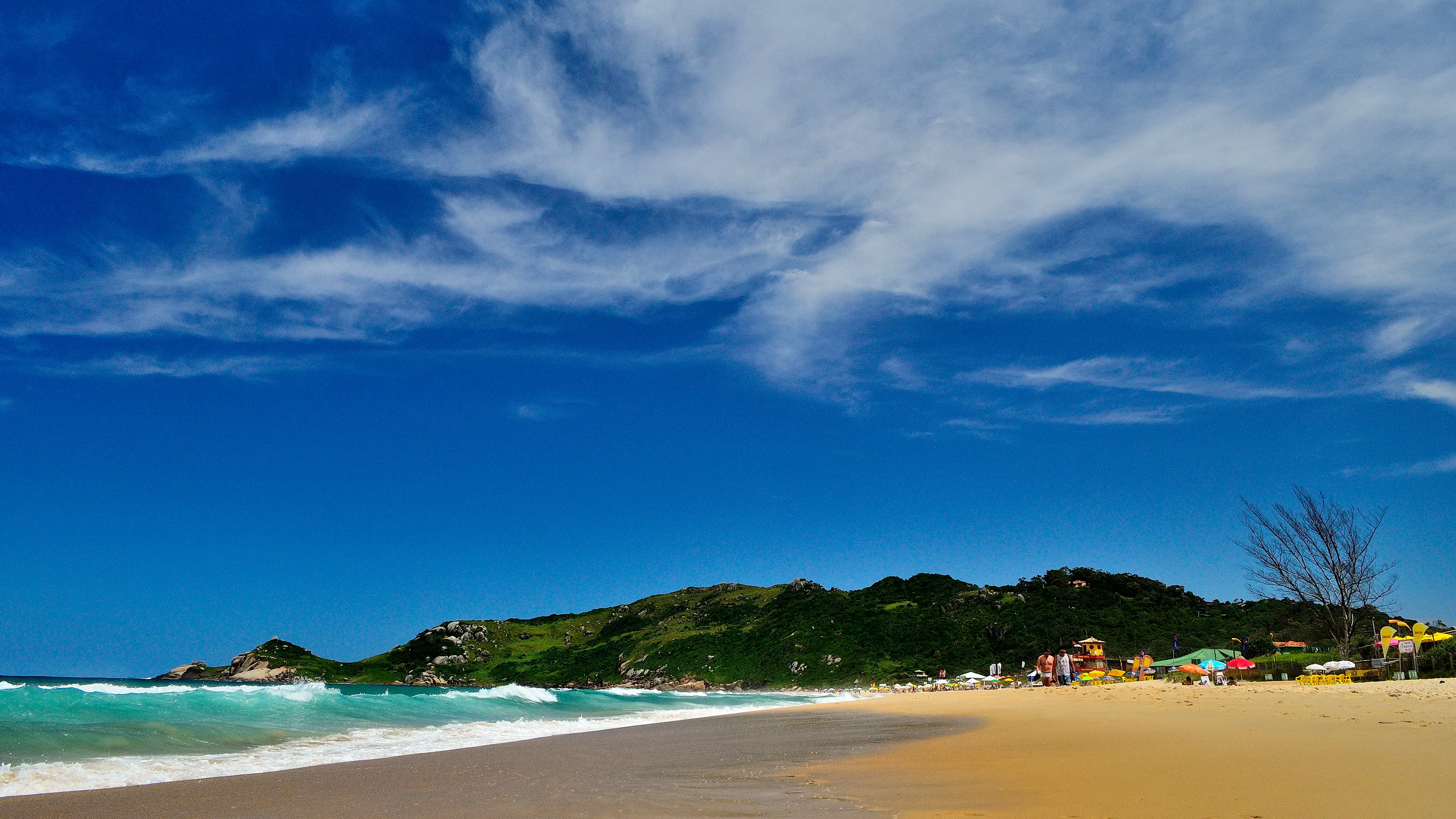
Praia da Galheta
A wild beach among granite rocks, Galheta is reached by a trail of about two hours from Barra da Lagoa, the Trilha da Boa Vista, according to Wikivoyage (EN). The same source lists it as a nudist beach: ask locally.
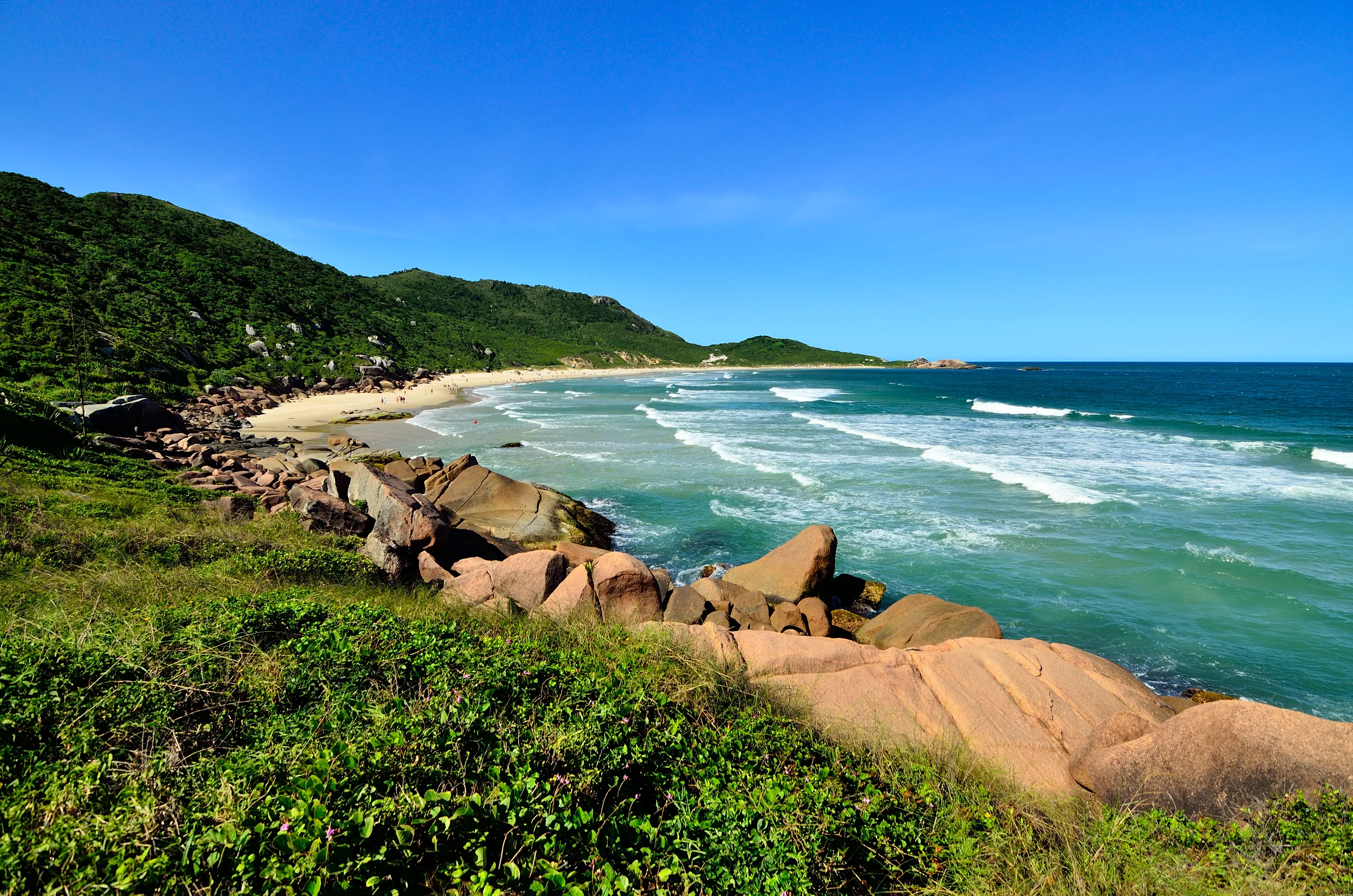
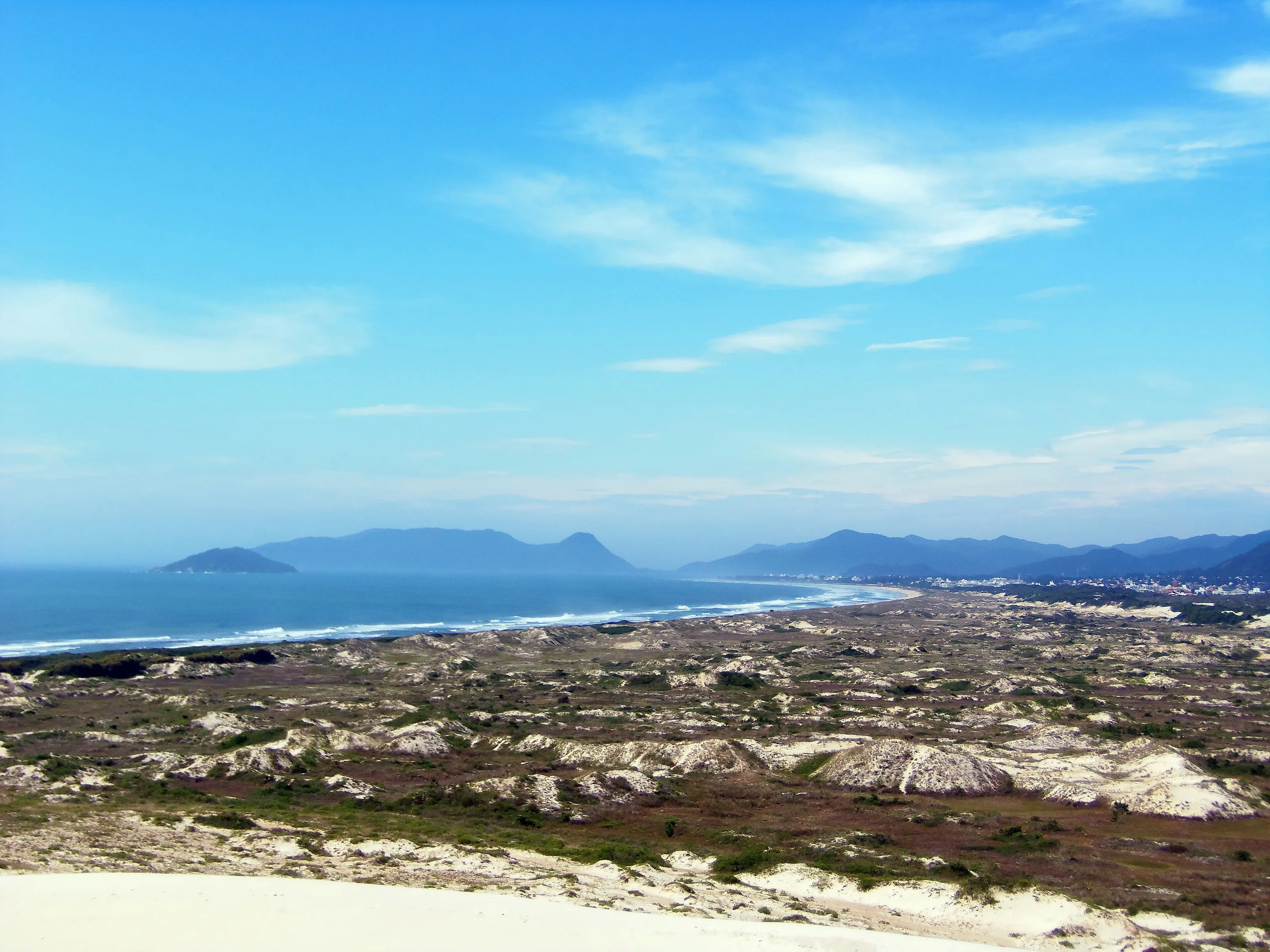
The Joaquina dunes
A large field of dunes stretches north of Praia da Joaquina. Sandboarding is popular, but you can also just walk and watch the sand formations that the wind slowly shifts, according to Wikivoyage (EN).
The lagoon, Ribeirão da Ilha and villages
A lagoon, Azorean villages and oysters
The Lagoa da Conceição
A large lagoon in the middle of the island, the Lagoa da Conceição is the best-known leisure area: water sports (windsurfing, kitesurfing, paddleboarding), restaurants and nightlife, mostly with a young crowd of surfers and students. A forest trail, the Costa da Lagoa, runs along the lagoon. We have no photo of the lagoon.
Ribeirão da Ilha and Santo Antônio de Lisboa
Ribeirão da Ilha, about 36 km from the centre according to Wikivoyage (EN), is an old district that testifies to Azorean immigration: its square has the Nossa Senhora da Lapa church and an ethnological museum. It is also the district known for its oysters. Santo Antônio de Lisboa, on the calm west coast, lines up waterfront restaurants; we have no photo of these villages.
Museums and culture
Modest museums, Azorean heritage and forts
Florianópolis is above all a beach destination; the cultural offer is modest but real. The ethnological museum in Ribeirão da Ilha holds documents and objects from the region's history, which stems from the arrival of about 5,000 Azoreans between 1747 and 1756 (Wikipedia FR). The Projeto Tamar is a conservation centre and museum devoted to sea turtles. The Cruz e Sousa palace, the Teatro Álvaro de Carvalho and the 18th-century forts, such as the Fortaleza de Santa Cruz on Anhatomirim island and the São José da Ponta Grossa fort, complete the visit. We have no photo of these places; we give no fares, which change.
Food and drink
Seafood, oysters and Azorean heritage
Seafood and oysters
The city is known for its fresh seafood, notably oysters, especially those from Ribeirão da Ilha, according to Wikivoyage (ES). Almost every restaurant serves them, raw, steamed or gratinated. We have no photo of the oysters.
Azorean and Italian cooking
Azorean settlement left a well-liked cuisine, and Italian dishes, such as macarronada, are also common. In the centre, pay-by-weight buffets serve salads, fruit and daily dishes at modest prices. In Santo Antônio de Lisboa, many tables stand on the waterfront.
Getting around
Buses, ride-hailing and rental car
Buses
Dozens of bus lines run from the centre to the beaches; you often have to change at a regional terminal, and the journey from the centre to the beaches takes 35 to 60 minutes according to Wikivoyage (EN). Air-conditioned executive buses link the main beaches directly to the centre. The Rita Maria bus terminal serves major Brazilian cities and several neighbouring countries.
Car and ride-hailing
A car is recommended to see all the beaches and sights, and one can be rented at the airport and on the island; traffic becomes very heavy in high season. Taxis and ride-hailing are an alternative, especially in the evening.
Staying safe
Keep an eye on your belongings, follow bathing flags and instructions, especially on surf beaches, and check your home country's official travel advice before departure.
Budget
A medium budget, higher in high season
Florianópolis remains affordable compared with Europe for pay-by-weight meals and buses, but accommodation and popular restaurants rise in high season, from December to February, when the city hosts several times its usual population according to Wikivoyage (EN). The overall level is therefore medium, and high in peak season. We give no figures, because prices change with the season and the exchange rate.
The air fare remains the most variable item. SniperAir tracks prices to FLN and compares them with the route's history.
When to go
When to visit Florianópolis? Beach summer from December to March, seasons reversed
Southern summer (December to March)
Hot, sunny and humid, with an average high of about 29 °C in January; the sea is pleasant for swimming. This is the high season, very crowded, with traffic jams.
Autumn (March to June)
An in-between season, less crowded; rain falls throughout the year.
Southern winter (June to September)
Drier but cool and windy, with highs around 21 °C and lows around 13 °C; poorly suited to the beach, except for surfers as waves get bigger.
Spring (September to December)
Weather warms before the high season; a good time to avoid crowds.
The climate is humid subtropical, with marked seasons and an average annual temperature of about 24 °C according to Wikipedia (FR). There is no dry season: it rains more in summer, with heavy rain from January to March, and rainfall is lowest from June to August. The southern hemisphere reverses the seasons: summer starts in December. The best months for the beach are December to March, according to Wikivoyage (EN); outside them, air and sea are cool.
By length of stay
What to do in Florianópolis by length of stay
The essentials
The Hercílio Luz bridge, the centre, Praia Mole or Joaquina and an oyster meal.
Going deeper
Sandboarding on the dunes, the Lagoa da Conceição, Santo Antônio de Lisboa and Ribeirão da Ilha.
Remote beaches
A trail to Galheta or Naufragados and the beaches of the south of the island.
In pictures
Florianópolis in pictures
You might also like
Similar destinations
FAQ
Frequently asked questions about flights to Florianópolis
How do you get from Florianópolis airport to the centre?
The airport (FLN) is on the island, about 12 km from the centre. City buses, taxis and ride-hailing reach the centre and the beaches, and car rental firms are on site; traffic is heavy in high season.
When is the best time to visit Florianópolis?
From December to March for the beach, in the southern summer, with heat and crowds. In winter the air is cool and windy: less suited to swimming but good for surfing. Spring avoids the high season.
Is Florianópolis expensive?
The level is medium compared with Europe, with affordable pay-by-weight meals and buses; accommodation and popular restaurants rise in high season, from December to February.
How many days should I plan in Florianópolis?
Two to three days cover the bridge, the centre and one or two beaches; four to five add the dunes, the lagoon and Ribeirão da Ilha, and more for remote beaches.
How do you get around Florianópolis?
By bus, often with a change at a terminal, or by ride-hailing and taxi; a rental car is recommended to see all the beaches, but traffic is heavy in summer.
What should I eat in Florianópolis?
Fresh seafood and above all oysters, notably from Ribeirão da Ilha, as well as Azorean-heritage cooking and Italian dishes such as macarronada.
How much does a flight to Florianópolis usually cost?
The price depends mainly on your departure city, the period and the booking date. The opportunities section above shows real examples of prices already detected by SniperAir to this destination.
How do I get alerted when a flight to Florianópolis drops below my budget?
Create an alert profile with your departure airport, Florianópolis as the destination and your maximum budget. You are notified automatically as soon as a matching price is detected.
Ready to head to Florianópolis?
Set your budget and let SniperAir monitor fares for you.
Create my alert