
Cheap flights to Cayenne
Set your departure airport and maximum budget: SniperAir tracks prices to Cayenne and alerts you the moment a deal matching your criteria appears.
Quick summary
Country
French Guiana
Continent
South America
Airport
CAY
Currency
Euro (EUR)
Time zone
UTC-3 (no daylight saving time)
Deals already spotted to Cayenne
Real flight examples detected by SniperAir, with their reference price.
Loading examples…
Why track Cayenne with SniperAir
You do not need to compare prices every day
Choose your departure
Enter your departure airport and your maximum budget for a flight to Cayenne (CAY).
SniperAir keeps watch
Our systems continuously compare new prices with the real price history of the route. SniperAir monitors prices and alerts you: it does not sell or book tickets.
You receive an alert
As soon as a price matches your criteria, you are notified, without having searched for anything yourself.
Airport and getting into town
An airport in Matoury, about fifteen kilometres from the centre
Cayenne - Félix Éboué (CAY)
Cayenne - Félix Éboué Airport (CAY), formerly known as Rochambeau, is in the commune of Matoury, 13 kilometres (8 miles) southwest of Cayenne according to Wikipedia (EN); the German Wikipedia says 16 km. It is French Guiana's main international airport. Wikivoyage (EN) lists flights to Paris Orly (Air France and Air Caraïbes), Martinique, Guadeloupe, Paramaribo and Belém.
Distances differ between sources (13 to 16 km). There is no shuttle bus between the airport and the city according to Wikivoyage (EN and FR), so plan on a taxi or a rental car and check the trip before you travel. We do not publish fares.
Cayenne is the capital of French Guiana and the most populous French-speaking city in South America (French Wikipedia). It has 62,675 inhabitants on 1 January 2023 on just 23.6 square kilometres, the smallest commune in Guiana by area. It occupies the island of Cayenne, between the estuary of the Cayenne River and the Atlantic, with Matoury and Rémire-Montjoly as neighbours: built-up areas spill well beyond the commune.
Arriving well
Avoid arriving on a Sunday: almost everything is closed and your first day of holiday is spent walking around an almost deserted city (Wikivoyage EN and FR). A few Chinese-owned groceries stay open, and food trucks sometimes set up on the Place des Palmistes.
French territory
French Guiana is part of France and of the European Union. Entry rules depend on where you travel from and on your nationality, and a yellow fever vaccination is required on entry according to our sources: check the official sites before you book.
Landmarks
A yellow cathedral, a square of royal palms and Creole houses
Downtown Cayenne is small, with a grid plan drawn in 1821 by the architect Sirdey, ringed by hills (Cépérou, Bourda, Montabo). It is covered on foot. Built on a swampy site, the city does not see the ocean from its centre: mangroves surround it and the beaches lie in the suburbs (Wikivoyage EN).
Saint-Sauveur Cathedral
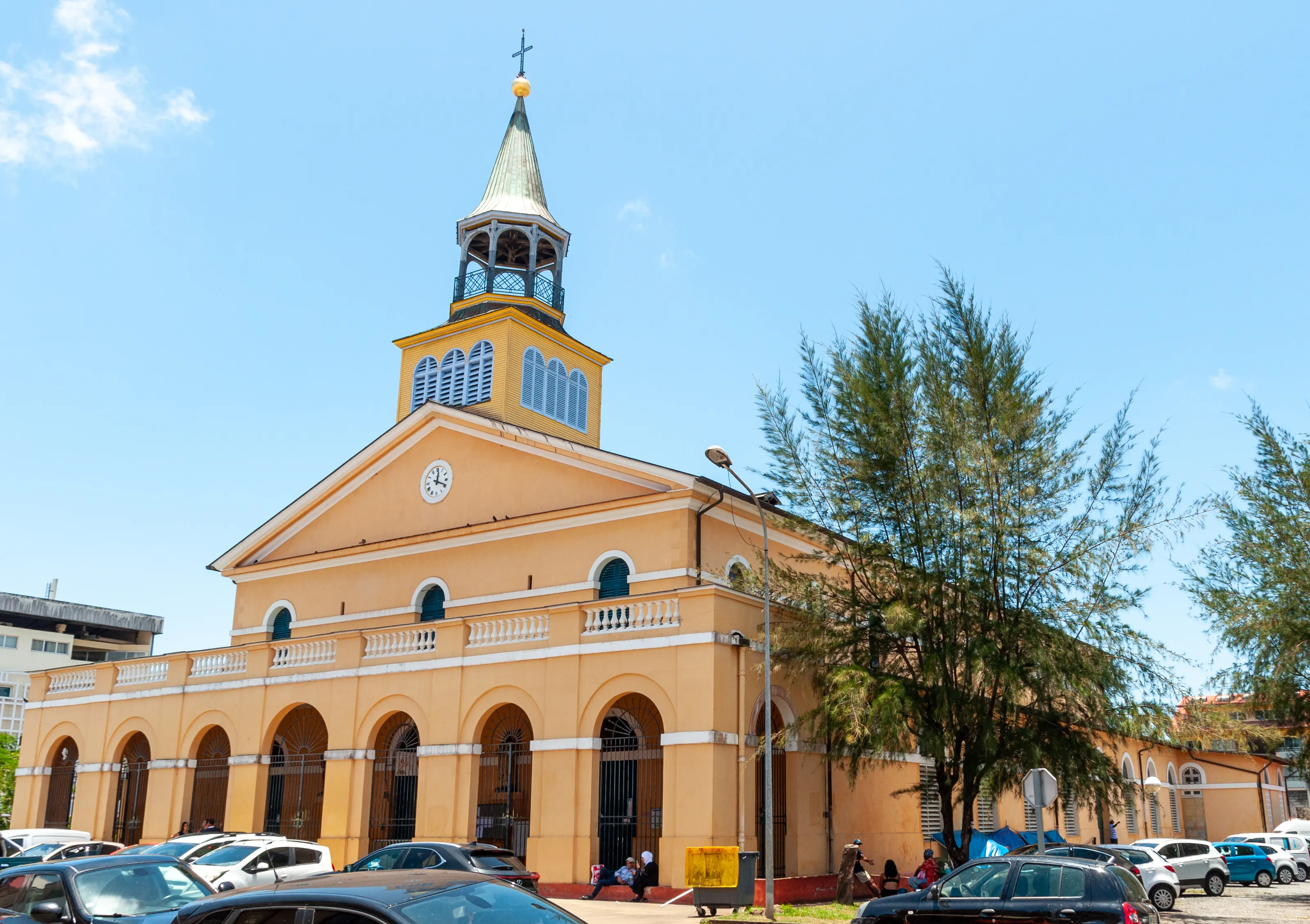
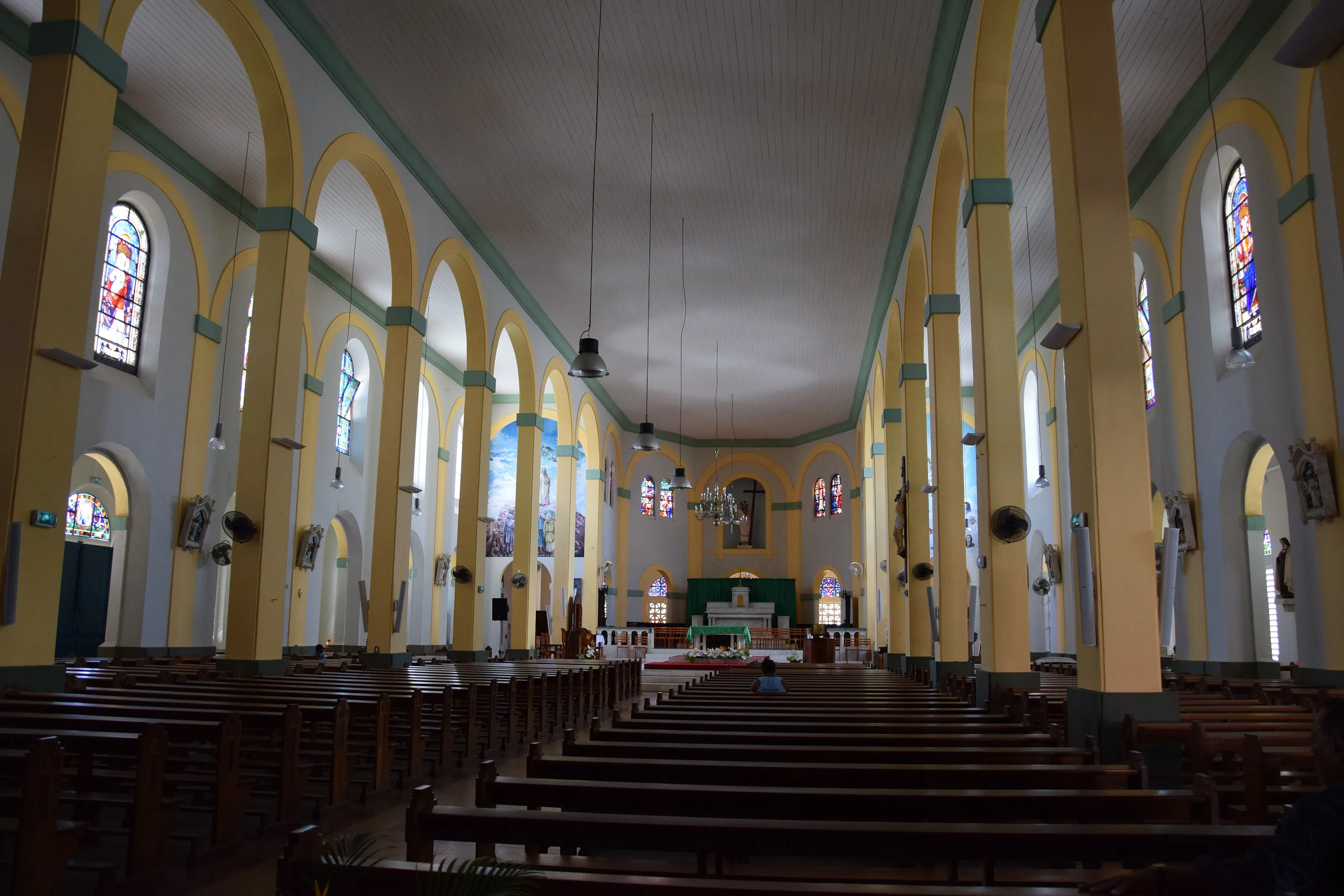
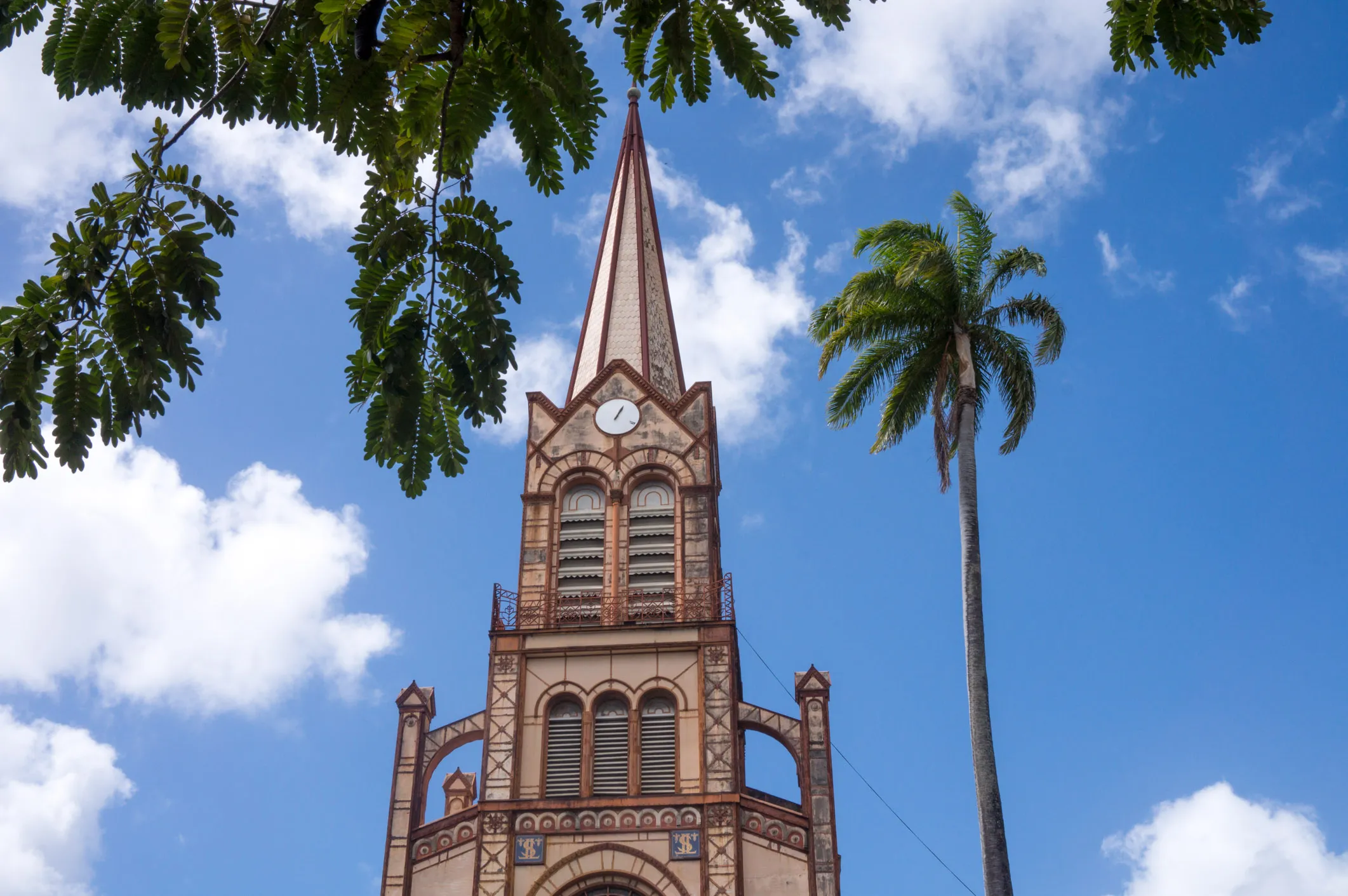
Decided on in 1823 to replace the old church of Saint-Nicolas, the cathedral was built from 1825; it became a cathedral in 1934 and is a listed historic monument according to the French Wikipedia. Wikivoyage (EN) calls it a major landmark. Its pale yellow facade, spire and clock can be seen from several streets in the centre, and it overlooks a busy shopping district.
The Place des Palmistes
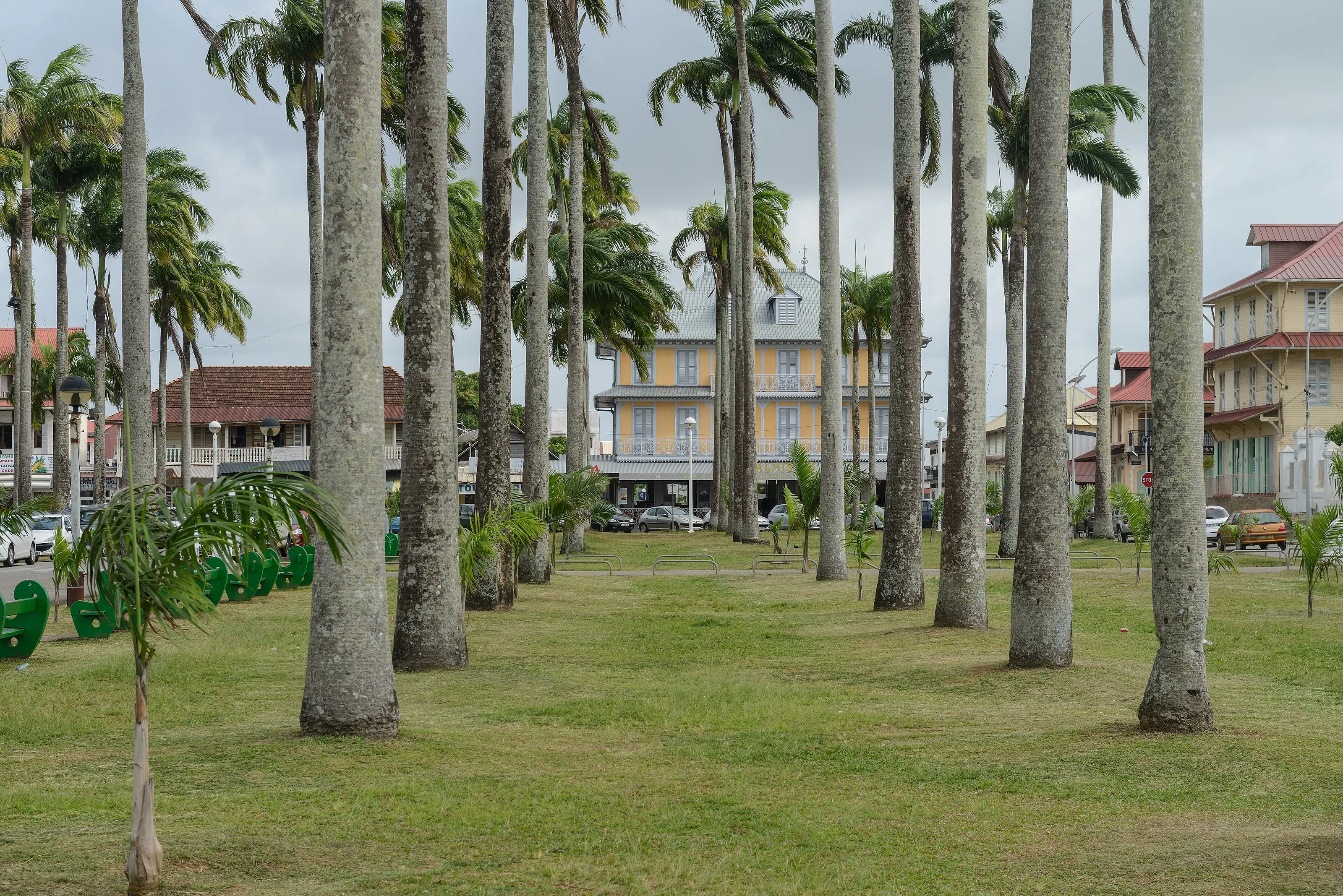
Laid out after the city walls were demolished in 1810 and first called the Place de la Savane, it was later planted with royal palms that gave it its name (French Wikipedia). It has a statue of Félix Éboué, a local hero, and is today a place for meeting and strolling. In the evening, food trucks sell chips, sandwiches, bami and nasi (Javanese specialities) and local juices to take away.
The Creole houses of the centre
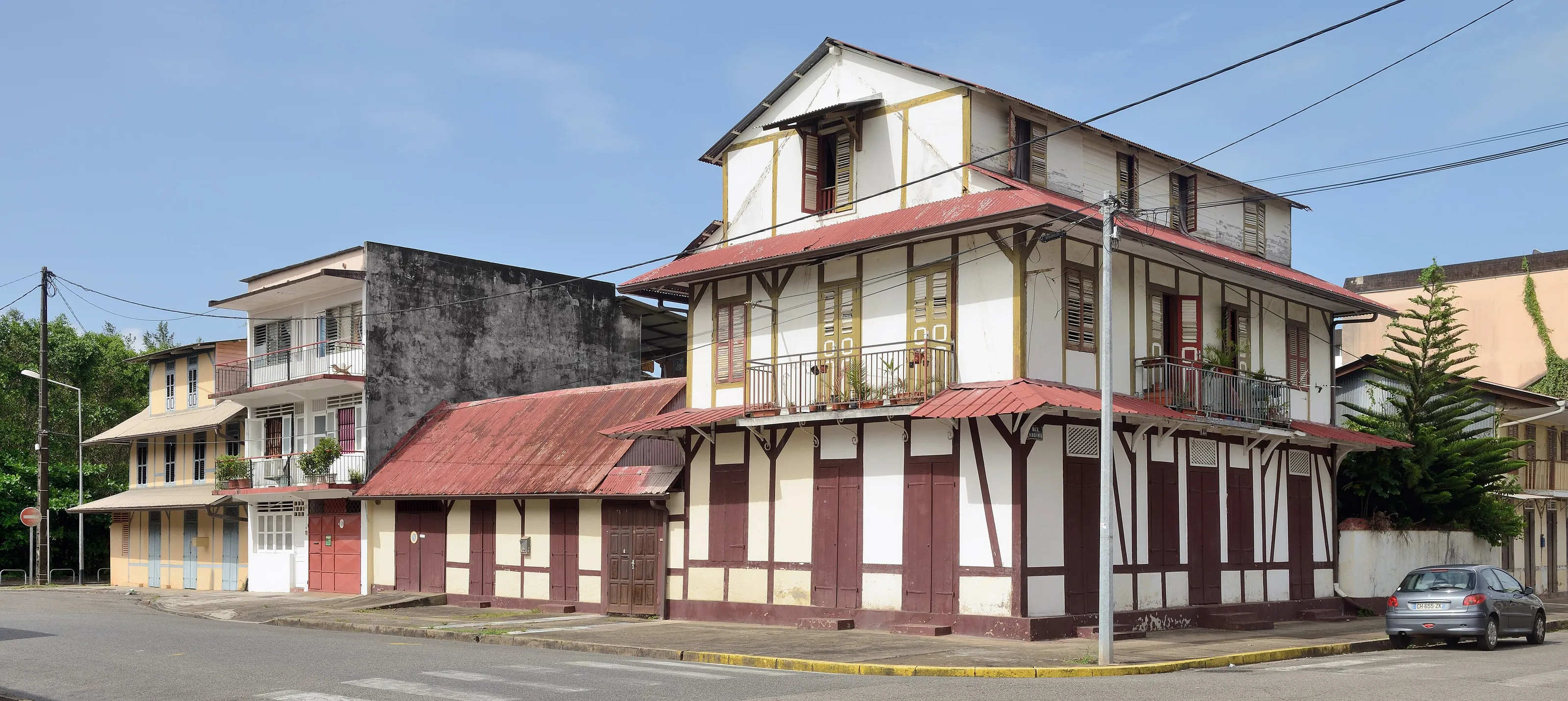
Wooden Creole houses, with half-timbering or balconies and shutters, are one of the town's charms; the French Wikipedia speaks of the renovation of old houses and Wikivoyage (FR) of beautiful Creole houses. They stand out at street corners with red sheet-metal roofs and give the centre a Caribbean look that German Wikivoyage finds close to French architecture, a curiosity in South America.
Rue Schoelcher and the grid
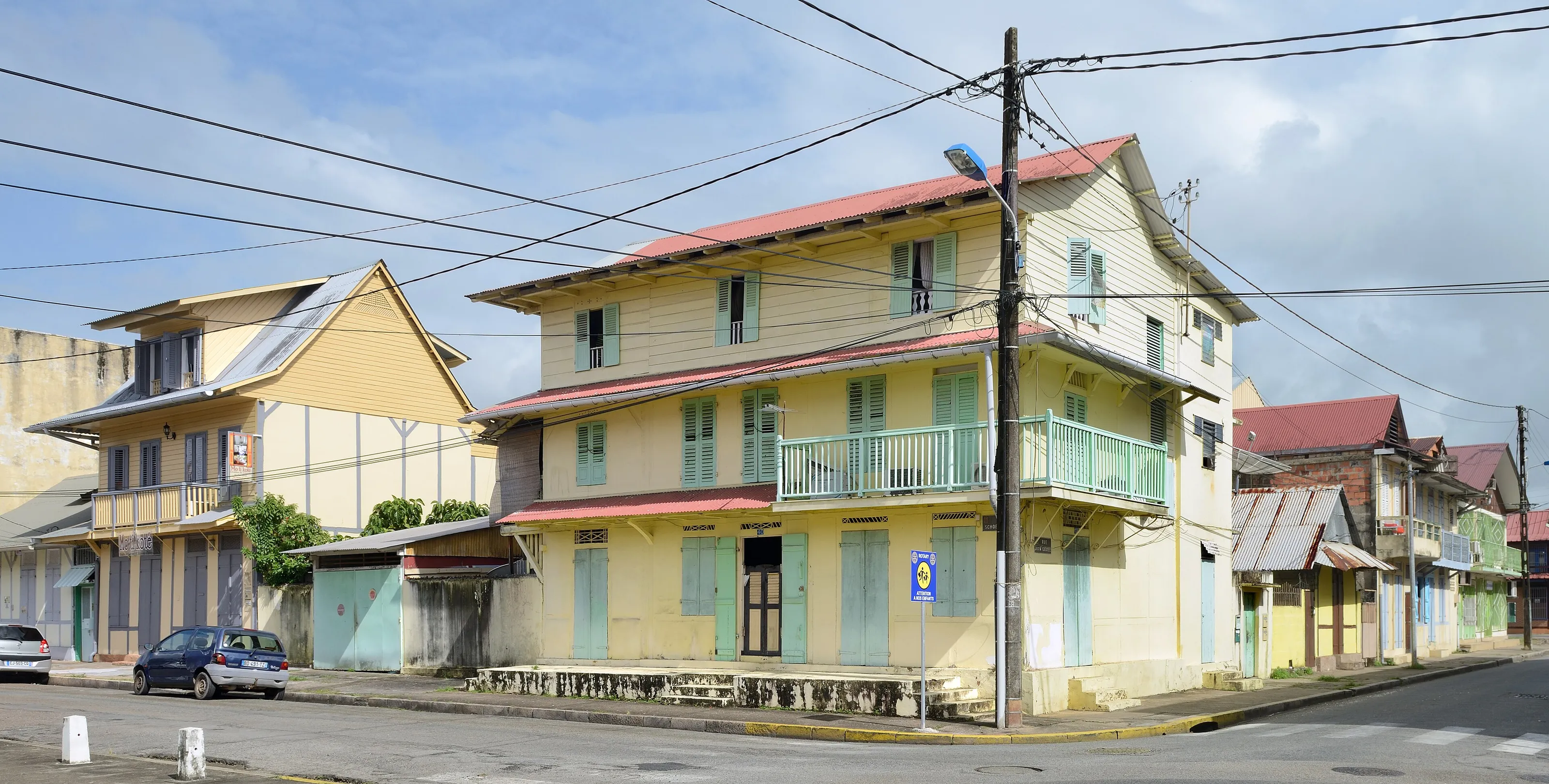
Streets at right angles running north-south and east-west make it easy to find your way, though direction signs are few (Wikivoyage FR). Rue Schoelcher and its neighbours show timber facades painted yellow, green or blue with large shaded balconies. It is a good place for a walk early in the morning, before the heat.
Fort Cépérou and the botanical garden
On the hill where the first fort was built in 1643, Fort Cépérou gives a view over the city, the river and the ocean; admission is free according to Wikivoyage (EN). The botanical garden in the town centre covers three hectares: it is the former King's Garden, where spices from India were acclimatised (French Wikipedia).
The market and the Place du Coq
Near the old port, the Place du Coq and the covered market are next to each other; the central vegetable market is held on Wednesday, Friday and Saturday early in the morning (Wikivoyage EN and FR). The regional market, where fish is sold, opens every morning except Sunday.
Beaches and trails
The beaches are on the outskirts, notably at Rémire-Montjoly, where the Salines de Montjoly combine beach, dunes and mangrove (Wikivoyage EN). The sea is often brownish because of river mud (Wikivoyage EN). The easy Montabo trail links the city with the nearest beach through mangrove and forest.
Museums and culture
Cabinets of curiosities, Guianese cultures and carnival
Cayenne has no great museums, but several small institutions tell the story of French Guiana. The pointers below come from Wikipedia and Wikivoyage; we give no prices or opening times because they vary, so check them before you visit.
Alexandre-Franconie Departmental Museum
Housed in the Franconie building, built between 1824 and 1842 near the Place des Palmistes, the museum has been listed as a historic monument since 1986. It shows 'cabinets of curiosities': stuffed animals, insects, Amerindian and Creole crafts, the history of the colony, scenes from penal colony life and an exhibition on Félix Éboué (Wikivoyage FR and EN).
Museum of Guianese Cultures
On rue Madame Payé, it documents the heritage and way of life of the different peoples of Guiana, with a reconstructed traditional carbet and a documentation centre (Wikivoyage FR and EN).
The Franconie library and the cultural centre
The library, inaugurated in 1885, shares the Franconie building. The Centre de rayonnement départemental, opened in 2004 in the Zéphir district, brings together the music and dance school, the regional cultural office and an auditorium (French Wikipedia).
Carnival
Guianese carnival runs from Epiphany to Ash Wednesday, between January and March. Groups parade on Sundays around floats, with percussion and brass; the touloulous, fully masked women, dance on Friday and Saturday nights at masked balls unique to Guiana (French Wikipedia, Wikivoyage EN). Dates change every year, so check before you book.
Food and drink
A Creole, Chinese, Javanese and Lebanese mosaic
A mosaic cuisine
Cayenne's restaurants reflect the ethnic mosaic of Guiana: Creole, French, Chinese, Lebanese and Javanese (Wikivoyage FR and EN). Chinese restaurants are said to be the most affordable; in the evening the food trucks on the Place des Palmistes offer bami, nasi and sandwiches (French Wikipedia).
Markets
The central market, with its halls, is for vegetables and meat; the regional market sells local fish. You will also find fruit, spices, juices and crafts.
Drinks
Local juices and rum from the Antilles and Guiana are found in shops and at the market (German Wikivoyage notes fruit and regionally produced rum at low prices). We do not recommend a specific address.
Going out
Cayenne has little nightlife outside carnival according to Wikivoyage (FR, EN): a few bars in the centre and nightclubs mostly on the outskirts. On Sundays almost everything is closed.
Getting around
On foot in the centre, taxi or car for the rest
On foot
In the town centre the best way to get around is on foot (Wikivoyage FR). The grid plan helps orientation, but direction signs are few.
Bus, taxi and car
The city has a five-line bus network and is the only town in Guiana with urban buses (Wikivoyage EN and DE). Outside the centre the network is thin and a rental car is strongly recommended. Rémire-Montjoly is about 15 minutes away by car and Matoury about 25 minutes (Wikivoyage FR). Taxis are booked mostly by phone or at stands and may be hard to find late in the evening.
To the rest of Guiana
Kourou is 64 km away, Saint-Laurent-du-Maroni 268 km and Saint-Georges 189 km (French Wikipedia). The coast is served by a coastal road; the rest of the territory is explored mostly by river or by plane.
Budget and precautions
French price levels, with imported goods costing more
Price level
The currency is the euro. Prices are close to French levels, with imported goods often costing more locally according to our research. We do not publish price ranges because we could not cross-check them with two independent sources; museum fees and transport fares should be checked before your visit.
Flights
The flight remains the most variable item in the budget, especially in July and August, the tourist high season (Wikivoyage FR). SniperAir monitors prices to CAY and compares them with the route's history, but it does not sell or book tickets.
Precautions
Opinions on safety in Guiana vary: read the official advice of your own country before you leave and keep to the usual caution of a city, especially in the evening. For health, find out about required vaccinations. French Guiana is generally considered outside the usual cyclone belt; still, follow the forecasts.
When to go
Equatorial: a dry season from July to November, rain the rest of the year
July to November
The dry season, with October the hottest month (French Wikipedia); usually the most pleasant time to visit.
Mid-November to February
The short rainy season, with carnival from January to March and year-end holidays.
March
The 'little summer' of March: a short break between two rainy periods.
Late March to June
The long rainy season, with heavy but generally short showers.
Cayenne has a humid equatorial climate: 26 °C on average, 22 °C in the morning and 32 °C in the afternoon, with about 3,000 mm of rain a year and a good amount of sun (French Wikipedia). Rain is usually heavy but short, sometimes at night in the dry season. The trade winds temper the heat. The exact season dates vary a little from one source to another, so we publish broad windows.
By length of stay
What to do in Cayenne depending on how long you stay
The centre on foot
Saint-Sauveur Cathedral, Place des Palmistes, Fort Cépérou, the botanical garden and the Creole houses, with lunch at the market.
Museums and markets
The Franconie museum, the Museum of Guianese Cultures, the central market and the fish market, then a beach or the Montabo trail.
Beyond the city
Rémire-Montjoly and its Salines, then Kourou and the Îles du Salut, or a trip into the forest and along the rivers to see inland Guiana.
In pictures
Cayenne in pictures
You might also like
Similar destinations
FAQ
Frequently asked questions about flights to Cayenne
How do I get from Cayenne airport to the city centre?
Félix Éboué airport (CAY) is in Matoury, 13 to 16 km from the centre depending on the source, or 20 to 30 minutes by road. There is no shuttle bus: take a taxi or a rental car and check the trip before you travel.
What is there to see in Cayenne?
The Place des Palmistes, Saint-Sauveur Cathedral, Fort Cépérou, the botanical garden, the Creole houses, the markets and the Franconie and Guianese Cultures museums.
Is Cayenne a beach town?
Not really: mangroves surround the centre and the beaches are on the outskirts, notably at Rémire-Montjoly, with water that is often brownish because of river mud.
When is the Cayenne carnival?
From early January to Ash Wednesday (February or March), with big parades on Sundays and masked balls at weekends. Dates change every year, so check before you book.
When is the best time to visit Cayenne?
Mostly during the dry season, from July to November. French Guiana is equatorial: it rains hard the rest of the year, but usually in short showers.
Do I need a visa or a vaccine for French Guiana?
French Guiana is French territory: entry rules depend on your nationality and where you travel from. Yellow fever vaccination is required according to our sources, so check the current official conditions.
How much does a flight to Cayenne usually cost?
The price depends mainly on your departure city, the time of year and how far ahead you book. The "opportunities" section above shows real examples of prices SniperAir has already detected to this destination.
How do I get alerted when a flight to Cayenne drops below my budget?
Create an alert profile with your departure airport, Cayenne as the destination and your maximum budget. You are notified automatically as soon as a matching price is detected.
Ready to head to Cayenne?
Set your budget and let SniperAir monitor fares for you.
Create my alert