
Cheap flights to Georgetown
Set your departure airport and maximum budget: SniperAir tracks prices to Georgetown and alerts you the moment a deal matching your criteria appears.
Quick summary
Country
Guyana
Continent
South America
Airport
GEO
Currency
Guyanese dollar
Time zone
UTC-4
Deals already spotted to Georgetown
Real flight examples detected by SniperAir, with their reference price.
Loading examples…
Why watch Georgetown with SniperAir
You don't need to compare prices every day
Pick your departure
Enter your departure airport and your maximum budget for a flight to Georgetown (GEO).
SniperAir watches
Our systems continuously compare new prices with the real price history of the route. SniperAir watches prices and alerts you: it does not sell or book tickets.
You get an alert
As soon as a price matches your criteria you are notified, without having searched anything yourself.
Georgetown Airport
Guyana's gateway
Cheddi Jagan International Airport
About 40 km south of Georgetown.
Into the city
Cheddi Jagan International (GEO), near Timehri, lies about 41 km south of Georgetown (Wikipedia, Wikivoyage). A taxi takes roughly 45 to 60 minutes depending on traffic. Wikivoyage quotes a fixed licensed-taxi fare of about G$5,000, around US$25, plus any toll; a shared minibus is far cheaper but ends at a bus park, so you still need a short taxi hop. Check the fare on arrival, as the figure comes from Wikivoyage only.
Ogle airport
Domestic and charter flights leave from Ogle (OGL), about 10 km (6 miles) east of the centre. It is the usual departure point for Kaieteur flights.
On arrival
US dollars are accepted in many places, but Wikivoyage notes there is no ATM in the arrivals hall, so carry a little cash.
Colonial architecture
Victorian timber and Dutch engineering
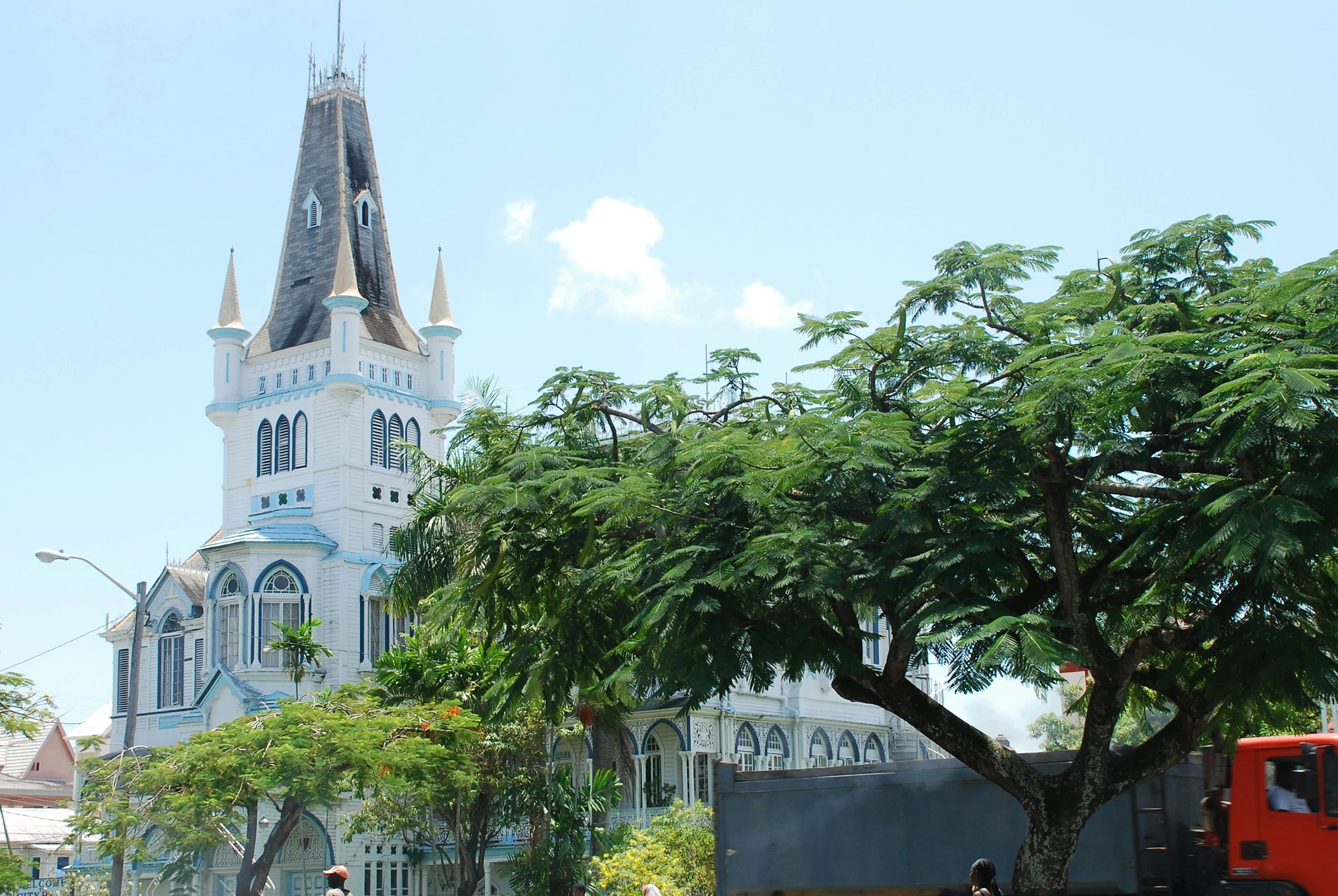
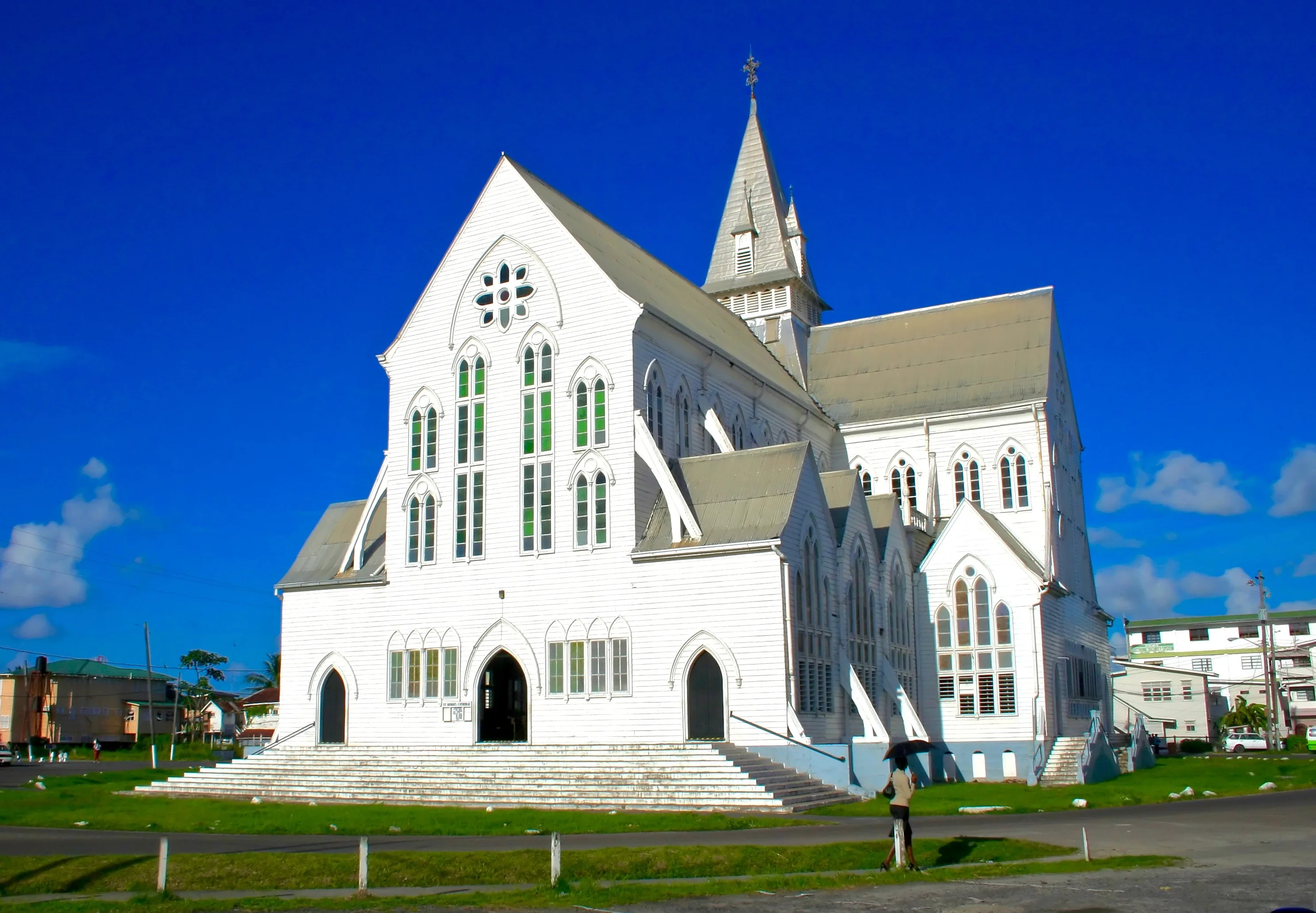
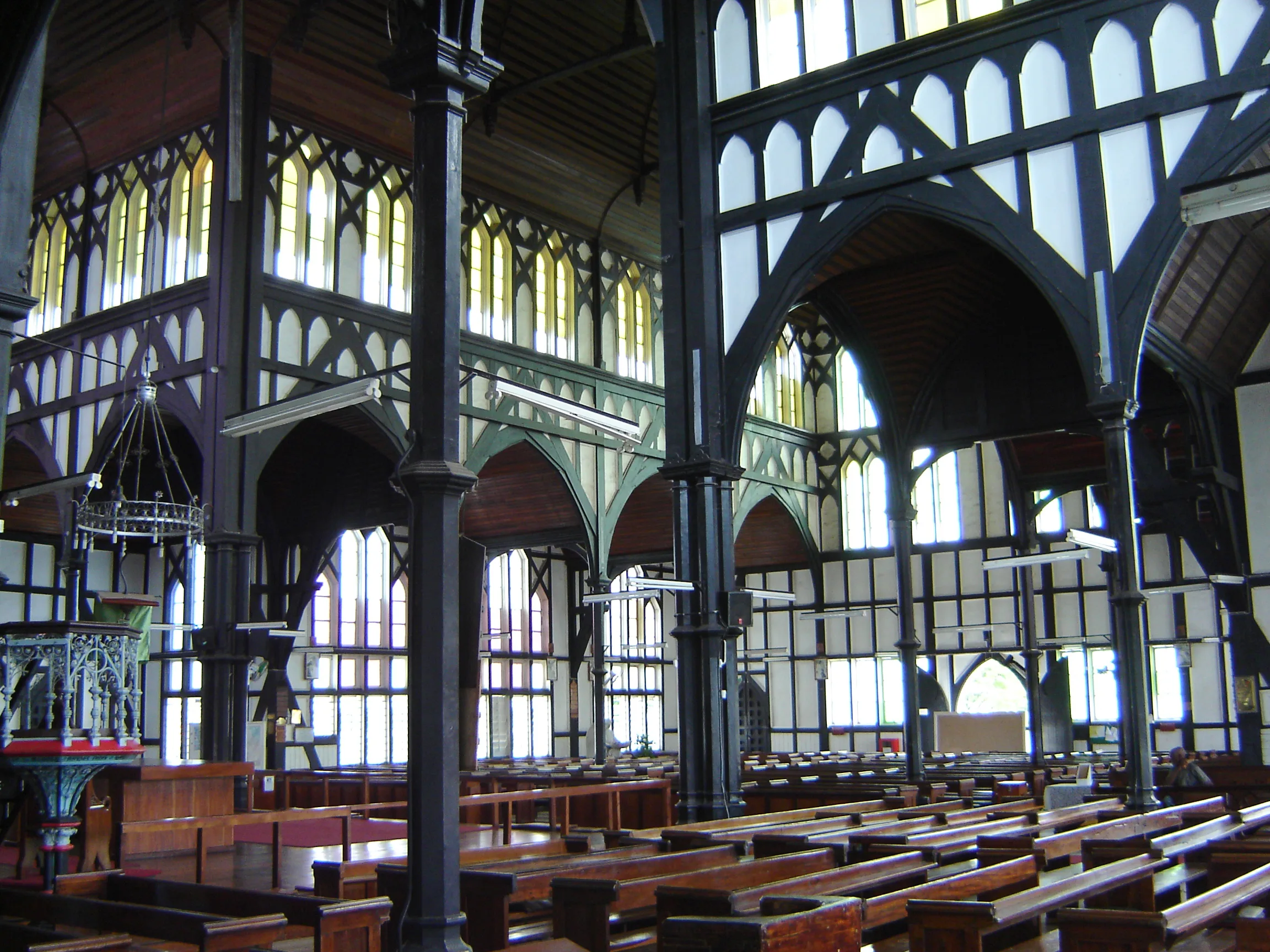
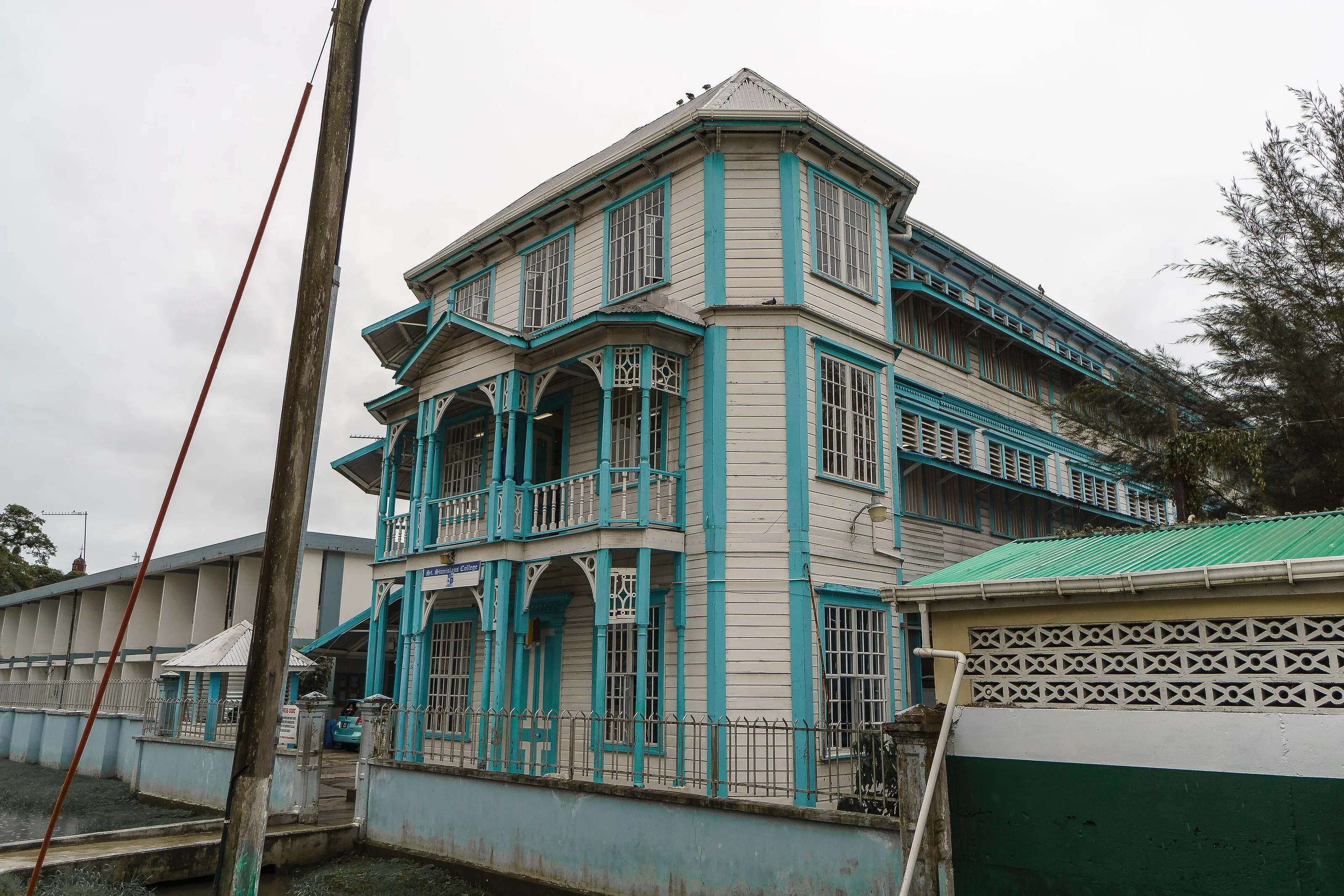
Georgetown stands out for its 19th-century Victorian wooden buildings, unlike anywhere else in the Caribbean or South America — wide verandas, jalousie windows and the city's signature "Demerara shutters," all set along wide, tree-lined avenues. St. George's Cathedral, an Anglican church built entirely of local greenheart timber, is considered one of the tallest wooden structures in the world and embodies this craftsmanship on its own.
Canals, seawalls and polders
A direct legacy of Dutch colonial engineering, the city sits largely below sea level and is protected by a network of seawalls, canals and sluice gates (kokers) still in use today — an urban layout comparable to the Netherlands, transplanted to the tropics.
Stabroek Market
A clock tower and stalls as far as the eye can see
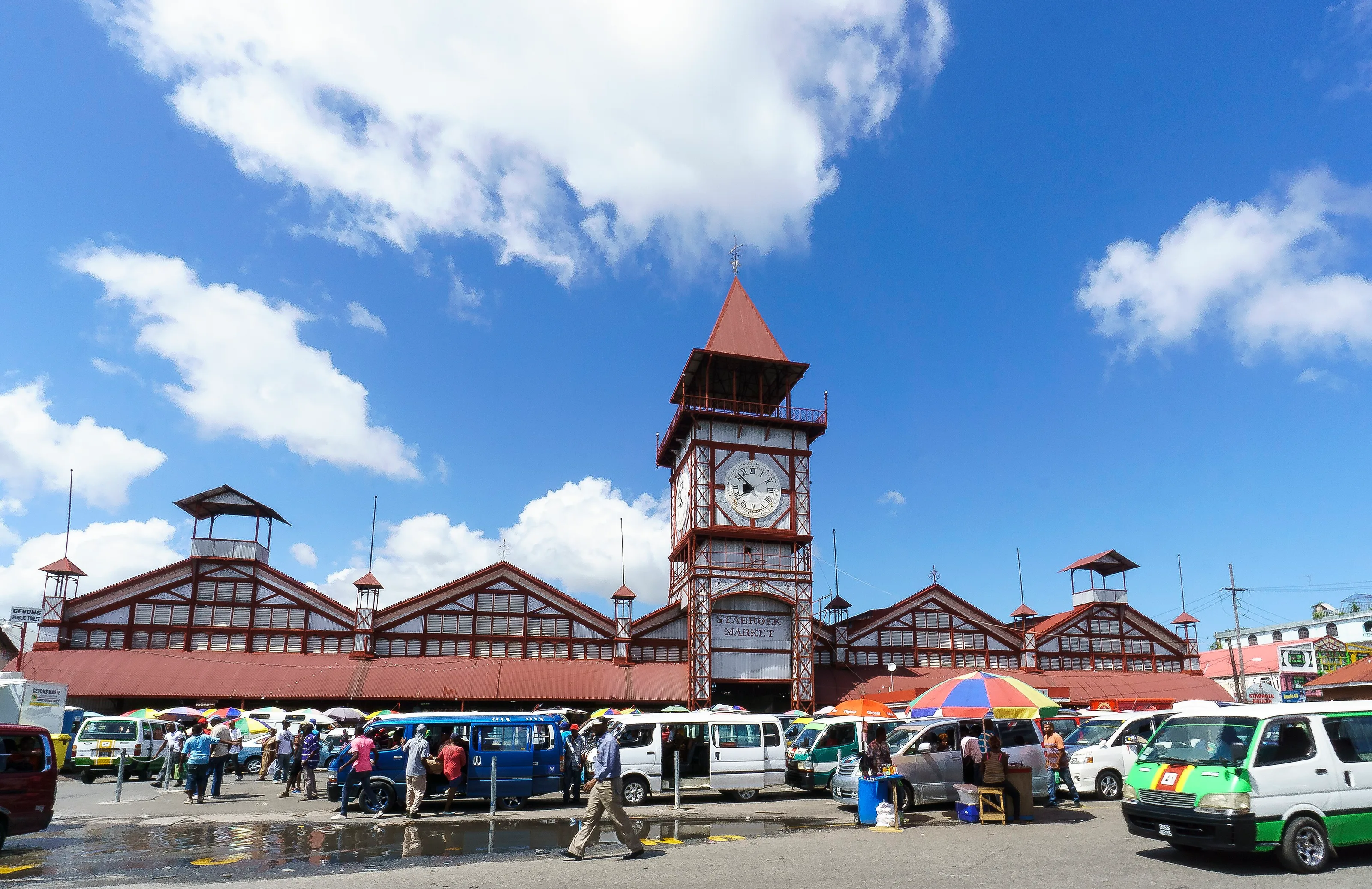
Recognizable by its red-and-white cast-iron clock tower, shipped from England in 1881, Stabroek Market is Georgetown's commercial heart: hundreds of vendors sell fresh produce, gold jewelry, Indigenous handicrafts, hammocks and traditional remedies, spilling out into the surrounding streets.
The seawall
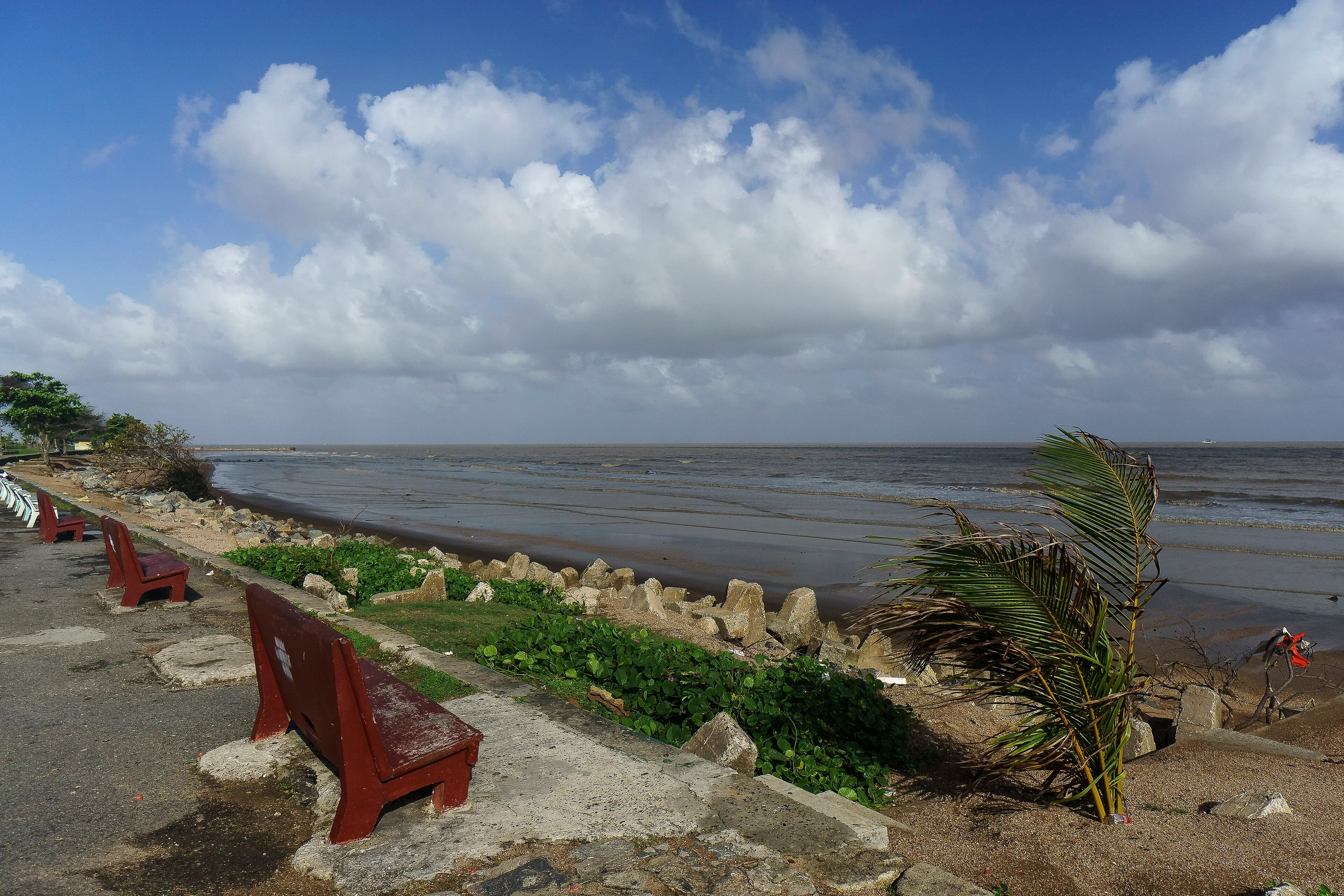
Georgetown's seawall, a long waterfront promenade, comes especially alive at sunset — an essential local ritual for taking the city's pulse away from the usual tourist trail.
Museums and gardens
National museum, anthropology, art and rum
Georgetown is not a city of grand museums, but it has several small ones, free or cheap, that pair well with a walk past the wooden streets. Opening hours and prices change, so check locally.
| Place | Good to know |
|---|---|
| National Museum of Guyana | Collections dating from 1868 according to Wikivoyage DE, next to the national library; natural and cultural history. |
| Walter Roth Museum of Anthropology | Amerindian cultures of Guyana; free entry on weekdays according to Wikivoyage EN. |
| Castellani House | Home of the National Art Collection; free entry, donations welcome (Wikivoyage EN). |
| Demerara Rum Heritage Museum | Explains how rum is made at the El Dorado distillery (Wikivoyage DE). |
| Botanical Gardens and zoo | Large free park with a manatee pond and big-cat enclosures (Wikipedia); the neighbouring zoo has a small entry fee. |
Landmarks on foot
City Hall, built of timber, the Parliament Building, St. George's Cathedral (tower about 45 m, tropical hardwood, built 1892-99 per Wikivoyage DE), the Independence Arch, the 1763 monument to the slave uprising, and Umana Yana, the large conical Amerindian thatched building rebuilt in 2016.
Food and drink
Pepperpot, cook-up and roti: a Creole and Indian table
Guyanese cooking blends Amerindian, African, Indian, Chinese and British influences. The easiest places to try it are the cookshops around Stabroek Market (daytime only) and the roti shops across town.
Typical dishes
Pepperpot, a meat stew of Amerindian origin flavoured with cassareep, a bitter cassava extract; cook-up rice, a one-pot dish of rice, beans and meat; metemgee, a thick soup of root vegetables and coconut milk with dumplings; roti and curries of chicken, goat, duck or fish. Black cake, made with fruit soaked in rum, is the Christmas cake.
Drinks
Demerara rum (El Dorado) is the national spirit and Banks is the local beer. Soft drinks include mauby (made from tree bark), sorrel and homemade ginger beer. Wikivoyage advises drinking bottled water.
Gateways to the interior
Kaieteur and the Rupununi savannah
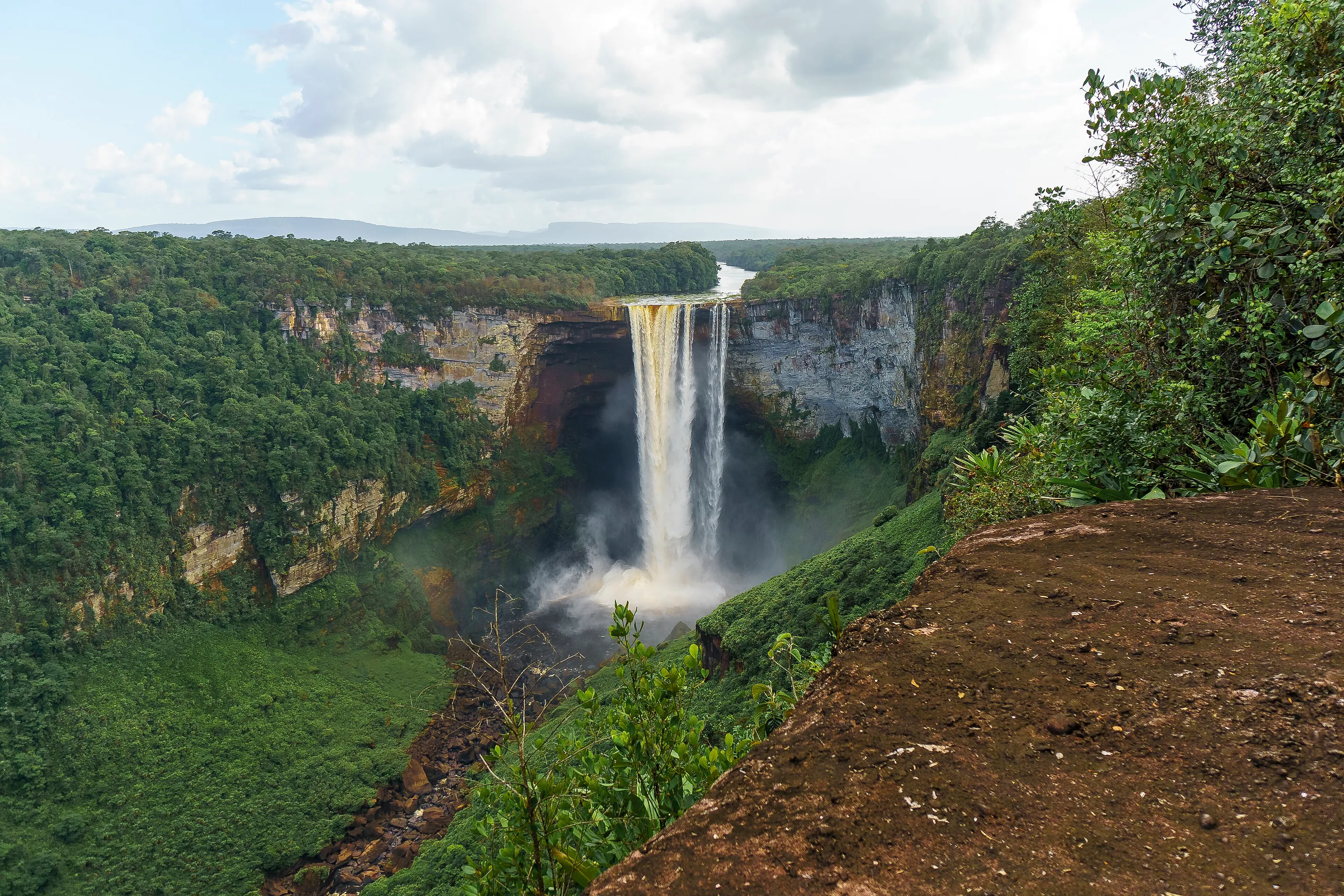
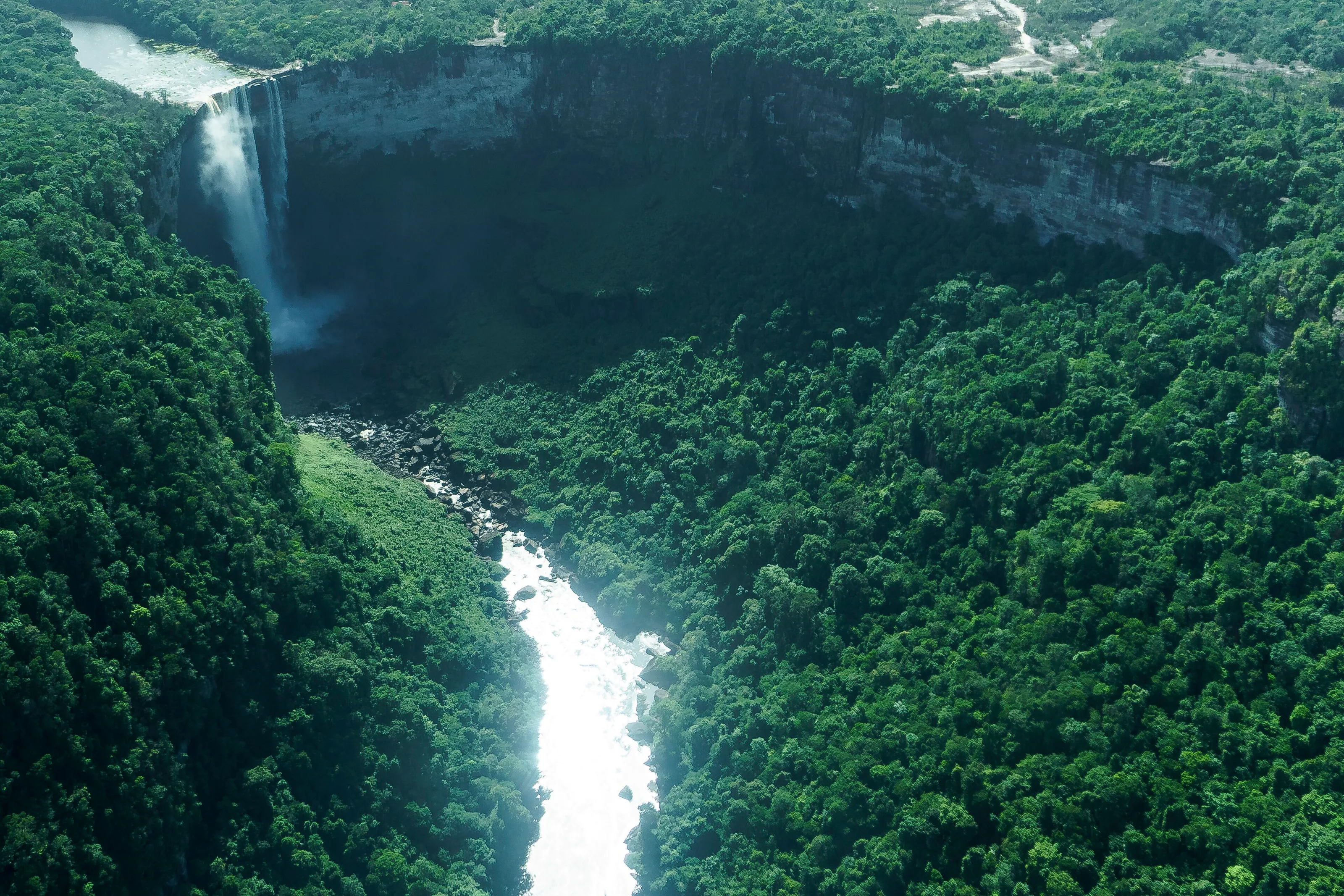
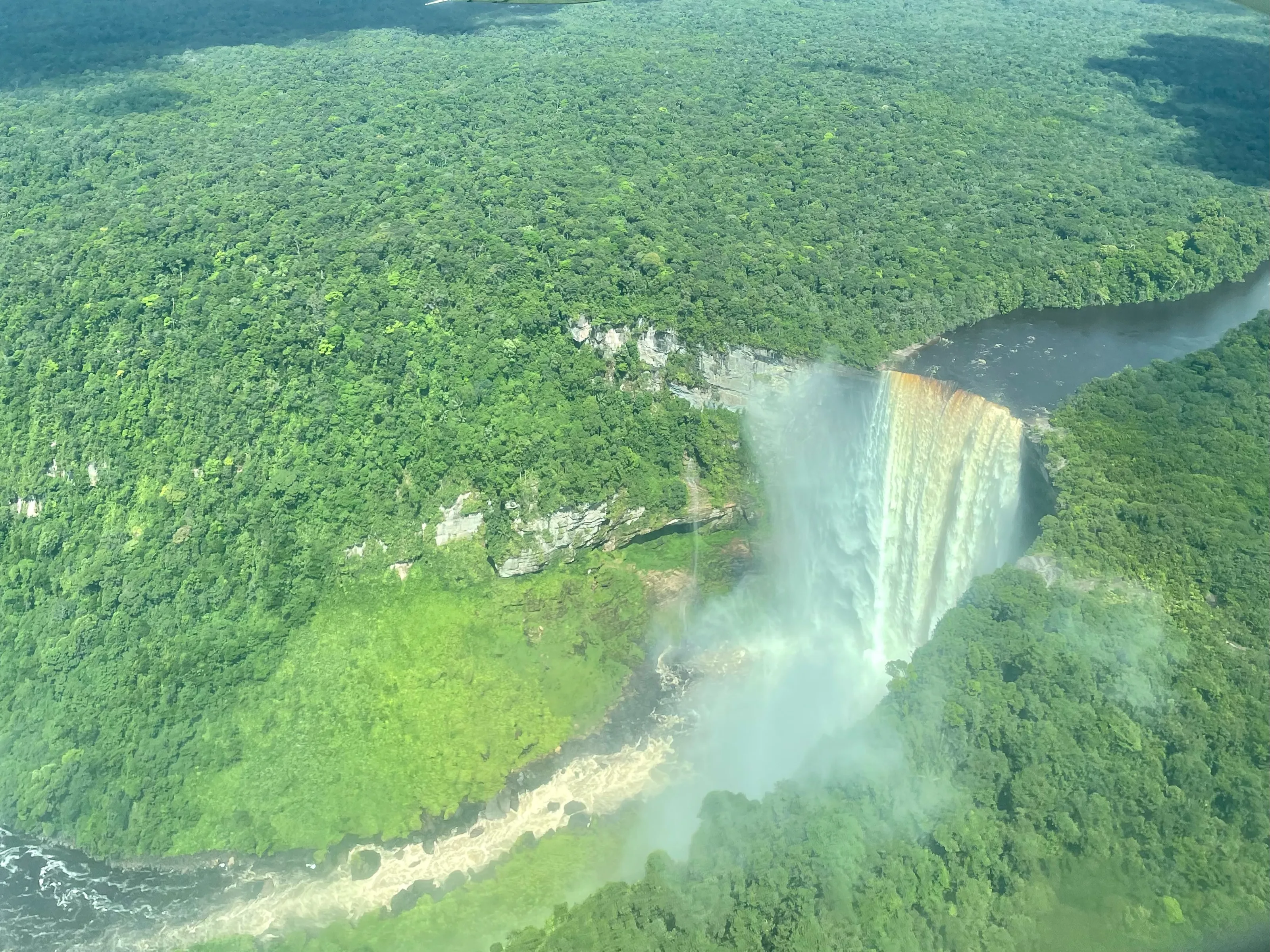
Most visitors reach Kaieteur Falls — the world's tallest single-drop waterfall, at 741 feet, more than five times the height of Niagara Falls — via a small charter plane (about a dozen seats) from Ogle Airport, since there are no scheduled commercial flights to this remote site. Expect to pay roughly USD $270-450 per person for a day tour. The falls are sacred to the Indigenous Patamona people and home to rare species like the golden rocket frog and the harpy eagle.
The Rupununi savannah
Further south, the Rupununi region offers a completely different side of Guyana: open savannah and abundant wildlife, often combined with Kaieteur and the Iwokrama rainforest in multi-day community ecotourism itineraries with local Indigenous communities.
Getting around & city life
Taxis, minibuses and charter flights
Georgetown and the coast are covered by taxi or private minibus, the most common and affordable shared transport in the country. Licensed taxis carry plates starting with H and have been yellow since 2010; Wikivoyage suggests picking them up outside a hotel rather than hailing them in the street. Minibuses run numbered routes and mostly meet near the market. A ferry crosses the Demerara River behind Stabroek Market to Vreed en Hoop. The city is flat and walkable by day, but take a taxi at night.
To the interior
With no usable road to Kaieteur, a charter flight from Ogle remains the main way to reach the falls, the Rupununi or airstrips like Lethem. Some connections are by motorised river boat. The road to Lethem is often impassable in the rainy season.
Staying alert
Wikivoyage describes a city where petty crime is common: avoid flashy jewellery, never leave luggage unattended, keep original documents in the hotel and read your government's travel advice before you go.
Budget
A pricier destination than it looks
Guyana is not a rock-bottom destination: Wikivoyage describes a high cost of living (as of January 2024) and widely varying accommodation. Older rates quoted there put small guesthouses at roughly US$30-35 for a double, with hotels costing more; these figures are dated and need rechecking. Some hotels quote prices before a 16% tax.
Where the money goes
Charter flights to Kaieteur weigh most: roughly US$270-450 per person for a day trip, according to offers we have seen (a range we could not cross-check, so confirm with operators). The city itself is inexpensive for museums, markets and meals at cookshops.
By length of stay
What to do in Georgetown depending on your trip length
The essentials
Stabroek Market, St. George's Cathedral and a stroll through the colonial architecture districts, ending with sunset on the seawall.
Go deeper
Add a day-trip charter flight to Kaieteur Falls from Ogle Airport.
Interior circuit
Combine Kaieteur with an ecolodge stay in the Rupununi savannah for wildlife spotting.
When to go
When to visit Georgetown
February to April
Short dry season, a good window to combine the city with the interior.
May to August
Coastal rainy season — Kaieteur Falls are at their peak flow.
August to November
Main dry season, the best time for the Rupununi and Kaieteur.
November to January
Second rainy season, interior access more difficult.
Georgetown has a hot tropical climate all year: about 27 C on average, highs around 30 C, and temperatures that rarely exceed 31 C thanks to the trade winds. There is no true dry season: more than 60 mm of rain falls every month, about 2,260 mm a year (Wikipedia). May and June are the wettest months; September to November are drier. For the city any month works; for Kaieteur and the interior aim for the drier periods.
In pictures
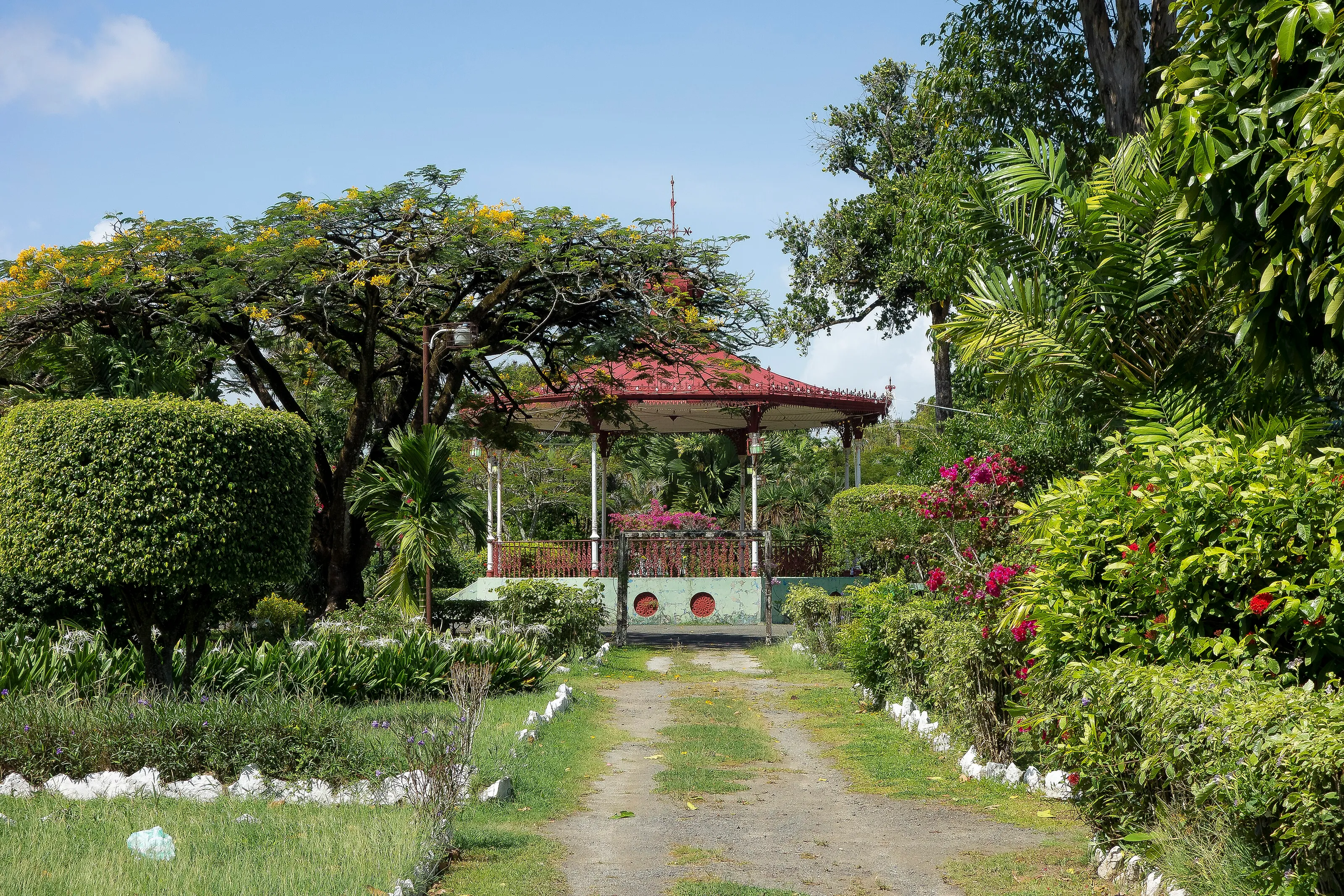
Georgetown in pictures
You might also like
Similar destinations

FAQ
Frequently asked questions about flights to Georgetown
Is Georgetown just about colonial architecture?
No — the city mainly serves as the gateway to Kaieteur Falls, one of the world's tallest single-drop waterfalls, and the Rupununi savannah, a top ecotourism and wildlife-spotting destination.
What's the best airport for arriving in Guyana?
Georgetown (GEO), Cheddi Jagan International Airport, is the country's only international air gateway.
How much does a flight to Georgetown usually cost?
The price mainly depends on your departure city, the season and how far ahead you book. The "deals" section above shows real examples of prices already detected by SniperAir for this destination.
How do I visit Kaieteur Falls from Georgetown?
Only by charter flight from Ogle Airport, since there's no usable road to the site — expect to pay roughly USD $270-450 per person for a day tour.
Do I need several days to visit the Rupununi?
Yes, plan at least 4-6 days total to combine Georgetown, Kaieteur and an ecolodge stay in the Rupununi savannah, given the charter flight times and the region's remoteness.
How do I get alerted when a flight to Georgetown drops below my budget?
Create an alert profile with your departure airport, Georgetown as destination and your maximum budget. You'll be notified automatically the moment a matching price is detected.
How do I get from the airport to central Georgetown?
Cheddi Jagan airport is about 41 km south of the city: allow 45 to 60 minutes by taxi (around G$5,000, roughly US$25, to be confirmed on arrival), or take a cheaper but less direct shared minibus.
When is the best time to go to Georgetown?
There is no true dry season, with over 60 mm of rain every month. September to November are the driest and suit Kaieteur and the Rupununi; May to August are wetter, but the falls then run at full volume.
What should I eat in Georgetown?
Pepperpot, cook-up rice, metemgee, roti and curries, with El Dorado rum, Banks beer or mauby. The cookshops around Stabroek Market are recommended for daytime meals.
Ready to head to Georgetown?
Set your budget and let SniperAir monitor fares for you.
Create my alert