
Cheap flights to Seville
Set your departure airport and maximum budget: SniperAir tracks prices to Seville and alerts you the moment a deal matching your criteria appears.
Quick summary
Country
Spain
Continent
Europe
Airport
SVQ
Currency
Euro (EUR)
Time zone
UTC+1 (UTC+2 during summer time)
Deals already spotted to Seville
Real flight examples detected by SniperAir, with their reference price.
Loading examples…
Why track Seville with SniperAir
You do not need to compare prices every day
Choose your departure
Enter your departure airport and your maximum budget for a flight to Seville (SVQ).
SniperAir keeps watch
Our systems continuously compare new prices with the real price history of the route. SniperAir monitors prices and alerts you: it does not sell or book tickets.
You receive an alert
As soon as a price matches your criteria, you are notified, without having searched for anything yourself.
Airport and getting into town
A single-terminal airport about 10 km out, with a direct bus into town
Seville San Pablo (SVQ)
Seville Airport is a single-terminal airport roughly 10 km north-east of the centre on the A-4, according to Wikivoyage (EN); the German edition says 13 km. The EA airport bus calls at Santa Justa railway station and the Plaza de Armas bus station, taking about 35 to 40 minutes, with departures every 15 to 30 minutes depending on the time of day. Taxis use regulated fares for the airport run, and the local ride-hailing apps are allowed to pick up. If you are already in Spain, the AVE high-speed train links Madrid Atocha with Seville in about 2 h 30 to 2 h 40; from Málaga you change at Córdoba. Jerez de la Frontera airport (XRY), about an hour away by road, is another gateway worth watching.
Distances and times are approximate, based on Wikivoyage (EN, DE, FR) and Wikipedia; bus and train timetables change: check them before you travel. We give no fares.
Seville is the capital of Andalusia and its largest city, with about 690,000 inhabitants and roughly 1.5 million in the metropolitan area. The slow Guadalquivir River runs through it, with the historic centre on the east bank and Triana opposite. Most of the major sights sit in a compact old town, so you can see them on foot. It is also known as one of the hottest big cities in continental Europe.
Landmarks
Giralda, Alcázar, tiled arcades and the Guadalquivir riverfront
The cathedral with the Giralda, the Alcázar and the Archive of the Indies together form a UNESCO World Heritage Site, listed in 1987. Beside that Moorish and Christian heritage, Seville keeps the grand set pieces of the 1929 Ibero-American Exposition. The places below are illustrated; the Torre del Oro, Santa Cruz and Triana are covered in text.
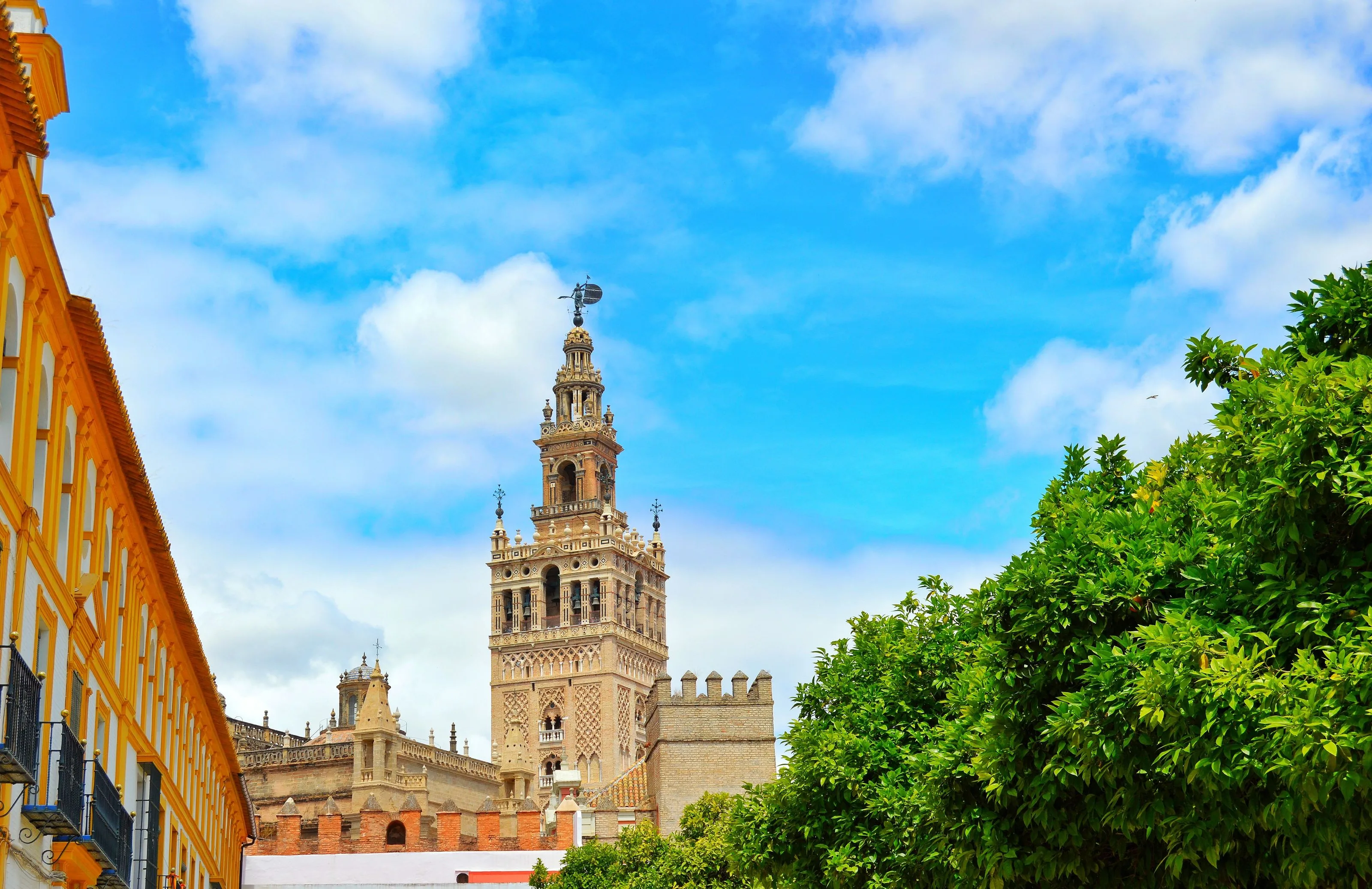
The Giralda and the cathedral
The Giralda began as the minaret of the great mosque and is now the bell tower of the huge 15th-century cathedral built on the mosque's site. The cathedral is one of the largest churches in the world and holds the tomb of Christopher Columbus. You climb the tower by 34 ramps rather than stairs, which Wikivoyage (EN) notes are tallied on the wall, to reach the viewing terrace.
The Alcázar gardens
The Real Alcázar is a Mudéjar palace begun by the Almohad caliphs in the 12th century and extended in the 14th century by Pedro I. Its gardens include ponds, galleries and a hedge maze, and the shade of palms and orange trees makes it a cooler retreat on a hot day. It is busy in high season, so book only through the official website.
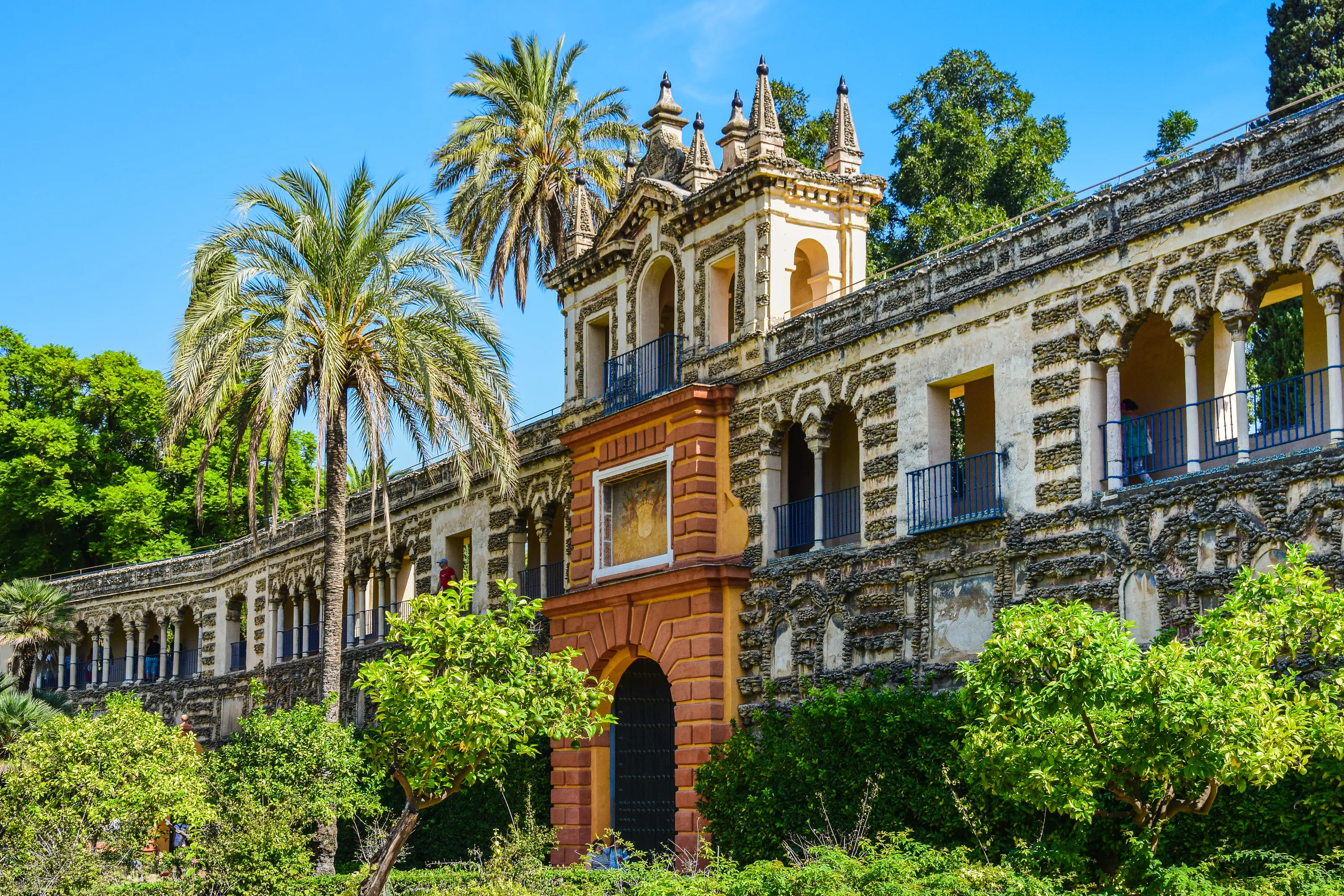
Courtyards and Mudéjar arches
Inside the palace, courtyards with lobed arches, carved plaster and narrow reflecting pools show the refinement of Mudéjar craftsmanship. One room is linked to the planning of Columbus's voyages, and night tours run in some months according to Wikivoyage (EN): check before you go.
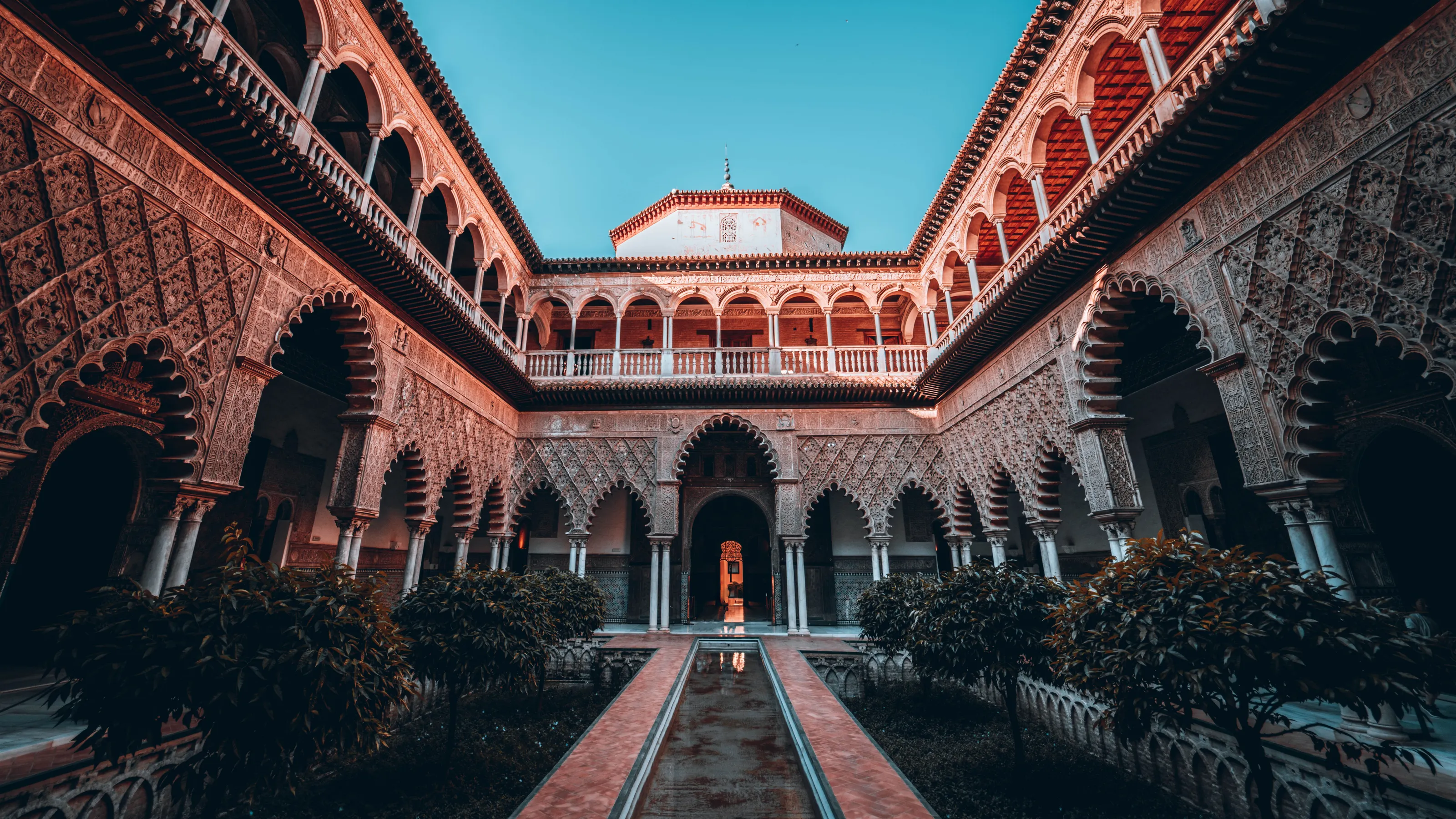
Plaza de España
Built for the 1929 exposition and designed by Aníbal González, this half-circle of brick, columns and canals is crossed by bridges. Tiled alcoves represent each Spanish province, and the setting has appeared in Star Wars films. It opens onto María Luisa Park, a green spot for a break in the shade.
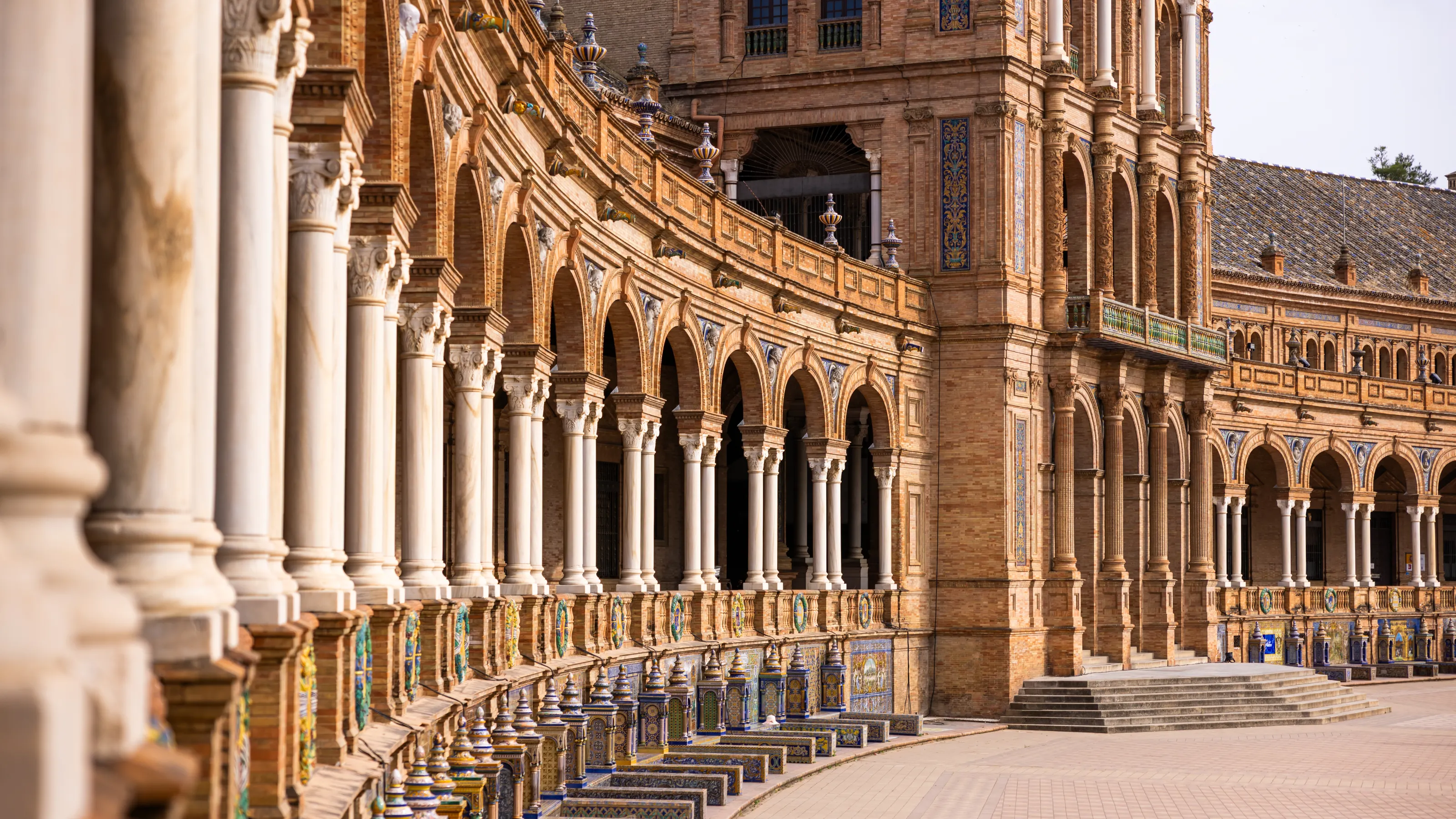
Las Setas
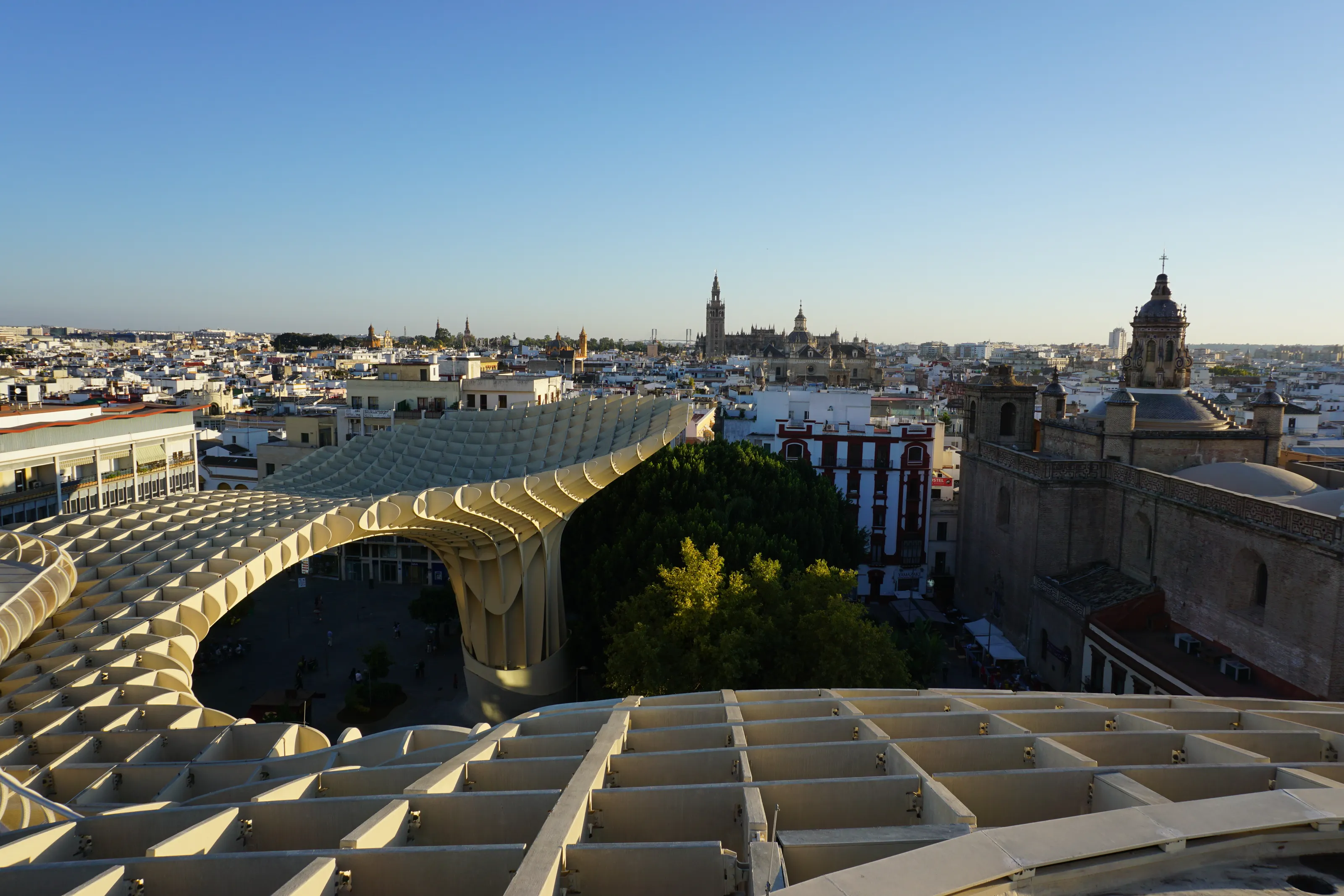
The Metropol Parasol, nicknamed Las Setas, the mushrooms, is a vast wooden structure over the Plaza de la Encarnación. It contrasts with the Baroque churches around it and rises above the roofs; at sunset it offers one of the best views of the Giralda and the bell towers.
The river and Triana
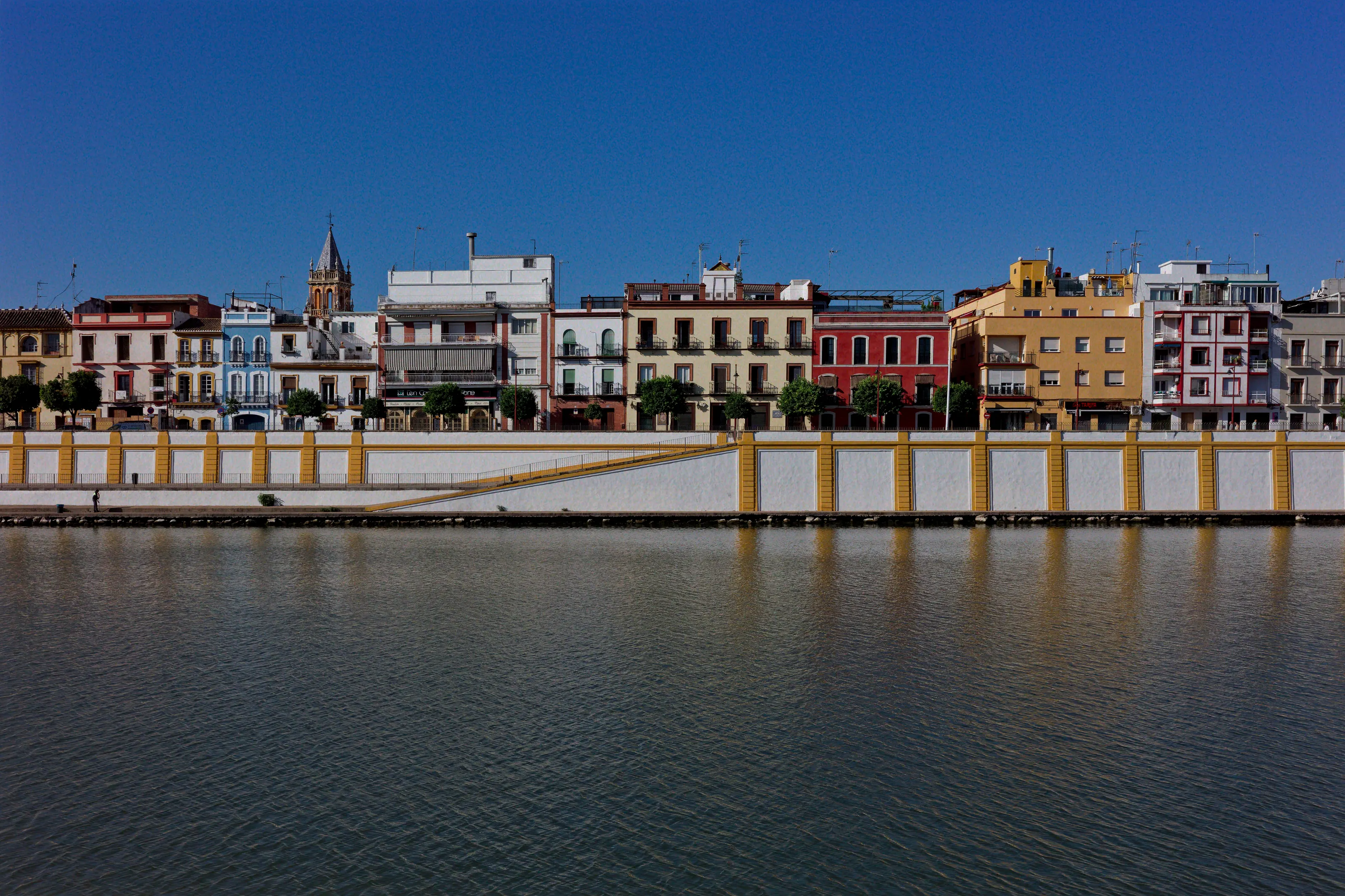
The Guadalquivir made Seville's fortune as the port that served the Americas. The Triana bank, with its colourful facades and quays, gives the best view of the old town according to Wikivoyage (DE), and the district is known for its ceramics and its flamenco taverns.
Torre del Oro, Santa Cruz and more
The 13th-century Torre del Oro by the river holds a small maritime museum. Santa Cruz, the former Jewish quarter of winding lanes, is the most charming and the most touristy area. Add the Casa de Pilatos, the former Royal Tobacco Factory (now the university and the setting of Bizet's Carmen) and the Maestranza bullring.
Museums and culture
Fine arts, flamenco, the Archive of the Indies and contemporary art
Museum of Fine Arts
Wikivoyage (DE) calls it the main museum of the city, with Andalusian and Spanish painting in a former convent near the centre. Check opening days before you go.
Flamenco and the Hospital de los Venerables
The Flamenco Dance Museum in Santa Cruz also stages shows. The 17th-century Hospital de los Venerables, a former home for elderly priests, has a Baroque chapel and a Velázquez painting of Santa Rufina, according to Wikivoyage (EN).
Archive, contemporary art and opera
The Archive of the Indies preserves the records of the conquest of the Americas and is World Heritage. The CAAC in the Cartuja shows contemporary art, and Seville is the setting of many operas, including Carmen, The Barber of Seville and Don Giovanni; the Maestranza theatre programmes concerts and opera. We give no ticket prices.
Food and drink
Tapas, serranito, markets and orange trees
The tapas culture
Seville is a tapas city: tortilla española, jamón ibérico, fried fish, spinach with chickpeas, olives, cheese and gazpacho. A tapa is really a size, and many bars sell the same dish as a tapa, a half portion or a full ración. Dinner is late: many kitchens do not open before about 20:30.
Specialities and areas
The serranito, a sandwich of pork loin or chicken with fried pepper and ham, is the local fast food according to Wikivoyage (ES). Look for bars around Plaza del Salvador, the Alameda de Hércules, Triana and Santa Cruz; the Plaza de la Encarnación market is a good place for food shopping.
Street oranges
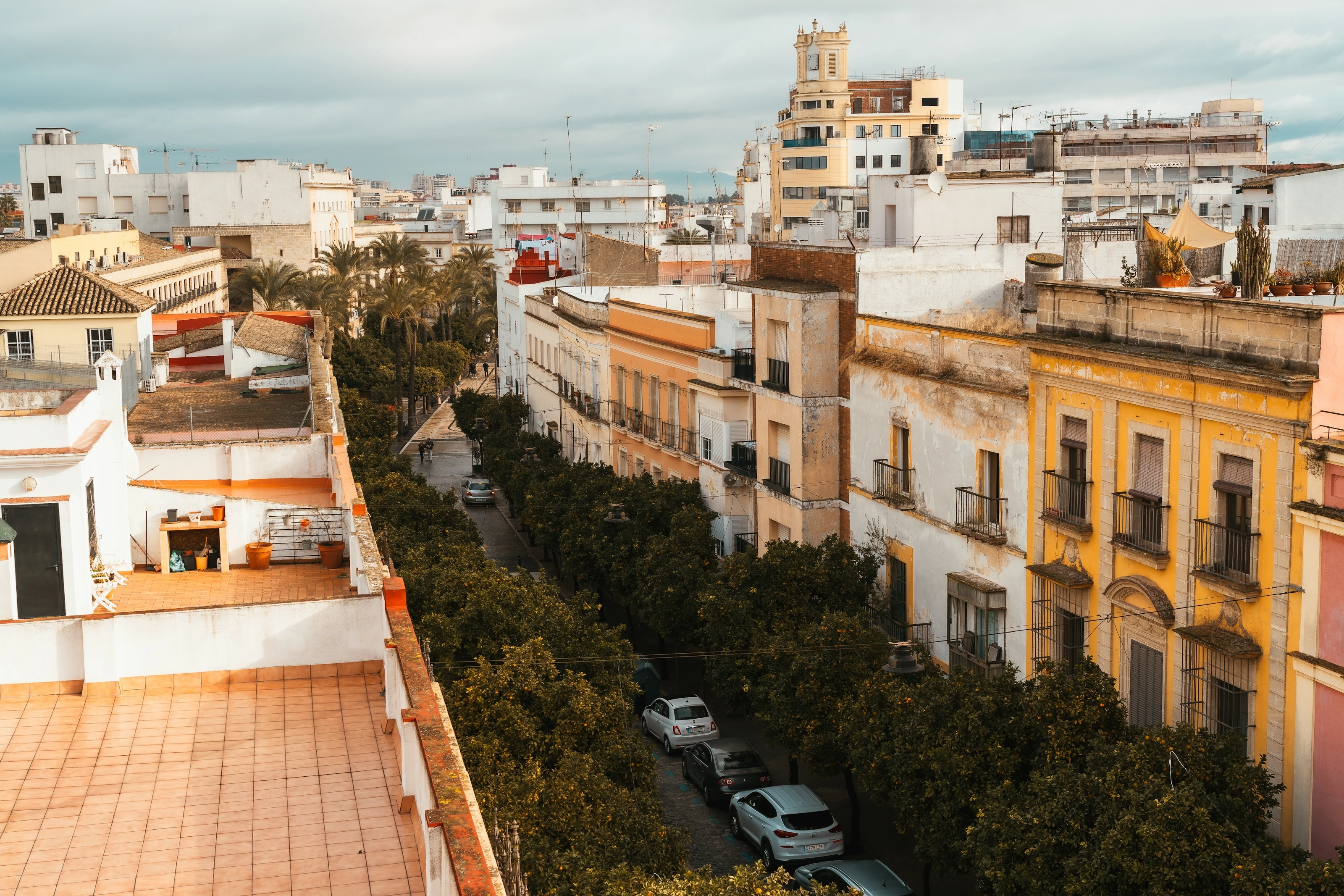
Bitter Seville oranges line the streets and patios, and large quantities are exported to Britain for marmalade. Do not eat the fruit straight from the trees: it is sprayed. In spring the blossom scents the whole centre.
Getting around
On foot, city bus, central tram and bike
Walking first
The main sights lie in a compact centre, so walking is the best way to see the city, its lanes and squares. Several bridges cross the Guadalquivir between the centre and Triana.
Public transport
The municipal bus network is dense and runs until about 23:30, with night buses afterwards according to Wikivoyage (EN); a small circular bus serves the old town. Seville has a single metro line that skips the historic centre, plus a short tram in the middle of town. Bike share fills the gaps.
Car and trains
Parking in the old centre is awkward and break-ins to parked cars are reported, so use a garage outside the old town. Córdoba is under an hour by train, Jerez and Cádiz are on the regional line, and coaches leave from Plaza de Armas or Prado de San Sebastián.
Budget and precautions
Cheaper than the big capitals, but festivals push prices up
Price level
Seville is good value for Western Europe, especially for tapas and bars away from the cathedral area. The currency is the euro. We publish no figures because we could not cross-check them on two independent open sources.
Holy Week and the April Fair
Hotels and restaurants raise their prices during Holy Week and the April Fair, according to Wikivoyage (ES): those weeks are spectacular but pricier, and tables are hard to find.
Flights and precautions
SniperAir monitors prices to SVQ and compares them with the route's history, but it does not sell or book tickets. Jerez (XRY), Málaga (AGP) and Faro (FAO) can be worth watching in parallel. Spain is in the Schengen area: check entry rules for your nationality and your government's travel advice. Watch for pickpockets in crowds and on buses.
When to go
Very hot summers, mild winters, a spring of festivals
Winter (December to February)
Mild by day, around 16 C according to Wikipedia (EN, DE), with cool nights and some rain. The city is quieter.
Spring (March to May)
Orange blossom, Holy Week and the April Fair fill the city; it is the most beautiful season and also the busiest.
Summer (June to August)
Very hot: highs above 40 C are not unusual and the airport record is 46.6 C (1995), according to Wikipedia (EN, FR). Keep the siesta and sightsee early.
Autumn (September to November)
The heat eases in October and the rains return from then on; a good season for walking.
Seville has a hot-summer Mediterranean climate and is among the hottest large cities in continental Europe, according to Wikipedia (EN, FR). Rain falls mostly from October to April (Wikipedia ES). We give no annual averages because sources differ by about a degree. March to May and October to November are usually the most comfortable for walking.
By length of stay
What to do in Seville depending on how long you stay
The essentials
The Giralda and cathedral, the Real Alcázar, Plaza de España, a tapas crawl in Santa Cruz and a flamenco evening.
Districts and museums
Triana, the Alameda de Hércules, the Museum of Fine Arts, the Setas at sunset, María Luisa Park and the Archive of the Indies.
Andalusia
Córdoba by train (under an hour), Jerez and Cádiz, or the Atlantic coast, with Seville as your base.
In pictures
Seville in pictures
You might also like
Similar destinations
FAQ
Frequently asked questions about flights to Seville
How do I get from Seville airport to the city centre?
The airport (SVQ) is about 10 km north-east of the centre. The EA bus reaches Santa Justa station and Plaza de Armas in roughly 35 to 40 minutes; taxis use a regulated fare. Timetables change: check them before you travel.
When is the best time to visit Seville?
Spring (March to May) and October to November. Summer is very hot, with highs above 40 C; winter is mild but can be wet.
Is Seville expensive?
It is good value for Western Europe, especially for tapas away from the tourist core. Prices rise during Holy Week and the April Fair. We give no figures because we could not cross-check them.
How long should I stay in Seville?
Two days for the Giralda, the Alcázar, Plaza de España and the tapas bars; four days if you add Triana, the museums and a trip to Córdoba.
How do I get around Seville?
On foot in the compact centre, by city bus and tram for longer distances. The metro does not serve the old town. Avoid the car in the centre.
What should I eat in Seville?
Tapas (tortilla, jamón ibérico, fried fish, spinach with chickpeas), the serranito sandwich and Andalusian wines; start with the bars around Plaza del Salvador or the Alameda de Hércules.
How much does a flight to Seville usually cost?
The price depends mainly on your departure city, the time of year and how far ahead you book. The "opportunities" section above shows real examples of prices SniperAir has already detected to this destination.
How do I get alerted when a flight to Seville drops below my budget?
Create an alert profile with your departure airport, Seville as the destination and your maximum budget. You are notified automatically as soon as a matching price is detected.
Ready to head to Seville?
Set your budget and let SniperAir monitor fares for you.
Create my alert